A gaggle of scientists attending a conference about their favorite subject is a sight to behold. Scientists, especially high-level academic ones, tend to have very little time in their day-to-day life to actually do science, because they have to focus so much on teaching and administration and supervising the students who are mostly the ones doing the science. So when they finally get the chance to escape for a few days and talk to each other, things can get a bit rowdy. Discussions about recent advances and future projects begin at coffee breaks, continue through the dinner and bar portion of the evening, and sometimes even go into e-mail phase after group members have dispersed to their individual hotel rooms and had late-night strokes of brilliance about a new project proposal instead of falling asleep. Still, the conference itself is nothing compared to their behavior during outdoor field trips. Unleashed scientists descend upon the natural environment en masse, almost literally turning over every leaf to see what lies beneath. And when that field trip takes place in a foreign country with entirely unfamiliar environments and species, all bets are off.
Adding to this the fact that we were headed for rural China, a place notoriously difficult to navigate without a local guide, it was good that there were roughly two Chinese student-helpers for every one foreign scientist on the field trip. At first it was weird for me as a nearly-obligate solo traveler to have someone else handling my itinerary and airport check-in and sometimes even meal choices (considering my gluten intolerance), but eventually I relaxed into the flow of it and decided it was kind of nice to be so diligently cared for. Our guides expertly shepherded us from Shanghai to Xiamen, keeping us in small controllable lumps and getting visibly nervous whenever anyone broke off unattended. Yet we all made it safely to Fujian Province, where our plane landed amid a flashing hurricane of LED lights that lit up every available surface of the city.
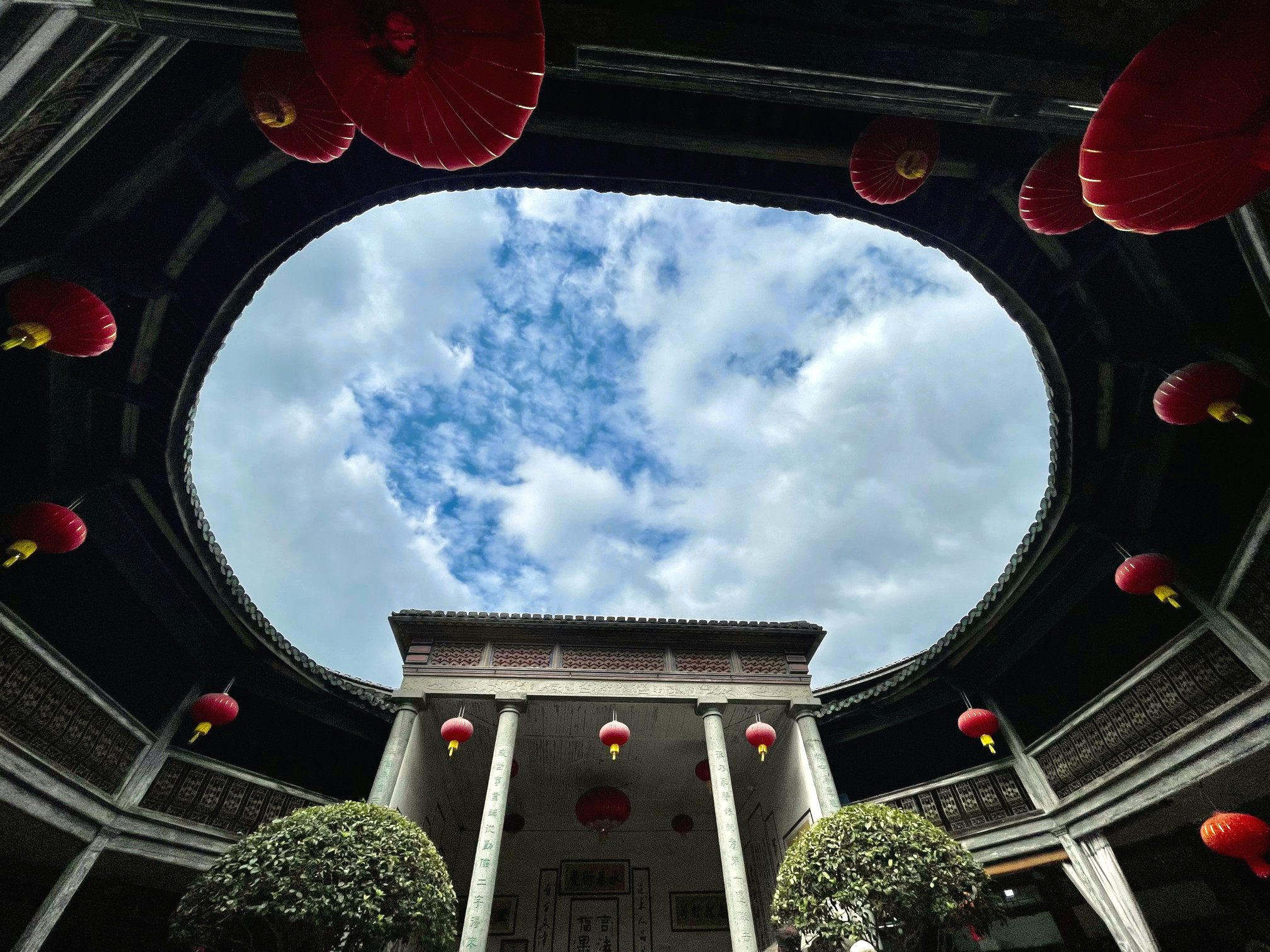
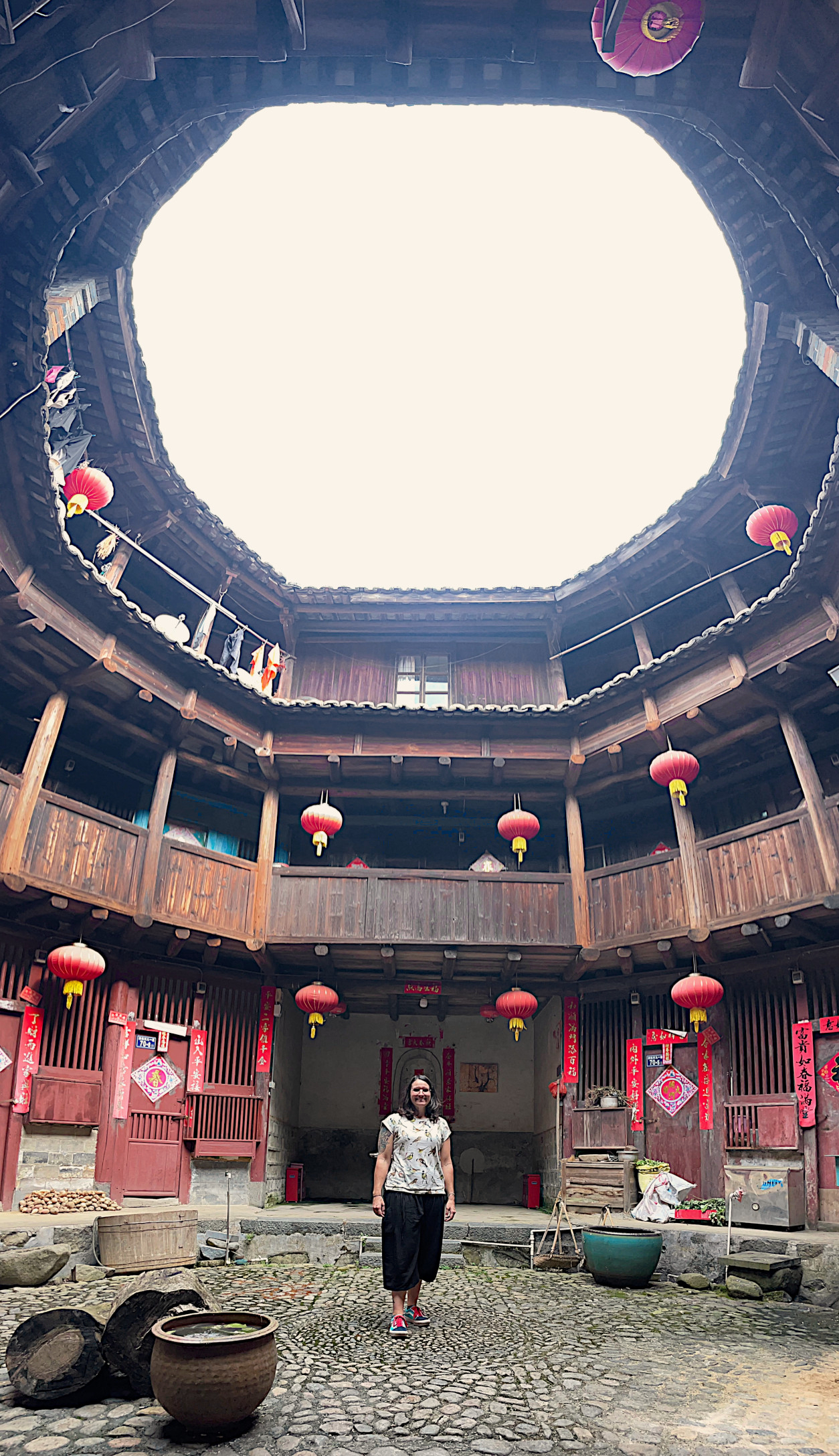
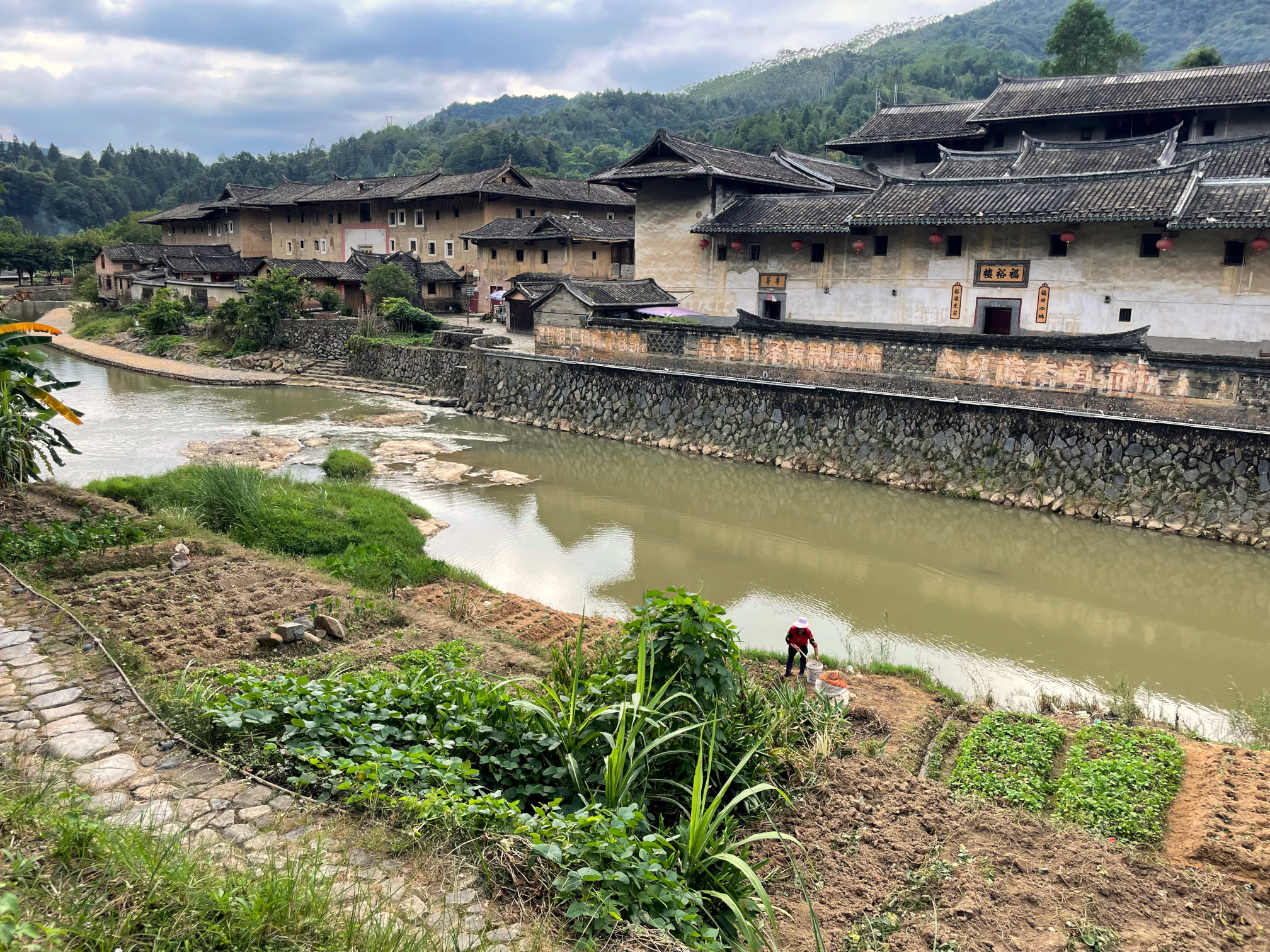
Although our main goal of the trip was to look at the forests, our hosts were also keen to show us some of Fujian’s incredible cultural heritage along the way. On the drive north from Xiamen to Longyan, we made a pit stop at the Hongkeng Tulou Cluster, where a sweet guide wearing a traditional conical farming hat led us through a tulou village. Tulou are traditional earthen house-castles built almost entirely from the local clay-rich soil, and each one is big enough to hold a whole clan family, sometimes up to 800 people! Today they’re living UNESCO World Heritage Sites where people still reside and work. The village streets were stuffed with mechanic’s shops overflowing with spare parts, grocer’s shops surrounded by drying persimmons, and shelves of semi-forgotten clay vases filled with fermenting rice wine. Magenta hibiscus pods blanketed the ground, drying in the sun as part of their journey towards becoming tea. And then there were the tulou themselves. Even the smallest ones had 6-foot-thick walls, multiple stories, and a central open-air courtyard that contained the family’s shrine. The largest contained mazes of concentric streets and plazas. Red paper lanterns swayed gently over the heads of the free-roaming chickens, tobacconists hand-sorting their fragrant dried tobacco leaves, and tea merchants pouring out free samples of their wares. Sipping on a chestnut tea and staring at an earthen wall, I couldn’t quite shake the feeling of being lost in a pleasant dream. At the far end of the city stood the pièce de résistance. Looming over the sluggish river was an actual earthen castle where princes once lived. We rested for a spell at the river’s edge and watched as life hummed all over the autumn landscape. Down along the river’s margin, a pair of women tended tidy little vegetable fields tucked into the nutrient-rich soil of the floodplain. High atop the castle’s roof, a barefoot man swept debris off the tiles. Behind me, professors and students alike were down on their hands and knees, ignoring the castle entirely in favor of discovering the delicate ferns growing from the dirt.




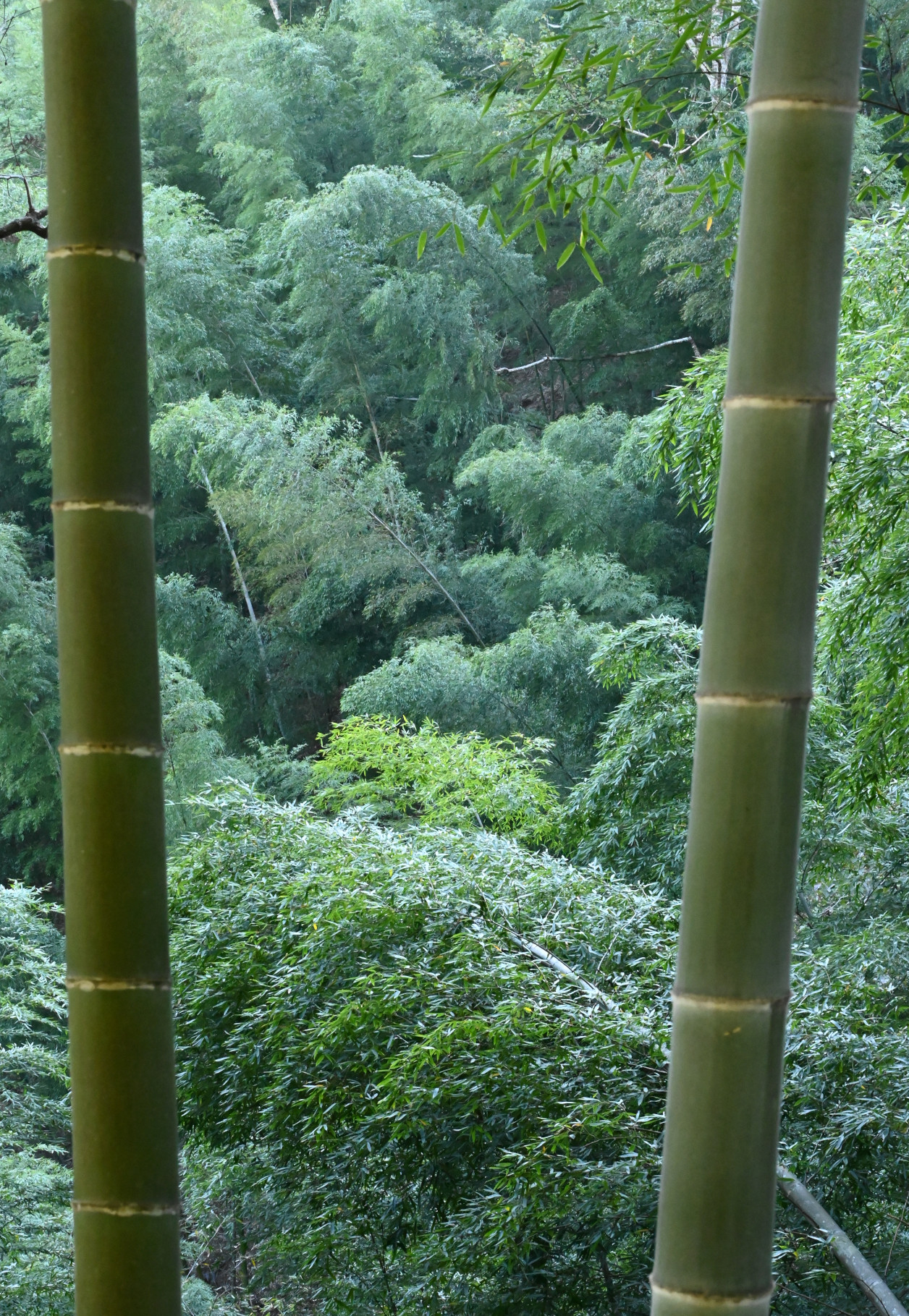
Fortuntately for them, the next day we headed straight for the forests. We were given printed lists of the tree species we might see that day (three whole pages!) as we climbed aboard the twin mini-buses. Our drivers raced each other up a long and winding road deep into the mountains. Unbothered by the motion, I sat at the back and stared out the window at the endless fields that lined the valley floor. Miles of chili plantations came first, the knee-high plants heavy with red fruits ready for harvest. Then came miles of shaded tables covered in flowering potted orchids, the kind that’s taking over Western homes. Our journey abruptly ended at the center of a bamboo forest, which was unexpected considering we were looking for oak trees. The subtle mints and turquoises and pinks of the bamboo forest cast a wholly different light than what you find in regular deciduous forests. The breeze stirred up layers of unfamiliar sound: deep hollow clacks as the stalks smacked into each other, interlaced with a dry rustling like prairie grass coming from the thin leaves as they danced. Later I would learn that the locals had cut down the native forest trees in favor of planting monocultures of bamboo, which grows much faster and is in high global demand for food and textiles and building material, but at the time I was charmed.
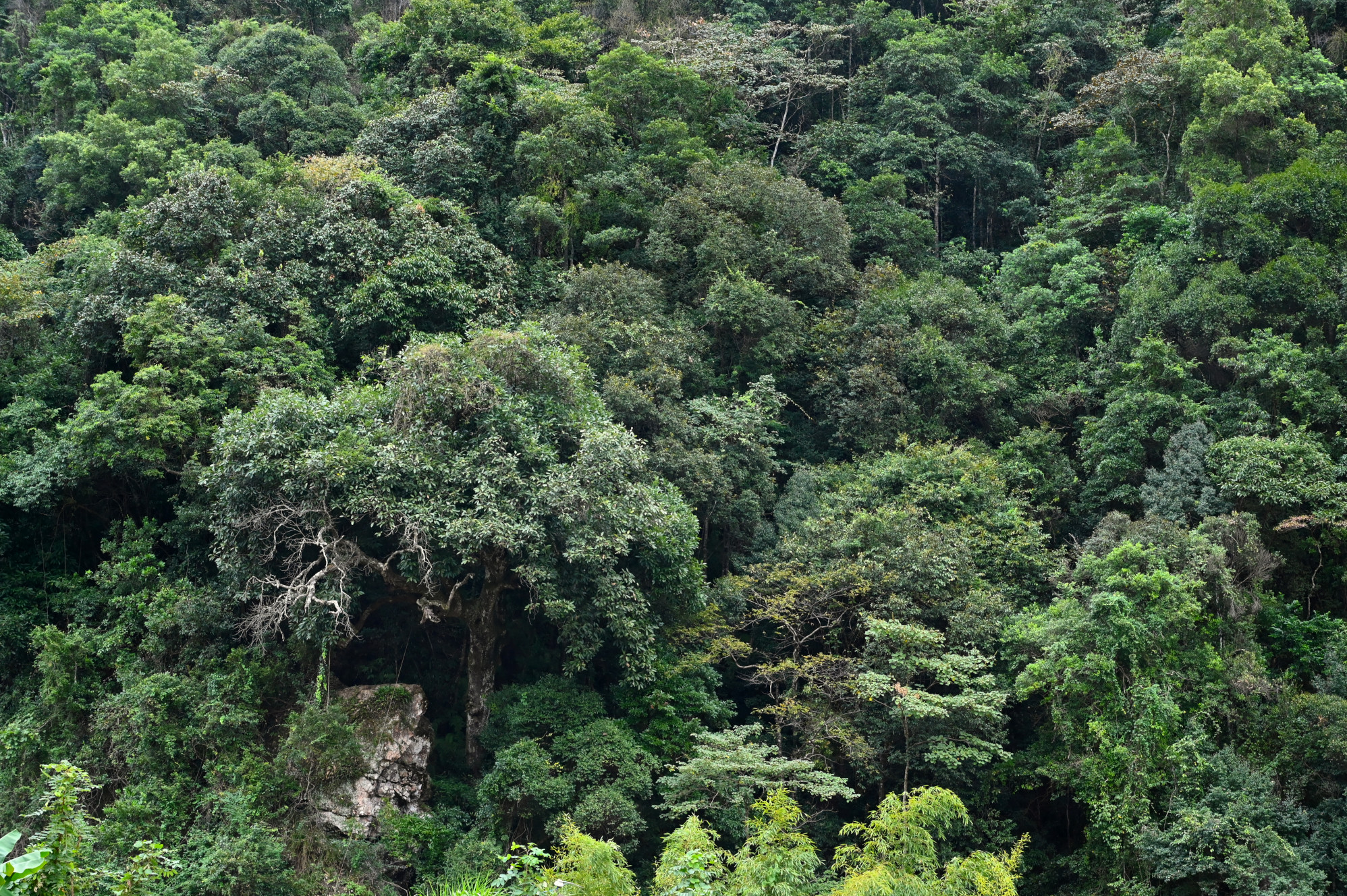
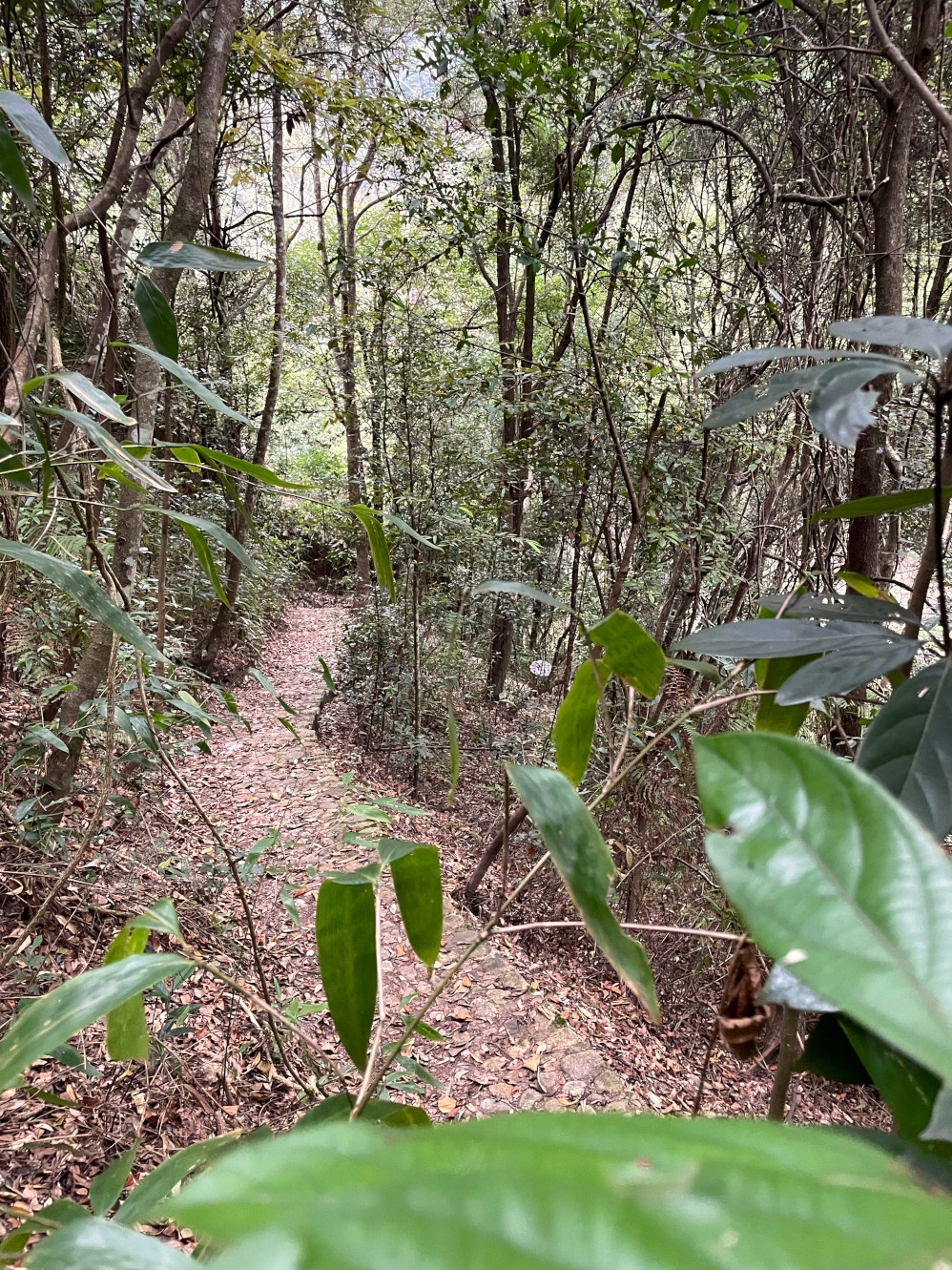
Still, there were a few Fagaceae trees along the sunnier margins of the road we walked. At every single one, the scientists took photos and wrote notes on their printed lists and dug around in the underbrush looking for acorns. I’ll admit here that I’m not much of a taxonomist. I was interested in the new species, but I forgot the Latin name of each one immediately after hearing it. Really I was just happy to be there, surrounded by all those strange life forms. The student helpers seemed to be magical encyclopaedias of knowledge about everything too. No matter what I pointed at, be it a mushroom or fern or flatworm, they could immediately tell me what it was. Finally we reached an ecotone where the forest shifted from planted bamboo to native cloud forest. As you can probably guess from the name, cloud forests are incredibly wet habitats that spend over 300 days a year soaked in mist and rain, but we were blessed that day with bluebird skies and a clear view all the way to the horizon. By “we,” I mean all 25 of us on the field trip and 8 men dressed head-to-toe in camouflage, presumably military, who had met us at the ecotone and silently shadowed us as we explored the protected and endangered habitat. We reached the peak of the local mountain and stood next to a few tiny individuals of Quercus arbutifolia, a rare and endangered oak species that clings to life at a few of these high margins of the world in China alone. From my feet to the horizons, I could see nothing besides uninhabited forested hills.


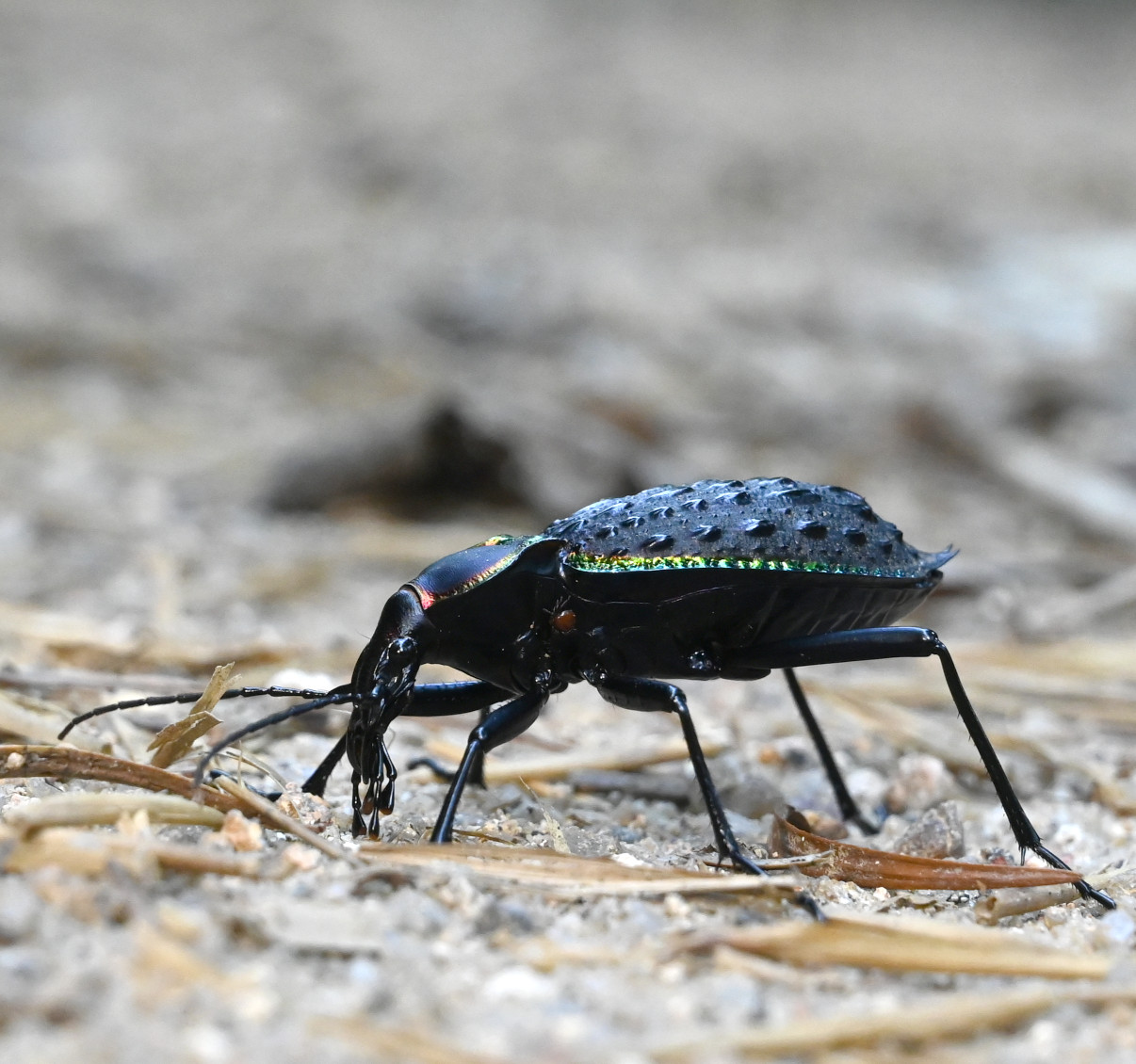

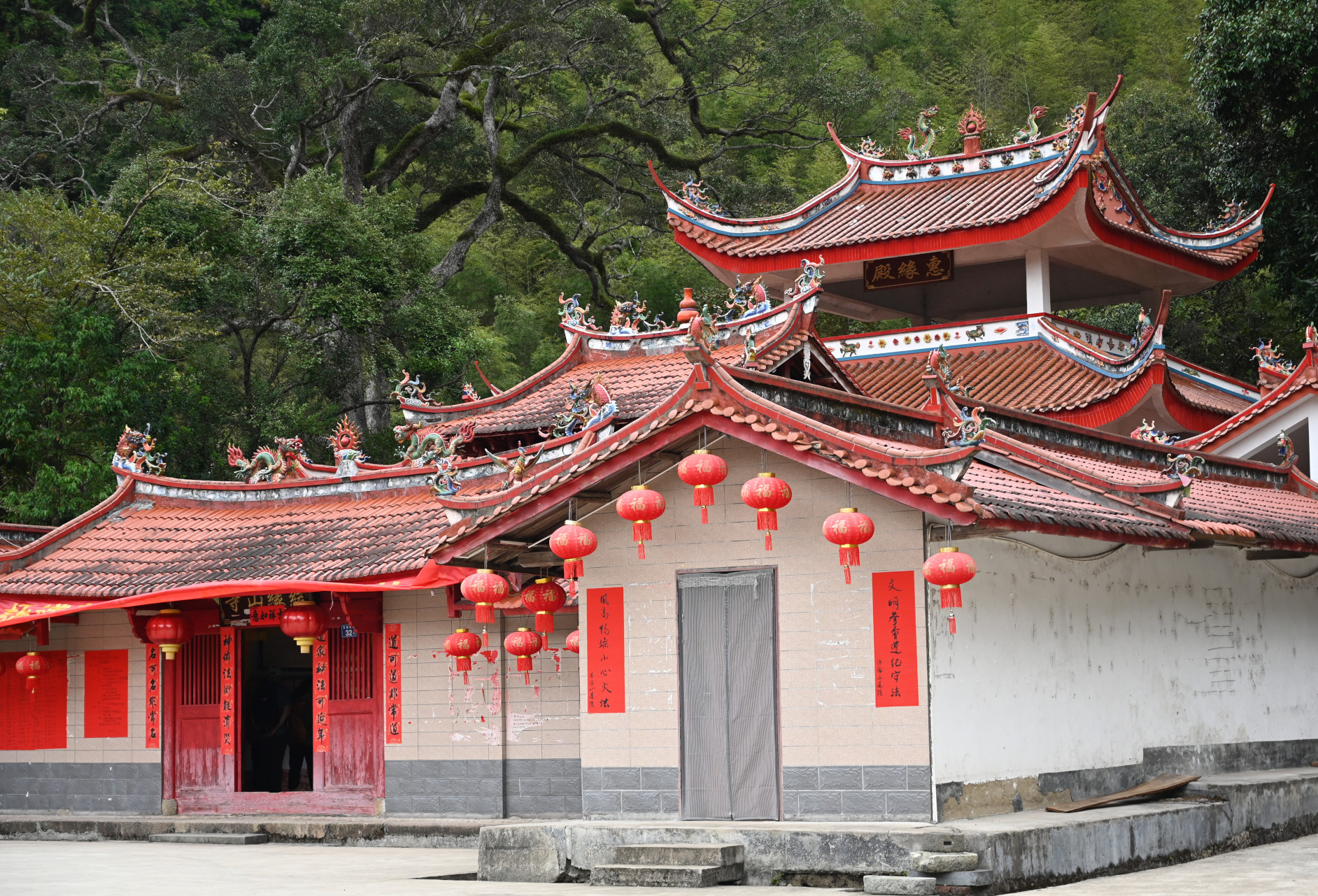
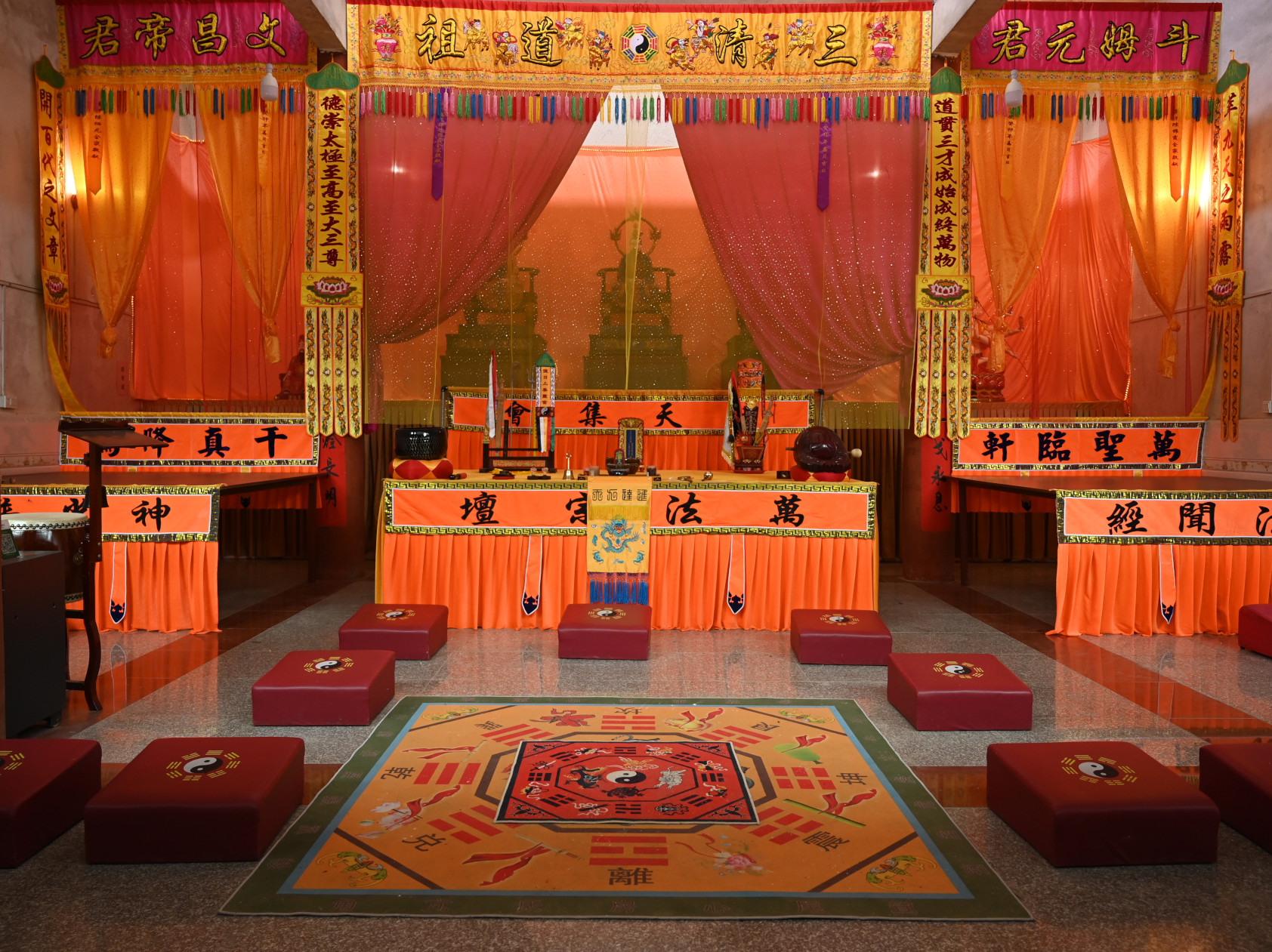
From that mountain peak, our forest tour descended the next day, which meant we were visiting warmer forests that were home to completely different species. At one stop we found a forest clearing that was haunted by colorful palm-sized spiders, as beautiful to me as they were terrifying. At another we found a grandfather Fagaceae that would have taken 12 people to fully hug its trunk, and whose fallen acorns wear whimsical fuzzy hats (one of our conference souvenirs was a preserved acorn keychain from this species). At the next, we found a Taoist temple deep in a valley that was guarding a small riverside grove of Fagaceae, and here the group split: half of us beelined straight fo the forest and the rest of us wandered into the temple. One of the Chinese girls began a complex ritual for obtaining her fortune (I guessed), picking up sticks and waving them around and then dropping them, except she kept messing up the dropping part and having to repeat the whole process. With each repitition her giggles became progressively louder. Eventually, one of the (monks?) came out and chastised her, (I assume) telling us to be serious in the temple. Once again I was completely lost, but just happy to be there. Amid all of this confusing and delightful hullaballoo, I kept getting roped into long conversations with scientists about assorted topics. A half hour here spent talking about germination habits of oak seeds while hiking, a dinner conversation there about whether humans had actually killed off mammoths (answer: unclear), and a long questioning session by me about whether wild monkeys care when you attach ID tags to the fruits they eat (answer: no).


Speaking of eating, the importance and overabundance of food was apparent even in the tiniest of mountain valley hamlets. For lunch one day, all 25 of us rolled up unannounced at a village where the houses seemed to be outnumbered by smoke shacks for locally-grown mushrooms. The two-employee kitchen didn’t seem fazed at all and they just fired up whatever they had on hand, somehow managing to supply 15-20 different dishes for all three of our tables. We counted the number of main-ingredient species on the table and arrived at 22, which is really something compared to the half-dozen I eat on a daily basis back home. The proprietor, an older lady of indiscriminate age who barely reached my shoulder, was absolutely enamored with our table of foreigners. She hovered at the edge of our table and took videos of us on her smart phone with a huge smile on her face. The others were not so impressed but I leaned into the prospect of being a novelty for once, and I smiled and waved as she panned around to me. When we’d finished eating she insisted on taking a photo with all of us non-Asians, and then she pinched my elbow and led me back into the kitchen. I was completely stuffed, but I couldn’t refuse when she handed me a whole, plain, piping-hot sweet potato. It was almost the closest thing I’d seen to dessert since arriving in China. I’m not usually a fan of sweet vegetables, but I peeled the skin back and took an enormous bite of the perfect tuber. I wasn’t even bothered when the locals pointed out that I was literally eating the chickens’ lunch. At the end of the week, we would all take a popular vote and unanimously agree that that meal was the best we had on the whole trip. Unfortunately its location will remain a secret here, mainly because I have no idea where it was.


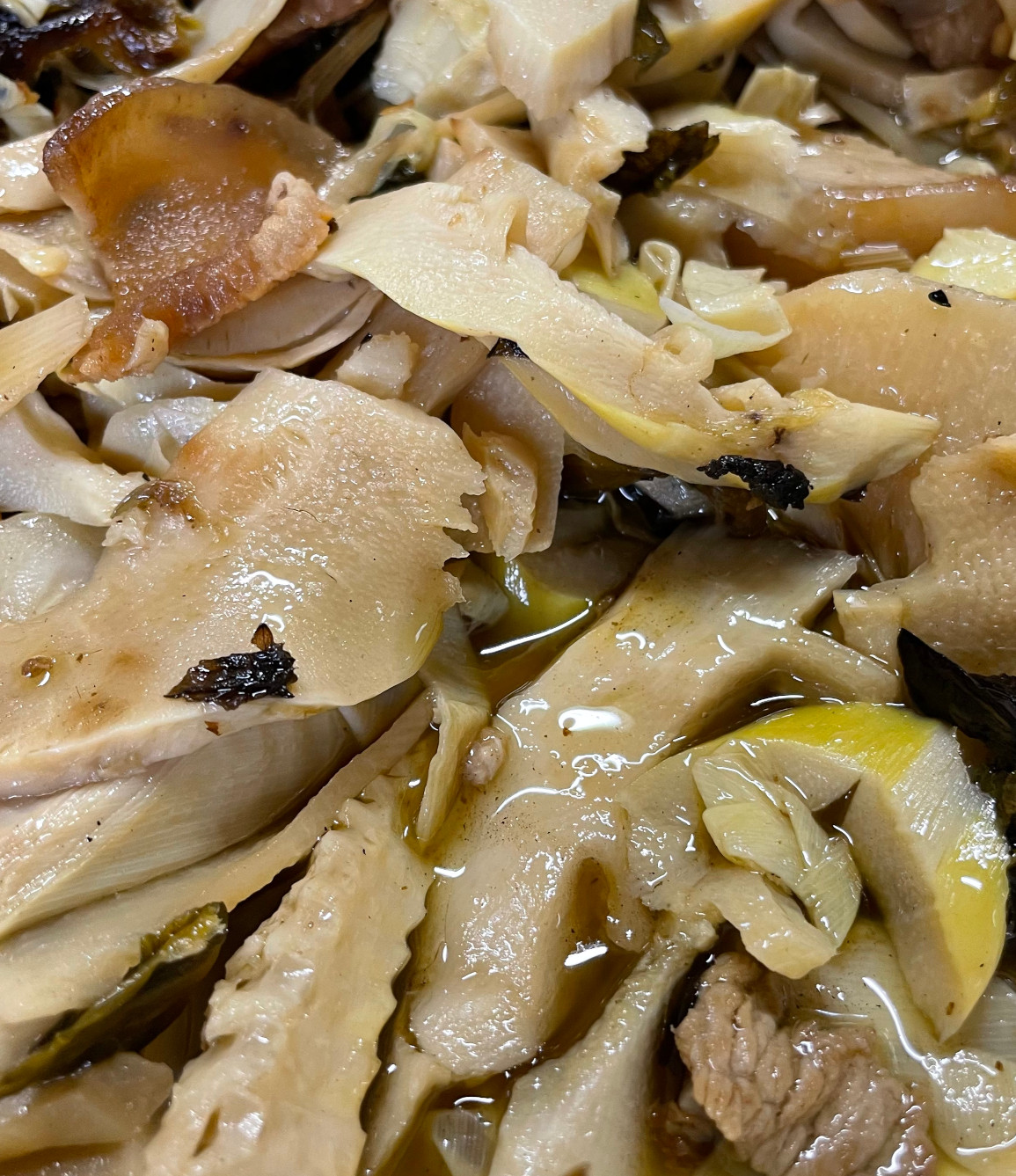

Fava beans, fresh mushrooms, bamboo with chicken, and…coconut milk. Yes really.
The only thing we weren’t fed enough of was information about our daily itineraries, which meant we could end up pretty much anywhere. One evening, after our daily forest visit, we drove up a mountain to a tiger park where they were “teaching” tigers how to survive in the wild before they would be released into the nearby forest. We stood worryingly close to the enormous cats and watched as an employee carried out two screaming chickens by the feet, then casually granny-tossed them over the barbed wire fence. Anyone who’s seen a housecat playing with a toy can envision what happened between one tiger and its terrified chicken snack: lots of curious paw swipes, a few casual nips of the teeth, and almost by accident, the chicken died a few minutes later. I was (and still am) unsure how to feel about this display. Even more unnerving, though, was the second cat in the same enclosure. This cat lounged on the hillside not twenty feet away from me, completely ignoring its chicken in favor of staring directly into my eyes. I felt, with absolute certainty, that I was looking into the eyes of a predator that wanted to kill me. There was no malice in those wide black pupils, just an unblinking hunger. I was pinned to the ground. After twenty seconds I finally found the will to walk away, and the tiger tracked me with its stare all the while. Only then did I learn the actual reason for our visit to the area. The attached tiger-centric natural history museum was new, and our hosts had been asked to come by and check the accuracy of the scientific information on all of their plant exhibits. And that’s how we spent an hour fact- and spell-checking a natural history museum.
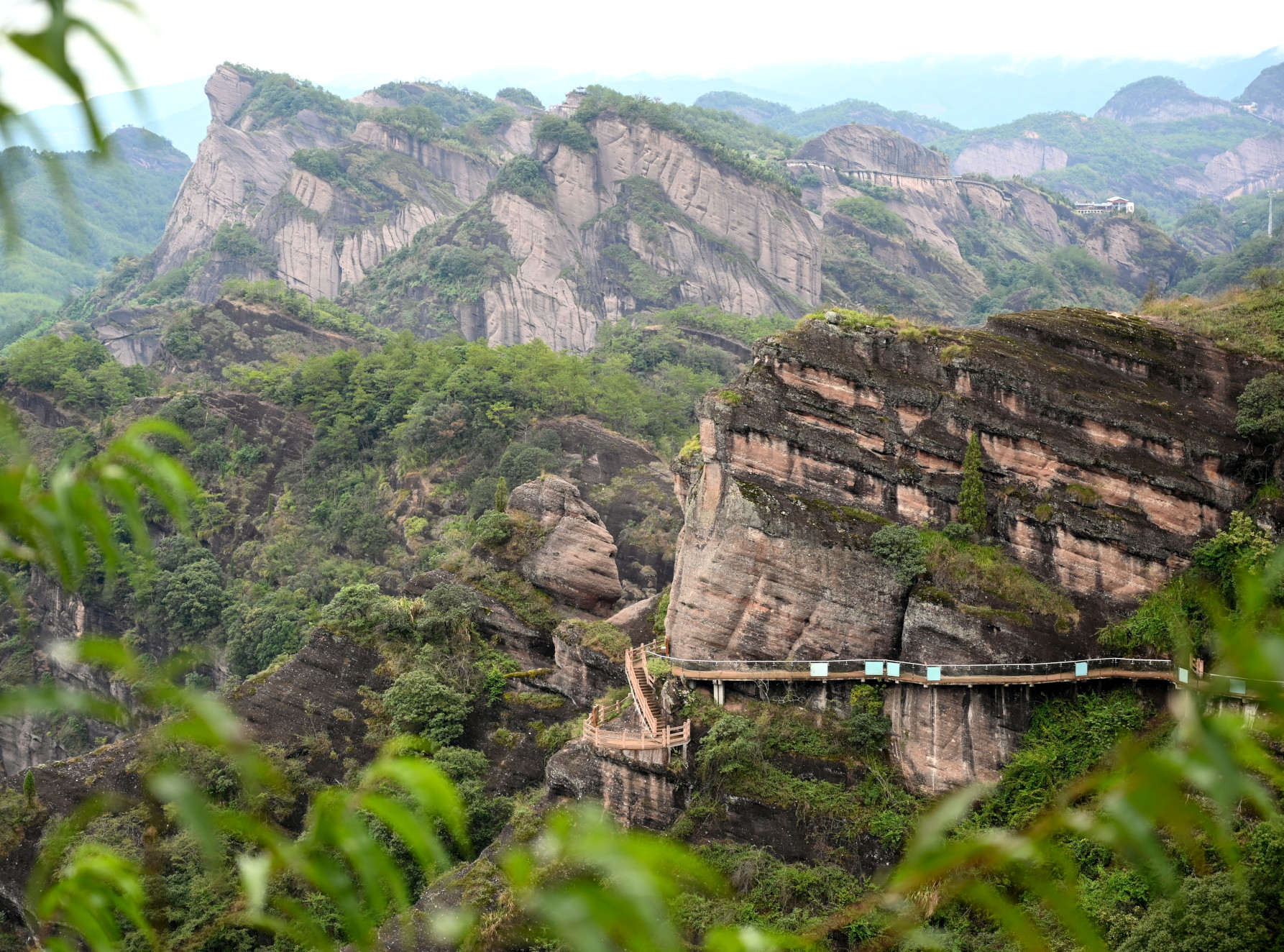
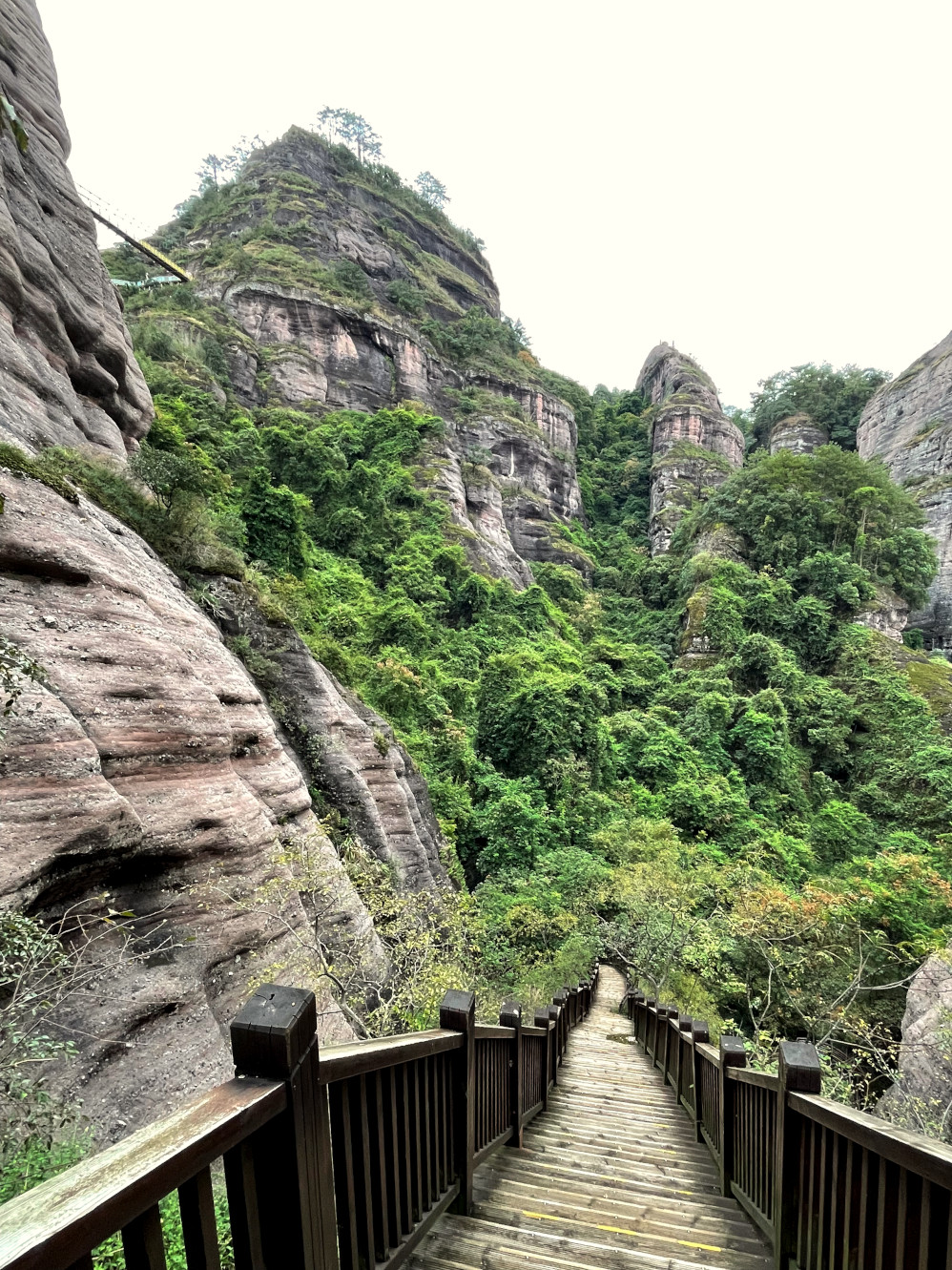
I was rather more excited to learn that our last day would be spent at Longyan UNESCO Global Geopark, since China has some astronomically cool geological features. A sleek combination of boardwalks, forest trails, and a narrated boat ride led us deep into the heart of the canyon-riddled park. Surrounded once again by more unfamiliar plants, I fell into step beside the Sicilian botanist and asked whether it was exciting or terrifying that he couldn’t identify all the plants around him. With a heavy sigh, he responded “both.” At some points, the mossy canyons were so narrow I could touch both walls with my outstretched hands. I leapfrogged past a group of student helpers who were taking some moss samples and arrived at a sunken crossroads where multiple canyons met. A pagoda and restaurant sat at the center of the crossroads, and a neverending stream of live performers entertained the gathered crowd. When I first sat down with my sack lunch, a magician was putting on a show, followed by a masked dancer, and by the time we left there was a high-wire circus act of a woman dressed in long silks flying through the air. Her act’s music followed us through the canyon as we began to climb.
Staircase upon staircase led us through the valley as it folded back and forth. At the final push, we were faced with a choice between a literal escalator that was wedged into a valley and a wooden staircase that followed a narrow spine of exposed rock. Although I was already winded, I chose the stairs, wanting more time to savor the view. We finally reached the trail’s summit, and as my eyes met the main canyon’s rim, I let out a breathless “oof.” The entire landscape tilted at a dizzying angle and I put a hand out to steady myself against the railing as I processed what I was looking at. An enormous rose-colored rock shelf seemed to be clawing itself from the very fabric of Earth, like a spaceship on the verge of breaking free. Juxtaposed against this unearthly sight, a speaker at my feet was absolutely blasting the song My Heart Will Go On by Celine Dion, better known as the title song to the movie Titanic. I laughed and flung my arms wide. “I’m flying, Jack!” I yelled. Given the stiff wind coming up at me from the canyon floor and the slightly-weightless feeling in my gut from the staggering view, it almost seemed like the truth. As we returned by a different route, the younger ones among us started taking risks with the paths, almost daring the older professors to follow. First we took a suspension bridge across the main canyon and back, while the professors just shook their heads and muttered something about another tourist suspension bridge that had recently collapsed. However, they did manage to follow us up a stone ladder that had been carved into the bedrock to reach the Geopark’s highest peak, where we all basked in the glorious, if cloudy, view.




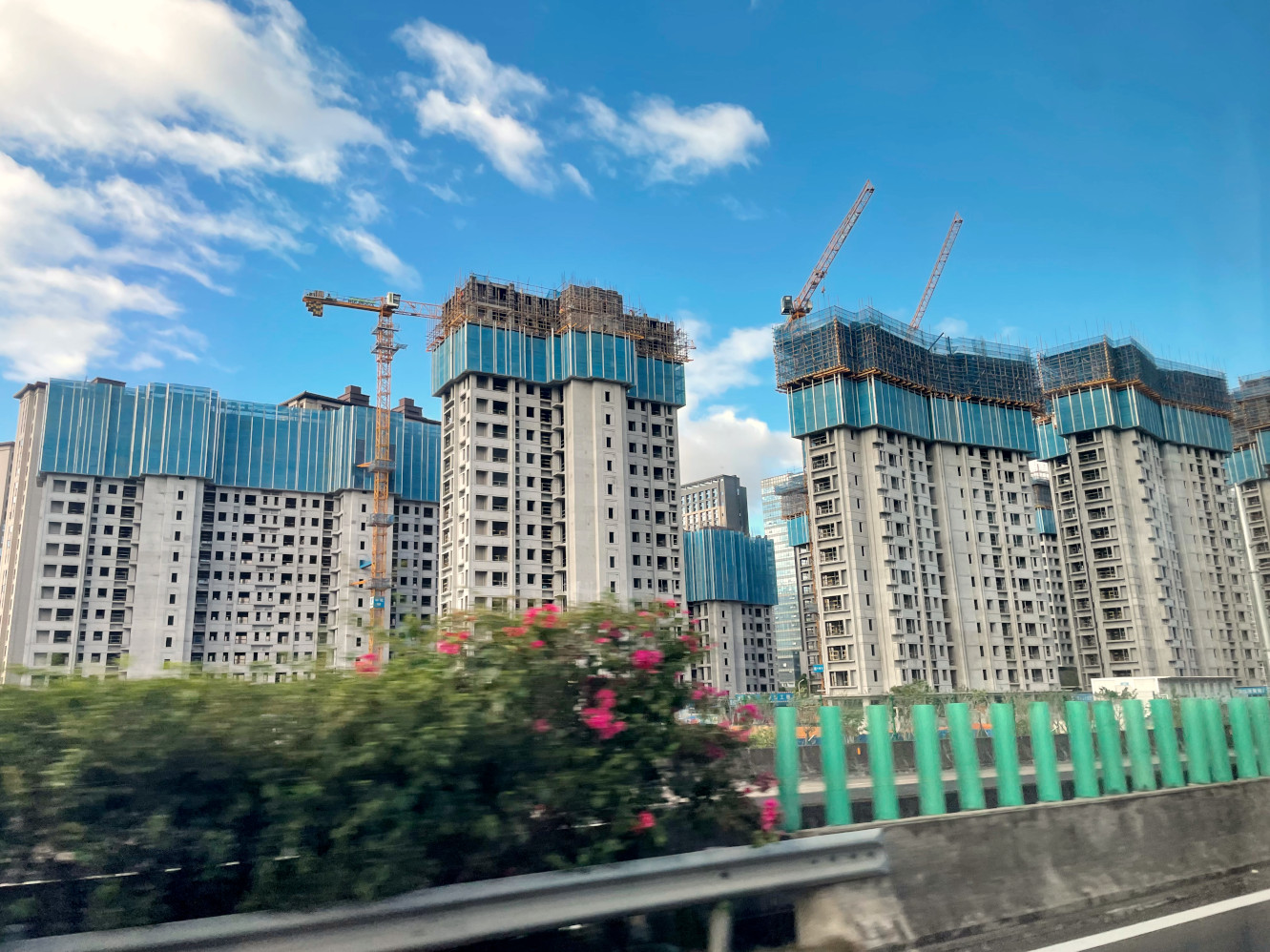
Our hotel for the week was in Longyan, a place that our hosts had initially described to us as a “village.” So when we’d first rolled into Longyan, I was not expecting a 2-million-inhabitant city filled with new copy-paste skyscrapers, many of which were still being built, or brand-new 8-lane highways. Our glittering high-rise hotel catered to the business class set, with sweeping views over the city and a penthouse breakfast bar and…bowls of sand next to the elevators? I wasn’t entirely sure what I was looking at until I saw a man butt his cigarette in the sand. The air around us smelled suspiciously fresh, and I marveled at the sophistication of whatever air filtration system the place was using. Since we spent most of our days in the surrounding mountains, we didn’t get to see much of Longyan itself. Midweek I’d finally gotten brave enough to take a 5-minute evening stroll across the river to a nearby kiosk. I equally wanted to test my independence, try some confusing local snacks, and check if I had the convoluted payment system figured out.1 Then on our final morning at the hotel, I decided to skip the Chinese breakfast (consisting mainly of wheat, meat, and savory vegetables – not my preferred breakfast foods) in favor of enjoying the early-November subtropical sun.
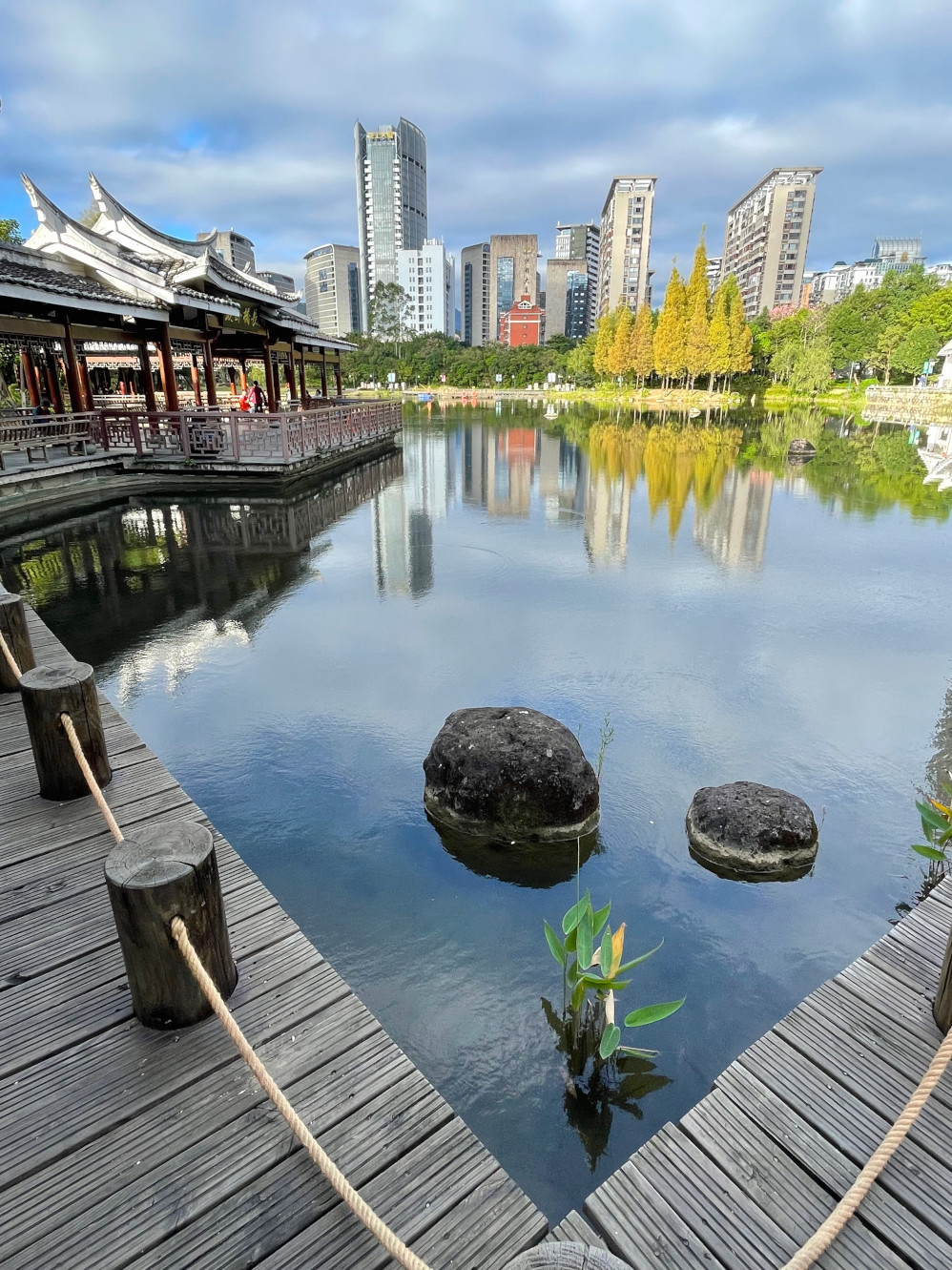
Instead of crossing the river, I descended into the riverside park. I was absolutely floored by what I found down there. Temples and pagodas had been tucked into hidden corners that could only be reached by hopping across a series of tiny islands, which were all covered in exotic flowering trees. I passed dozens of locals strolling and chatting and doing calisthenic routines to the tune of loud personal radios. Not a single other foreigner was around. I smiled charmingly at every person and surveillance camera I passed, and I predictably got a lot of curious stares. As I was just standing at the river’s edge, dumbfounded by this green space that had been hiding under my nose, a flash of blue caught my eye. I turned in time to watch a tiny Eurasian kingfisher dance along a boulder bridge. It’s a bird I have tattooed on my arm, but I’ve only ever seen them in person a handful of times, and never in the heart of a city. When I finally turned back to catch my ride to Xiamen, I spotted a woman tending a tidy vegetable garden in the fertile soils at the river’s edge.



My week in China was exhilerating, delicious, baffling (see below), and all-around worth it. The opportunity came to me at a crossroads of my professional life: just a month earlier, I’d submitted my written PhD thesis, and two weeks afterwards I would (successfully) defend it. A few weeks before I’d also started teaching a Master’s-level course, a prospect that had seemed impossible to me before it began. And yet, among all of this upheaval, my Chinese experience was a warm haven where I was welcomed by all these high-level scientists and local hosts who appreciated my work and treated me like a knowledgeable peer. Someday I would love to return to China if the stars align, and (global politics notwithstanding), I would heartily recommend it as a tourist destination.
And that’s the story of how my dubious decision to trust an internet stranger became one of my most uplifting experiences of 2024.


- Paying for stuff by card works like this: Using the wechat app (the Chinese equivalent of WhatsApp, which I could only use after my Chinese colleague in Germany “validated” my existence), I had to link my German bank account to this app, and that produced a bar code on my phone that the cashier had to scan! ↩︎
 Window Seat Odyssey
As always your writing, pictures, and humor make me feel like I am along for your adventures. Thanks Jill, for being one of our family member that makes me want to see more new places.
LikeLike