Date of visit: May 2022
You know what they say: once a teacher’s pet, always a suck-up to tour guides. So when our guide Arran* asked the group why there are unicorns plastered all over Edinburgh, I pounced on the chance to use a bit of my heretofore useless knowledge. “Aren’t unicorns the national…animal…of Scotland?” I replied, losing confidence halfway through the sentence when I realized it sounded like absolute bullshit. Had I been hoodwinked by an Internet lie again? Luckily not. Arran immediately yelled “Yes! They never said the animal had to be real. The English chose a lion, so the Scots were like ‘RIGHT. Stabby horse it is.’ Then the Welsh chose a dragon, and the Irish chose…a shamrock. Better luck next time, Ireland.”
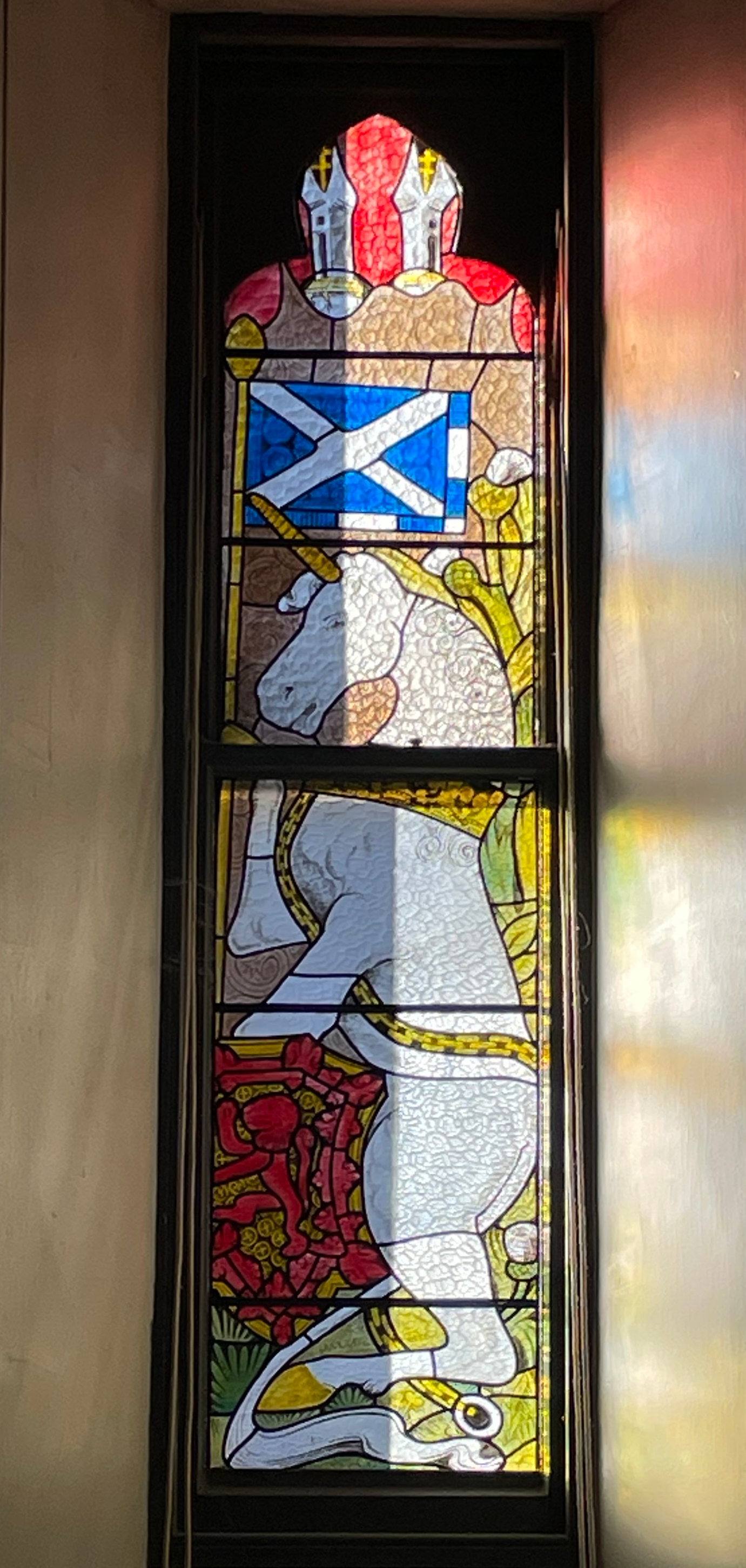

Stabby horses, always chained
This jokester was leading us on a Harry Potter-themed “free” tour through the twisted streets of Edinburgh, the city where JK Rowling lived while she wrote most of the books. It was the first of four tours I’d take during my first jaunt to Scotland, a country after which I’d wanderlusted for years. Once upon a time I rarely took guided tours since I tend to be both a cheapskate and a lone-wolf wanderer. Then I realized that the most foolproof way to get locals to hang out with me is to pay them to do so. Talk about subversion of the captive audience! I try to bring something to the party by engaging them in conversation, since most people treat tour guides as walking encyclopaedia rather than humans with their own fascinating stories. Put another way, everyone wants to be entertained, but who entertains the entertainer?
Haaave you met Jill?
I like wielding humor, but I’ve never been properly trained with it and tend to fling it around with very little regard for personal safety. Naturally I always expect it to get me into a bit of trouble, but I got more than I bargained for in Edinburgh. The Scots took everything I could think to serve and immediately hurled it back at me. Scottish humor is delightful: dry, smart, snarky, and delivered in a deceptively warm brogue so it feels like a hug even when they’re insulting you. But it’s also fast. I’m funny on paper and I mean that literally – my particular brand of humor is the kind that takes a few minutes (or weeks) to kick in, so it’s more apropos for the retrospective written word.
To be blunt: Scots are Olympiads of the verbal comeback, while I was just trying not to drown in the kiddie pool.
Scots are also a bit unhinged. I got my first inkling when Arran was excitedly discussing kelpies, which are bloodthirsty shapeshifters that take the form of beautiful horses on land. Should you be dumb enough to touch one, it’ll pull you deep into the nearest loch to drown and devour you, leaving only your liver behind. Legend has it the kelpies do this as a trophy to mark their kills. Arran has his own theory: “Not even a mythological beast can digest a Scotsman’s liver.” By the time he’d finished describing red caps with absolute relish, detailing how they dwell in ruined castles waiting for travelers whom they can squish to harvest blood to brighten the red of their caps, I was a little concerned for his well-being.
My concern only deepened when I met my second tour guide, a doe-eyed slip of a woman who led us deep into the underground tunnels of Mary King’s Close and described the grisly details of 17th century Scottish life in a sunshiny tone. You’d have thought she was talking about her recent holiday to Madeira instead of the lance-and-cauterize technique used to treat the bubonic plague or the knee-high human excrement that once covered the streets. “It wouldn’t only be your and your family’s leavings, but your friends’, and your neighbors’ too!” she said with an ear-to-ear grin.
…Okay.
Two mad Scots I could maybe understand, but then there was my third tour guide, a kindly family man named Brian who happily admitted that certain Gaelic ballads make him weepy. Surely, I thought, he won’t delight in creatures that eviscerate their prey or fingerpaint with human blood. It happened right as he drove us past a shimmering loch in the Highlands. Out came an explanation of kelpies that was nearly verbatim to Arran’s, except he finished the tale with a deep “mua-ha-ha.” Oh, Brian, no, there’s a child aboard this van! But at least I had my answer: the Scots are something else. And I’d die for them.



Edinburgh castle / The Hub, a Gothic former church now used as an event venue / Blooming gorse plants in Holyrood Park
Edinburgh is a visually stunning city that quickly climbed into my top three favorite European cities (arrivederci, Rome). However, as in literature, so in life: the physical setting is mainly a backdrop. It’s the culture and history, the humanity and humor, and the legends both urban and real that really give substance to a world, and it’s the storytellers among us who can see all these individual threads and tie them up into neat little packages. Authors are obvious examples, like Rowling, who gathered pieces from real people and folklore and literature, tossed in some embellishments of her own, and wove it all into a quilt that blanketed the world in magic. However, it was news to me that the Scots are born storytellers too. The Irish might be famous for their gift of gab, but I’d argue the Scots are better at conjuring cohesive narratives that actually lead you somewhere useful. Their spoken craft is particularly awe-inspiring to me because it’s a skill I haven’t even begun to master (see above re: “funny on paper.”) In short, I spent my time in Edinburgh absolutely enamored with the locals as they knit together a verbal Afghan of the city’s story, and I only had to pay a few of them for the honor along the way.



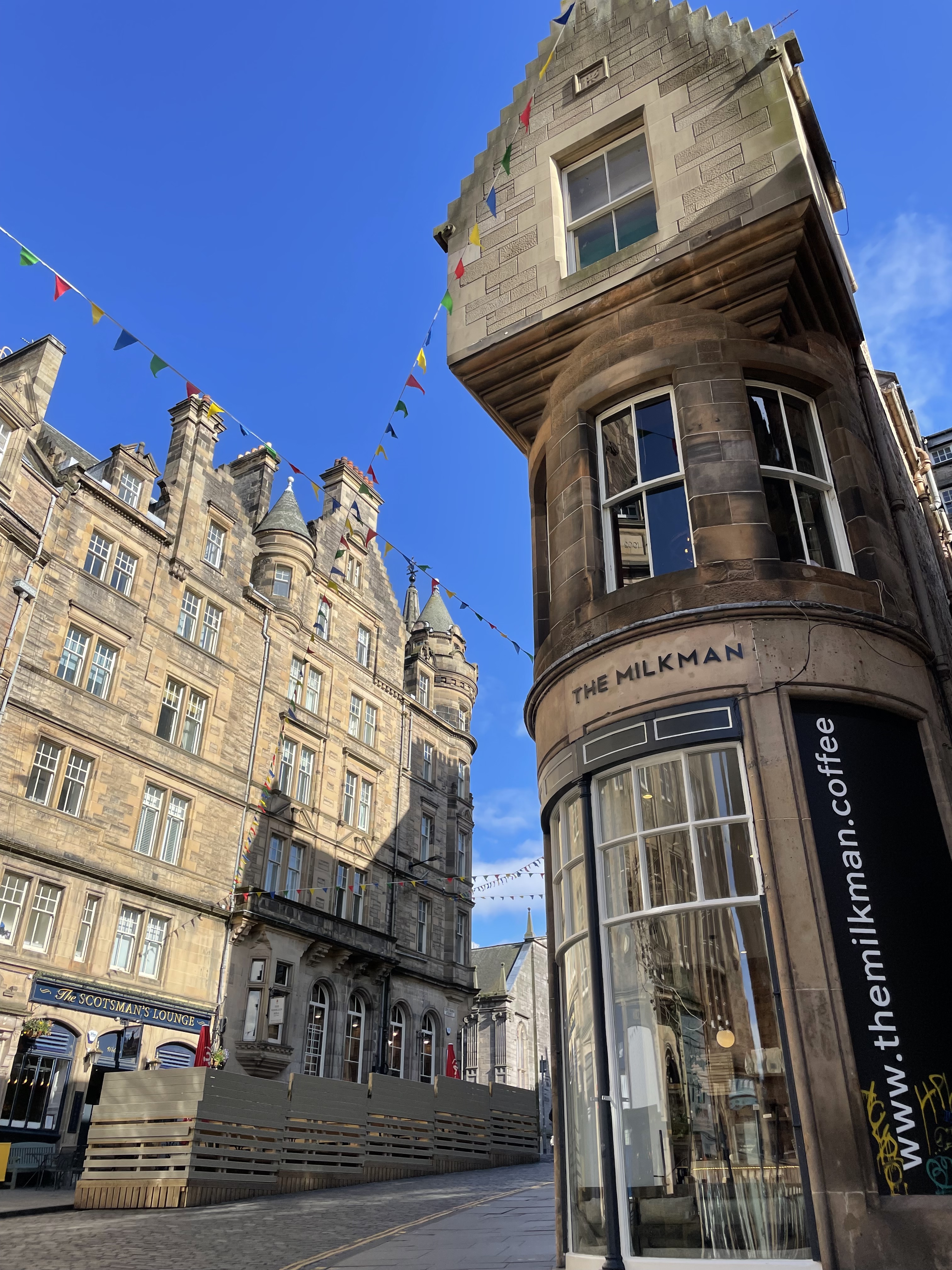
THE TOURS
I had so much to say about three of the tours that I broke them all into separate posts for you to digest at your leisure, unless you’re feeling up to a marathon read, in which case I recommend carbo-loading first (yes, whisky is carbs). The fourth tour at Mary King’s Close was also excellent but the guide was “in character” and the tour was tightly scripted, so there wasn’t much room for organic conversation between guests and guide. I’ll just recommend that you experience that one for yourself!
>> Harry Potter
>> West Highlands & The Trossachs
The end, or is it…?
Full disclosure: I got physically destroyed by Edinburgh. I finally caught Covid, I scarred the back of my hand while digging my phone out of the boulder crack, and I messed up my knee so badly while hiking up Arthur’s Seat that I would still struggle to climb stairs more than two months later. Yet I was mentally revitalized by Edinburgh, so I loved it. If cities count as soulmates, Edinburgh is one of the four I met in 2022. As I soaked in the city’s atmosphere and connected with its people I felt all the tension drain from my body. It was like after two years of pandemic stress (and hilariously despite catching the virus itself), I finally felt able to breathe. I suspect it came down to the friendliness, since I’m convinced that I conversed with more people during four days in Edinburgh than I had in almost 3 years in Marburg.
It was a rude awakening and I returned to Germany consumed by a burning question about whether I’d experienced a lightning-in-a-bottle scenario or if the city really is that spectacular. Within days of my return I’d finagled my way into a work trip to Edinburgh in September just so I could go back and check. Maybe it’ll end up only being a conservation-geneticist-work trip, but it could also be a working-on-my-life trip, or a combination thereof if I can manage to do some of that new-fangled “networking” with some local scientists. Regardless of what the city ends up being to me, Edinburgh showed me that being able to breathe and converse and connect are basic things I require for well-being.
If a life there could offer me more of that, what am I waiting for?
*Names changed to protect the guilty
** “Free” tours mean you’re free to choose how much to pay the guide, and it can be scaled to your budget and/or how much you thought the tour was worth. Actually paying nothing is terribly rude.
 Window Seat Odyssey
Leave a comment