Two weeks ago, I was unceremoniously thrown into a Toyota Hilux with two complete strangers. I would spend the next 8 days and 1600 kilometers with them, hiking 75 kilometers up and down largely pathless mountain faces near the Patagonian cities of Ushuaia, El Calafate, and El Chalten, conducting research for upwards of fourteen hours a day, come rain, sun, ferocious wind, and snow. We would be chilled to the bone, sunburnt, windburnt, and frost-nipped, even though it was the dead of summer. We would laugh together, even as we bled and suffered together. But I didn’t know that yet, on that first day in windswept Ushuaia.

This trip was the first of four intensive field campaigns I will make in 2019 to study the local adaptation of lenga across Argentinian Patagonia. In each of 20 sites, I lead a rotating crew of volunteers and paid field hands out into the woods, where we randomly choose 25 individual trees and spend 10-20 minutes getting to know each one intimately. We drill holes in them to obtain tree cores, cut off bits of its branches to gather DNA samples, measure, and mark it.


Field work always comes with a unique set of challenges, but no amount of old wives’ remedies could have fixed the neverending hiccups we had on this trip. We got stuck in the Chilean part of Tierra del Fuego for six hours because the wind was so ferocious that the car ferries crossing the channel to the mainland couldn’t run (although that same wind did help us cross the border with all of the plant samples that we had to illegally smuggle through Chile, since the border agents didn’t want to be outside either). One stand had so many rotten trunks that we burned out all our drill batteries and had to core the trees by hand. The glacial pace of bureaucracy had us burning precious daylight hours tracking down reticent government employees for signatures and permissions instead of actually collecting samples. And our plan for sampling locations, which was almost non-existant to begin with, went to hell from Day One.


Backing up to the beginning, Caro and I first flew from Bariloche to Ushuaia, a Tierra del Fuegan city (in)famous for its location at the southernmost tip of the world. We had hired a crew of local field hands, and in the first few days it took us a hot second to form a working bond with them while also trying to adhere to the project protocol, learn each other’s work patterns, and navigate around a strong language barrier that often left me in the pitch dark. It was also early in the field season, so our bodies and minds were still well-rested and soft – for the time being.


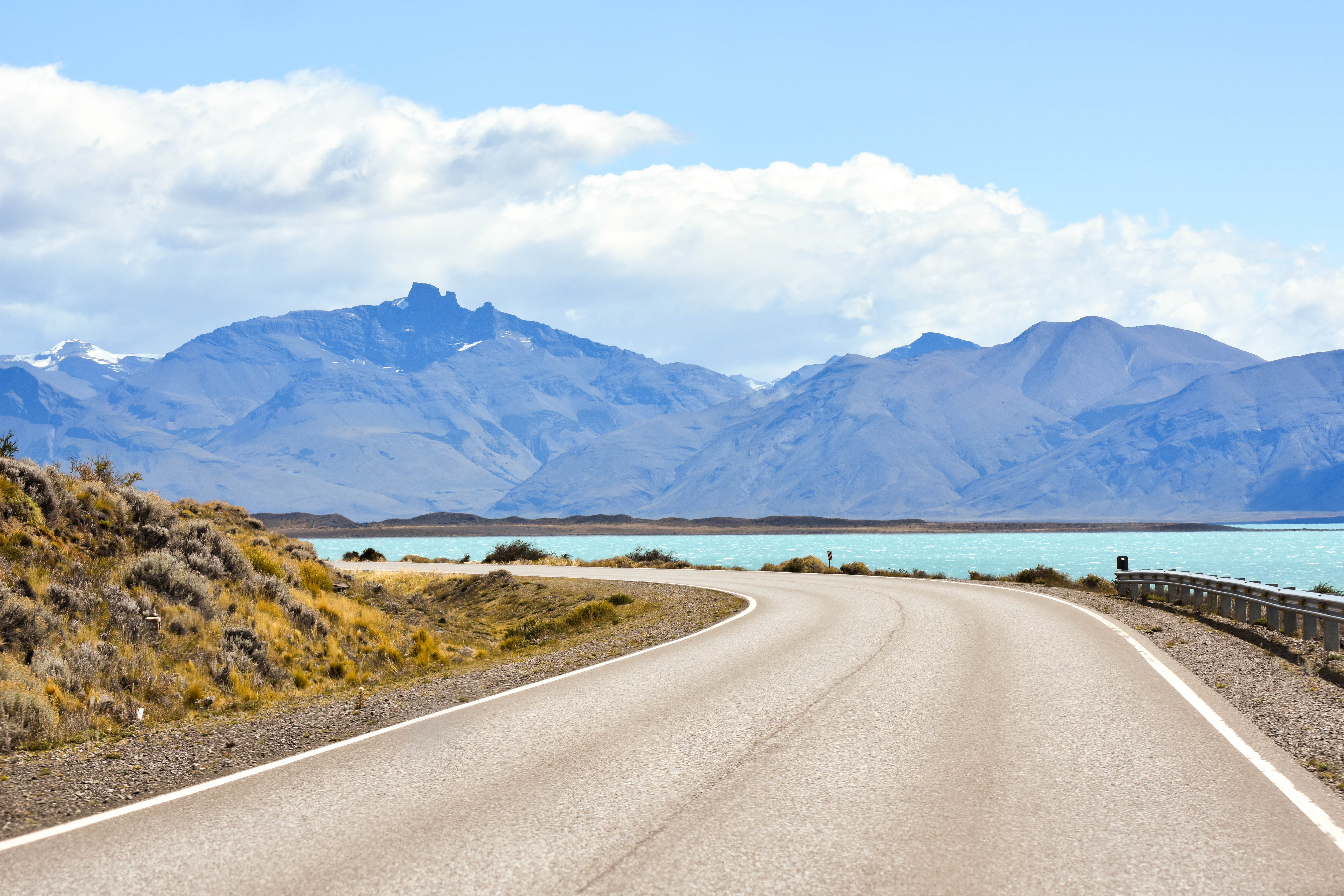
Once our two Ushuaian sites were complete, we ditched two of our field hands and headed north with the third, an Argentine named Cristian. Naturally, he was the one with the least English, but by the end of the trip that wouldn’t matter in the least. After dealing with the delayed car ferry, four border control offices, an unplanned night spent in Rio Gallegos, and twelve hours on a highway almost entirely barren of anything but guanacos, fences, and the rare passing car, we finally rambled into the town of El Calafate.
El Calafate, it should be noted, is named after a plant. It’s a beautiful native evergreen shrub that grows delicious blueberry-like fruits. It’s also a beautiful native evergreen shrub that’s covered in inch-long spines that will destory everything you love, and it’s also usually swarming in venomous caterpillars that, when touched, leave you with a burning and nauseating pain followed by strange polka-dot bruises. I tell you about this wonderful native plant because the route to our first field site was absolutely carpeted in caterpillar-infested calafate. After bleeding all over my field sheets from lacerations and temporarily losing the ability to write after being stung by a caterpillar, I opted to change the plant’s common name to “calaf*cker.”


Happily, though, our sampling site in El Calafate happened to be right next to the Perito Moreno glacier, one of the largest in the world. Moving from tree to tree, we would catch glimpses of turquoise water and the mind-boggling river of blinding white ice snaking off into the Andes. There were distant thunder-like cracks and booms of the glacier shifting in the distance, more a corporeal sensation than a sound, like I could feel the glacier breaking the Earth. The silence of the wilderness was periodically punctured by the shrill chatter of cachaña, brilliant green endemic parakeets, as they flew overhead. Spanglish jokes were traded fast and furious to take our minds off the mounting mental and physical fatigue.
We made the cardinal error of believing the second day in El Calafate would be easier than the first (a mistake we would somehow make twice more during the same trip!). A ridiculous elevational calculation error on the first day meant we had to make a grueling two-kilometer hike straight uphill from the lake in search of a more “stressed” population of trees. And boy did we find it – on a hilltop crawling with lycopodium, tiny pockets of subalpine wetland, and yes, more calafate, we sampled about half the population in the chilly sunshine before deciding to leave at a decent hour so we could run some errands in town (a decision we would pay for later).


The next day we had to hoof it to El Chalten, a village in which hikers swarmed the roads and outnumbered cars by at least 10:1. We paired with another vagabond Argentine field assistant named Alejandro and enjoyed a long sunny drive up a scenic valley to our sampling site near a tiny glacier, where it promptly began pissing rain and didn’t stop for the entire day. Everything became waterlogged – my data sheet turned to pulp, despite my high-tech Ziploc-bag rain cover (NASA-approved!). Caro opted to take off her sodden rain jacket and poke neck- and arm-holes into a huge black garbage bag instead, wearing it as a poncho. Such is the nature of us field-hardened scientists, though, that we found a way to joke about absolutely everything. Caro’s trash bag outfit we lovingly referred to as the “endangered forest whale” costume. Every time Cristian pulled a good tree core specimen out of the trunk, he would exclaim “It’s a boy! or “It’s a girl!” (although it’s stil unclear how exactly one determines the gender of a tree core).


By the time we high-tailed it out of the socked-in valley (with two equally sodden hitchhikers perched in the back of the truck), the road Cristian was navigating was more river than gravel. We made it back to El Chalten in one piece and did our best to dry out overnight. Against all odds we awoke to a chilly bluebird sky, and we were optimistic about the coming field day as we headed back up the same road, eyeing the imposing Fitz Roy in the distance. But, of course – OF COURSE – it had rained so much overnight that a bridge on the route to our field sites had been washed out.
We climbed out of the car, our breath turning to mist in the cold mountain air. We looked at the ruined bridge and then at each other, shrugged, and started walking down the road via a nearby pedestrian bridge. As the crow flew, we were only 8 kilometers from our intended site, but the road followed the river and was therefore anything but straight. We hiked two hours down the road to get as close to our intended sampling site as possible, did four hours of sampling under the golden eye of the sun, then hiked two hours back out again. Our mish-mashed team worked like we’d known each other for years, but the utter exhaustion I felt at the end of that day was beyond words. The last two kilometers back to the car became a mindless slog, with forward motion the only thing I could do or think about as I squinted into the brilliant sunshine and tried not to pass out.


As if all of this wasn’t enough, the delay in Chile meant that we had to tack on an additional field day beyond what we’d planned and drive back to El Calafate (sans Ale) to finish 15 trees from the second – higher – site. Rain doggedly followed us all the way from El Chalten, dampening our exhausted spirits, but the science had to be scienced and we didn’t have any choice but to dive back into the rain. We did our best to joke our way up the mountain, even as the chilling rain turned to chunky snowflakes. To the everlasting credit of our small but dediated crack team, we finished the site with frozen fingers and noses, did an embarassing dance in the privacy of the forest to celebrate our accomplishment, and barreled back down to the truck.

We piled into the Hilux and blasted the heater, then unanimously decided to sit in the truck just long enough to wolf down some sandwiches and warm our toes before subjecting ourselves to even more of each other’s company and the summertime winter. In truth it was the only option available to us; we couldn’t come all this way and not explore the glacier we’d been eyeing for three days from afar. We navigated the endless staircases and raised metal platforms, worming our way ever closer to the incomprehensible mass of ice. The scale was both more and less impressive up close, where we could see the 70-meter-tall wall, largely blinding white but streaked with the purest Caribbean aquamarine deep within. Five kilometers wide and over 14 long, it’s the third-largest reserve of (ice-locked) fresh water on Earth. I couldn’t feel anything but insignificance and wonder, standing next to it.

Eight days of sleep deprevation, screaming muscles, and mental fatigue crashed together and made our last few days a loopy mess. But despite the nonstop challenges, I like to think we had fun. There was always something about the work and the cameraderie that kept our spirits high. There were views through the lenga branches of turquoise lakes and ocean channels far below. There were the Spanglish jokes, which got worse as time wore on, our high humor exacerbated by sheer exhaustion, our emotions always just a little bit too close to the surface.
Friendship on the road is propelled by a different blend of fuel, borne of sheer necessity and proximity. It doesn’t matter whether you would be friends with these people in “real life.” It doesn’t matter if you have nothing in common, if you are on complete opposite ends of the human spectrum, or if you can’t really communicate thanks to a language barrier a mile high. You must find common ground. It’s sink or swim, and if you sink, you’ll surely drown (or more likely end up dead on the side of the highway).
For some reason, under normal circumstances, I hide the nuttier and less socially-acceptable parts of myself from new potential friends until the burgeoning relationship is fairly well-established, maybe to test the waters and see how much crazy the other person is prepared to deal with. On the road, though, there’s no time for such luxury. When you’re in constant proximity with complete strangers, especially when we’re working past the point of pure exhaustion every day and isolated from almost all other humans, every raw facet of your personality ends up on full display.
So, after eight days of intense emotional contact and utter dearth of personal space, after going deep and finding an unlikely camaraderie with these two weirdos, it all ended. The magic of road friendships comes from their ethereal nature, though it’s hard to know sometimes whether that magic is light or dark.
I have nothing now but the photos and the memories – and the lenga samples we collected together. The photos will not lose their color, but the memories will. Soon I will be left with only these words I write, my memories leeching until I’m left with only the vaguest mental echo of the grand ol’ time I spent rambling the barren steppes of southern Patagonia with two no-longer-strangers.
Oddly, of all of them, I think that is the worst challenge I have to face.
 Window Seat Odyssey
Hi Jill
Your blogs are inspiring! Please keep them coming! My friend David from Colorado, just got back in January from climbing Mt Aconcagua in Argentina.
Love You,
Unncle Joe
LikeLike