Surprise, surprise: I’ve been in Germany less than a week and have already taken a trip outside of Freiburg. Twas a well-deserved vacation, I believe, because there’s this tiny detail that no one tells you about moving overseas: it is exhausting. Finding edible foods in grocery stores, weathering DMV-esque government agencies, checking something off your to-do list only to add three more tasks in its place. Even the fun parts – walking around town trying to find some decent wieners (to eat, obviously) and learning how to speak your second language – leave you feeling like an enormous pile of reconstituted pudding at the end of the day.
The Sprachlehrinstitut (SLI), which runs the pre-semester language course I’m taking, is pretty great about setting up all sorts of excursions for its multitude of international students. One such event was a trip to the Bodensee, which is a small lake in southern Germany.
Now, I’m from Michigan, which four out of five Great Lakes prefer. It’s pretty stinkin’ hard to beat views and kayaking memories of Lake Superior. But although the Bodensee is dwarfed by Mother Superior, it has one fascinating and unique attribute:
It is bordered by four countries. F.O.U.R. Germany, Austria, Switzerland, and Liechtenstein. While we only really visited Germany, the knowledge that I was a stone’s throw from four distinct countries was astounding.
After boarding an unnecessarily large bus and driving through the requisite fog-cloaked south German valleys and switchbacks, we disembarked at a reconstructed village of lake-dwellers who lived in the Bodensee during the Bronze and Stone Age. For those of you who are like me and are historically challenged, that’s roughly 4000-850 B.C. These intrepid morons built stilt houses in the shallow waters of the Bodensee, for reasons still unknown to science.


These lake-dwellers eked out a precarious existence, living on the ever-fluctuating edge of the snow-fed Rhine river, but they did fairly well for themselves. Some settlements had up to 80 individual houses, and richer families traded amber and glass bead “pearls” that are still being found in lake bed sediments by divers and archaeologists today.


Moss growing on a thatched roof
We boarded a ferry – bus and all – and set sail into the high seas for a blustery 15-minute journey across the lake to Konstanz, Germany. A city that straddles the border of Germany and Switzerland, it survived WWII entirely intact by ingeniously leaving its lights on at night, thereby fooling Allied bombers into thinking it was part of neutral Switzerland (see, Mom, I am learning stuff).
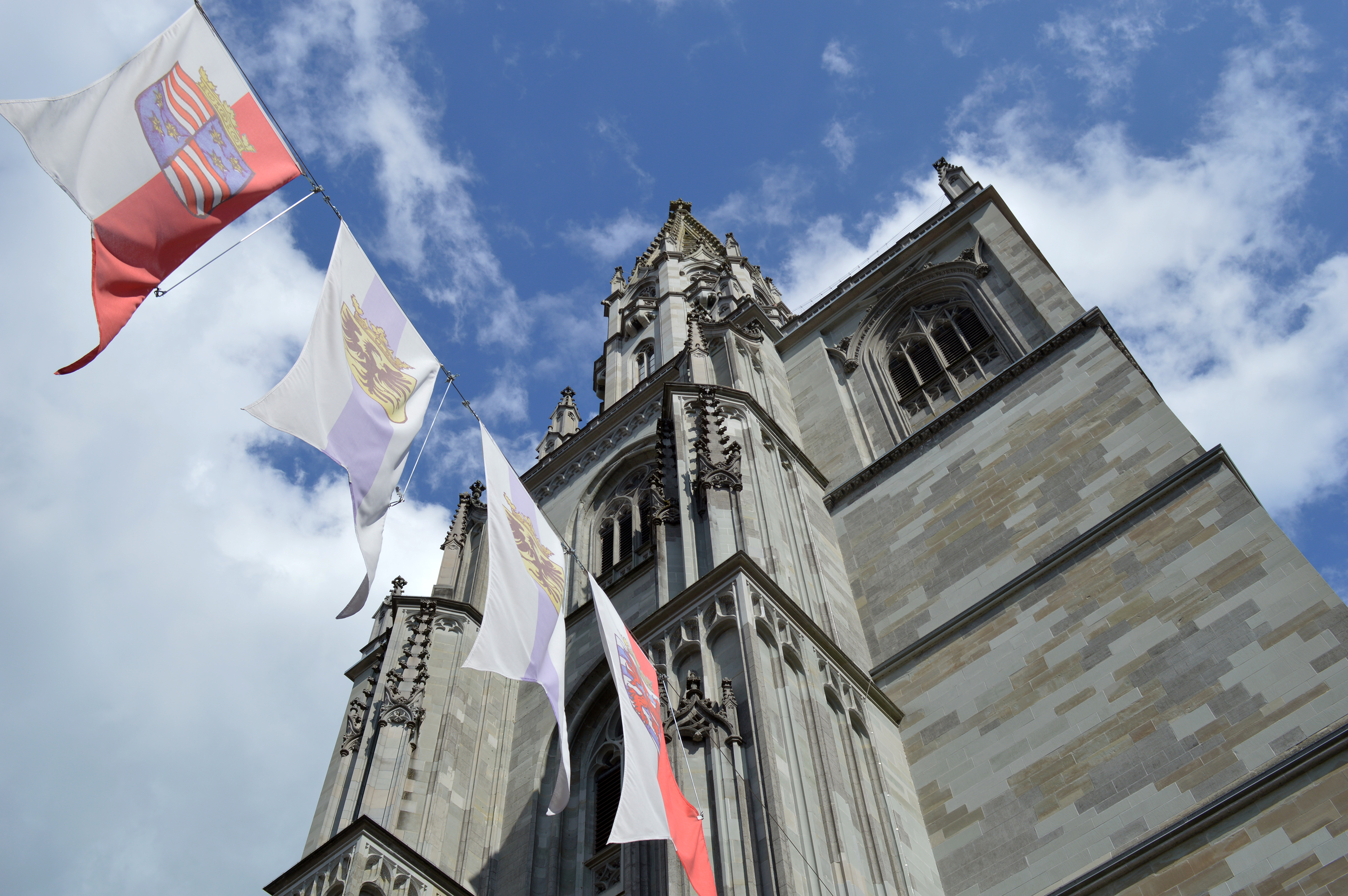 The international cathedral of Konstanz

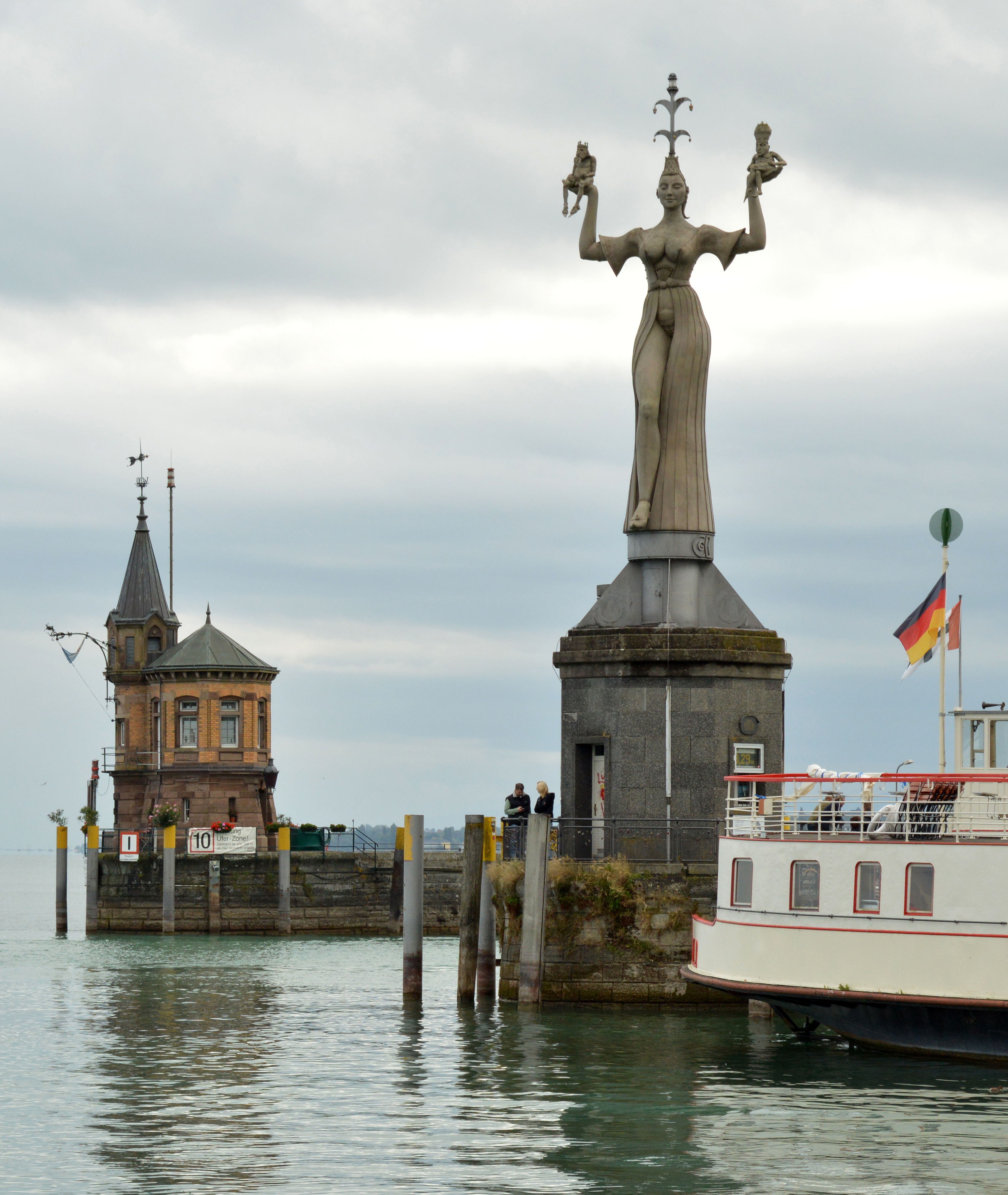
Left: The cathedral tower and its little sister; Right: the Party Girl guarding the entrance to the Konstanz harbor
Konstanz is a wonderful fusion of past, present, and more cultures than you can shake a stick at. Initially it was a Roman city, with a palace where the cathedral now stands. Today it’s a multicultural hub, buzzing with music and antique car shows and sailboaters even on a Sunday, a day usually reserved by Germans for aggressive relaxation (apparently, although this is still hear-say at this point, they frown upon even doing laundry or sweeping floors on Sundays). We toured the city with the help of a fantastic Dutch guide, winding through the convoluted streets and trying to remember to listen while absorbing the sights.


A wonderful place for lunch Ivy swallowing a wall whole Looking down from the cathedral
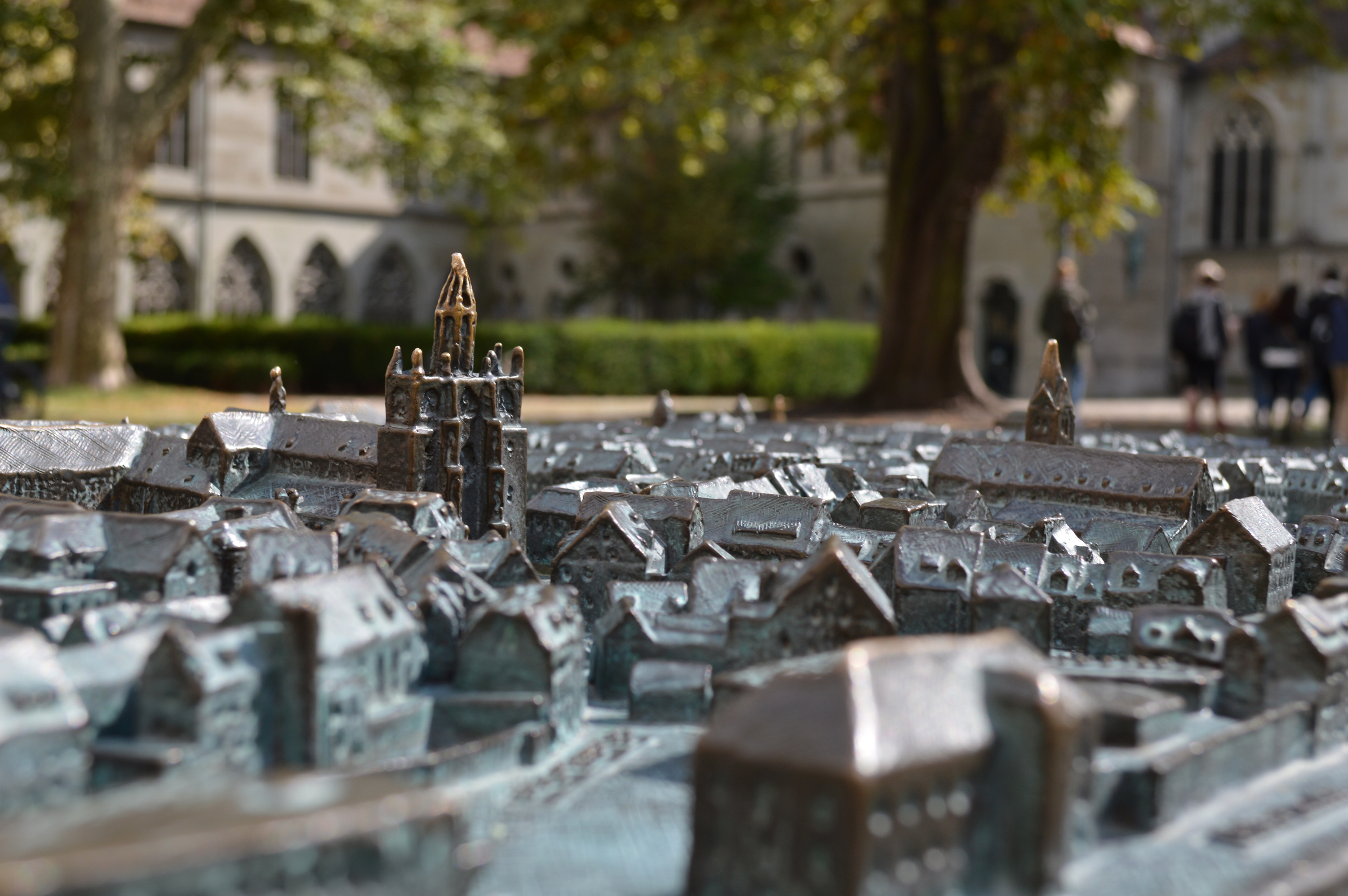
A metal miniature of the cathedral in the background
We were turned loose in the city for an hour, far too short a time for any real exploration, but long enough to get a tantalizing taste. I’m never one to turn down a great view, so I retraced our steps and climbed the cathedral’s spire. The solid wood staircase, so old and set in its ways that it barely even groaned as I walked towards the heavens, tightened more and more until I was on a stone spiral staircase just barely wide enough to allow passage for one person and to give me a twinge of claustrophobia for the first time in my life. Following an old woman who stopped to rest and curse every sixth step or so and a young boy inexplicably clutching a skateboard 200 feet above the streets, we stepped out into the cool atrium and beheld distorted views through ancient glass in all directions. The Bodensee bled into one horizon, the Rhine arced out towards another, and Switzerland lay so close that I swear I could smell the hot chocolate as I stepped out onto one of the balconies. Soon, I whispered to Switzerland, I will lay foot upon your beautiful land.
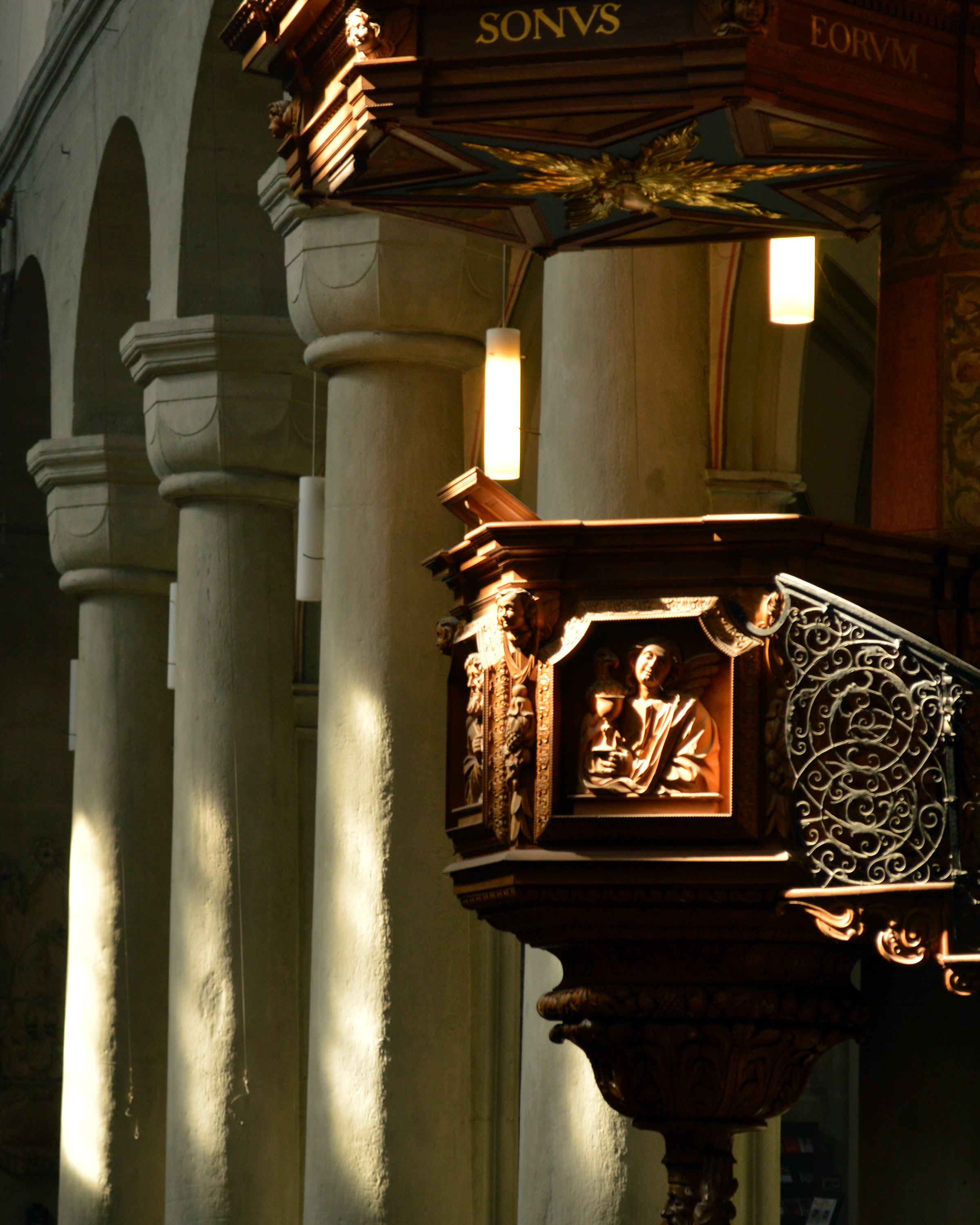
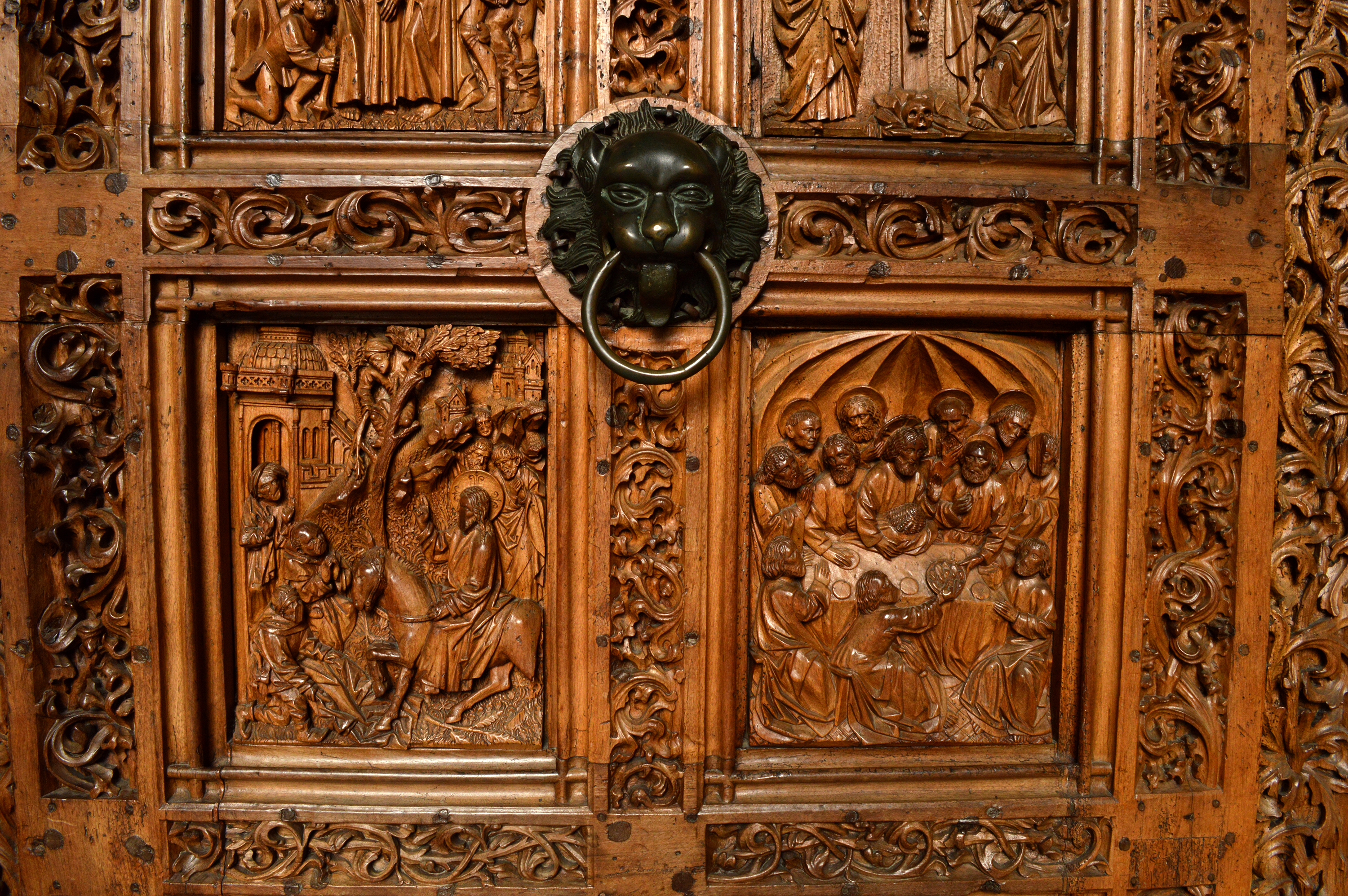
Views of the cathedral inside and out (carvings on one of the doors)
(Saving the best for last):

Bodensee from above
 Window Seat Odyssey
Jill ….. I find your writing to be exceptional, fascinating and interesting. Am looking forward to your writing and photos …… edd
LikeLike