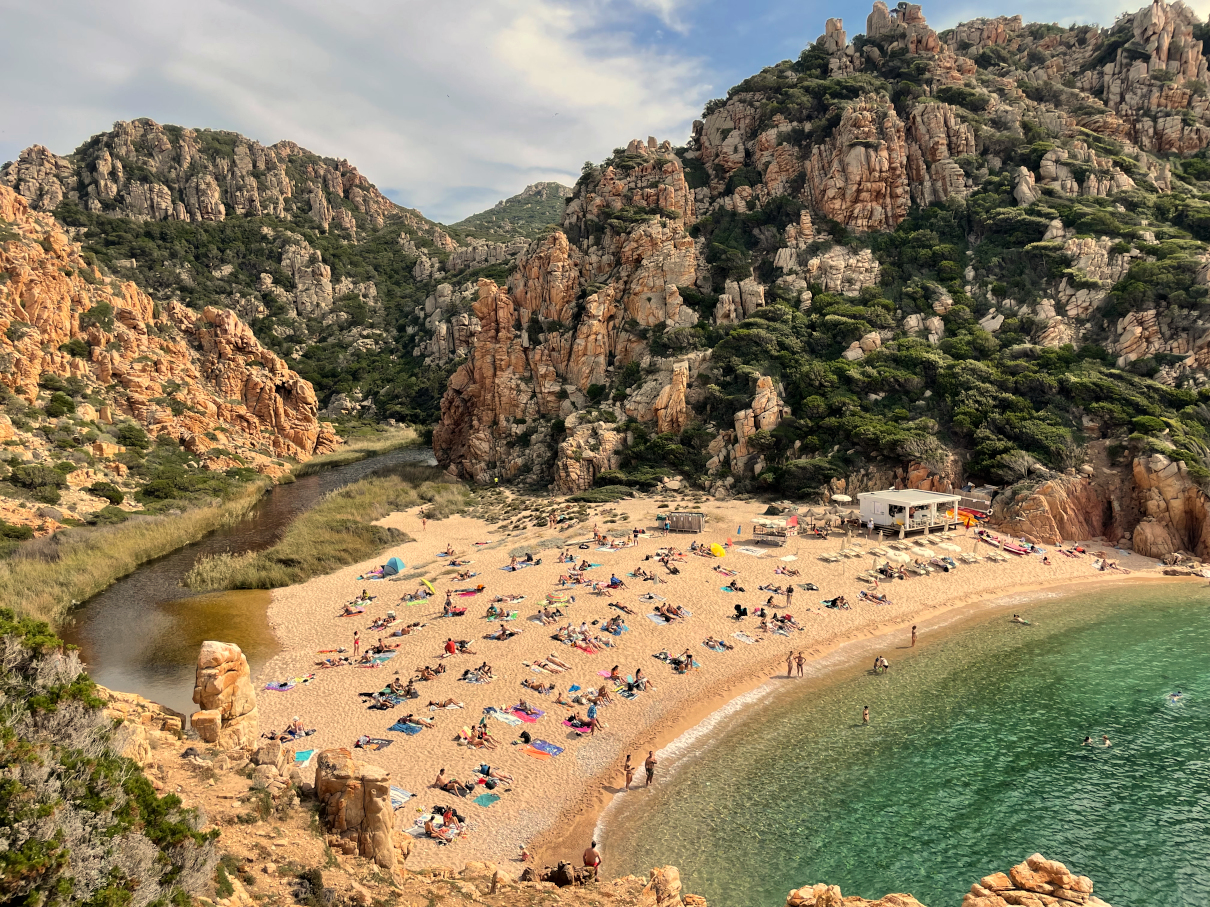
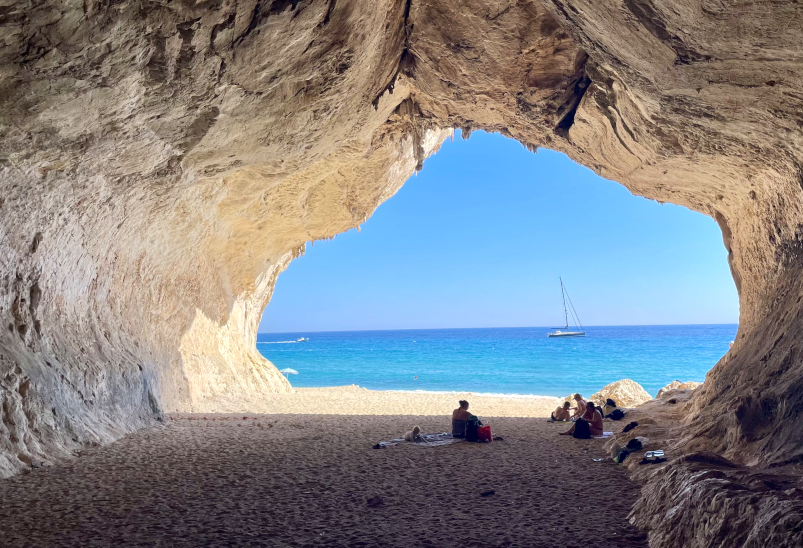
Sardinia: Spiaggia di Cala li Cossi
As a child of the space age, I’m a big fan of flight. I know we’ve all grown used to the idea that you can wake up in Germany and go to sleep in Brazil on the same date, but if you really think about that, it’s objectively crazy. Flight is the closest thing we have to teleportation.
As a teenager of the oughts, I’m also a big fan of travel in general, which you can probably tell from this travel-themed blog. I owe particular debts of gratitude for my love of travel to the Travel Channel (at least back when it still showed actual travel shows) and my older cousin, who paved the way towards studying abroad in Australia (and now runs her own travel company).
However, as an adult of the climate crisis age who works in the natural sciences, I’m not a big fan of my outsized carbon footprint. I used to consider every flight taken as some kind of personal victory. Now each takeoff only rewards me with a pang of guilt as I envision Nemo and friends (and humanity, I guess) slowly cooking to death. The guilt is particularly strong when I fly short-haul distances that could be done with overland public transport, especially now that I live in a country that mandates 30 vacation days per year and borders 9 different countries. Freiburg is also at the heart of Europe, equidistant to Sweden, Scotland, Portugal, and Greece, and they can all be reached overland if you’re willing to invest a bit more money and time.
Enter my lower-middle-aged era of “slow travel.” One of the EU’s crowning socialist achievements is its interconnected public transport network that can take you nearly anywhere you want to go within the bloc. Trains, trams, metros, and buses are generally well-funded and -regarded across the continent, and that last bit is critical – since the general public actually uses the services, they’re maintained. Water is no barrier either. Where they can build a bridge or tunnel, they do, like the Øresund bridge between Denmark and Sweden, or the Chunnel between France and Britain. For everything else, there are ferries. Perpetual ferries can take you across Dutch shipping canals in less than a minute, even for free if you’re on foot or bicycle. Long-haul sleeper ferries can take you from Germany to Finland, or along the entire coast of Norway, or even from Denmark to Iceland with a stopover at the gorgeous Faroe Islands. Sleeper ferry vessels are more utilitarian than their swankier cousins, the cruise liners, but they still have on-board cafes, shops, restaurants, and cheap private sleeper cabins with en-suite bathrooms, which makes them a heck of a lot more comfortable than the ~0.5 square meters of space that comes with your standard 2020s Economy plane seat.
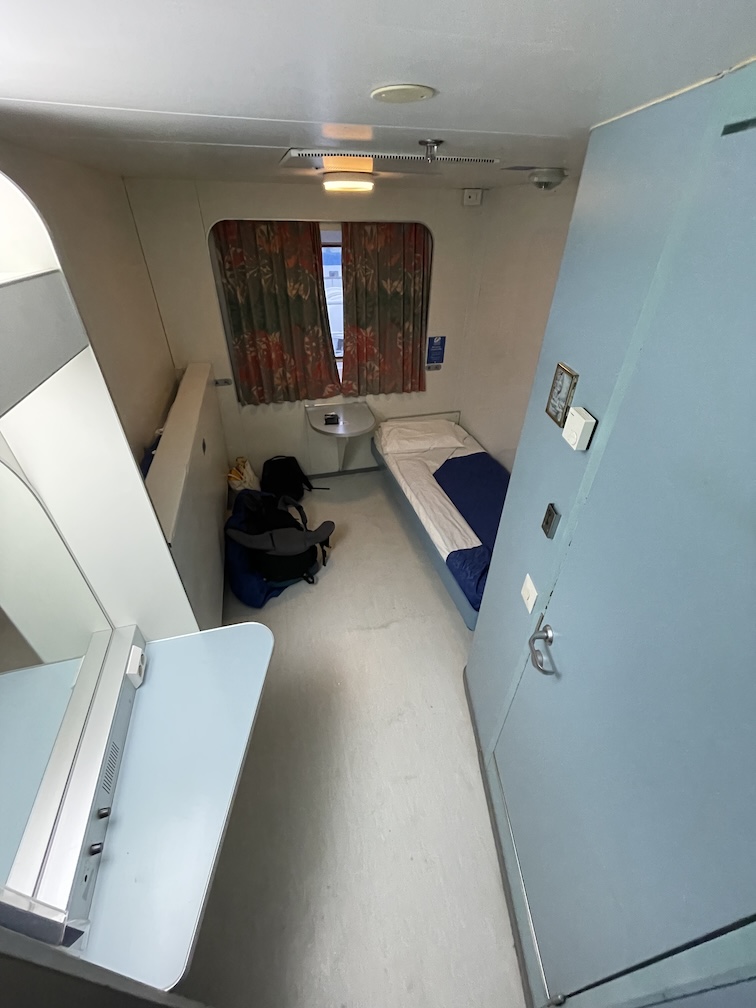
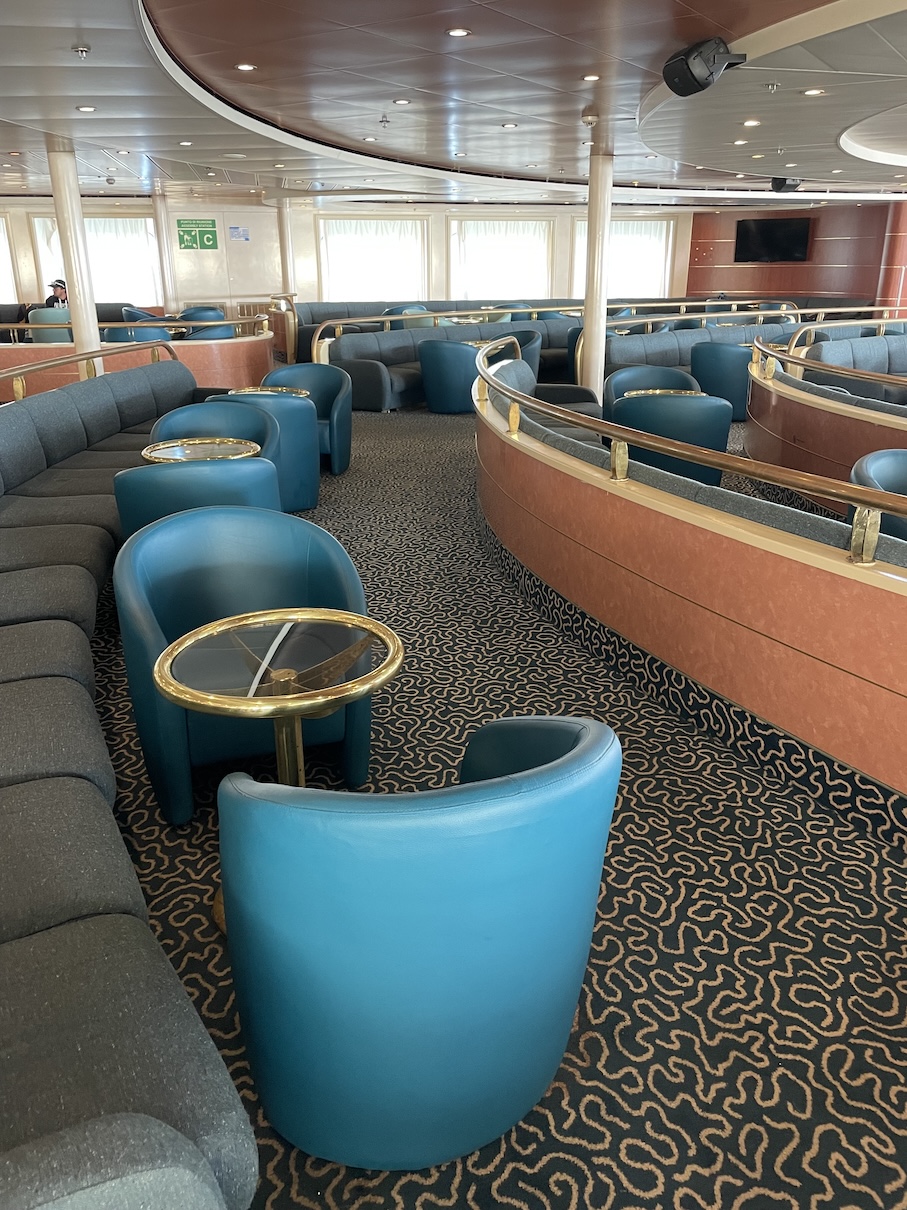
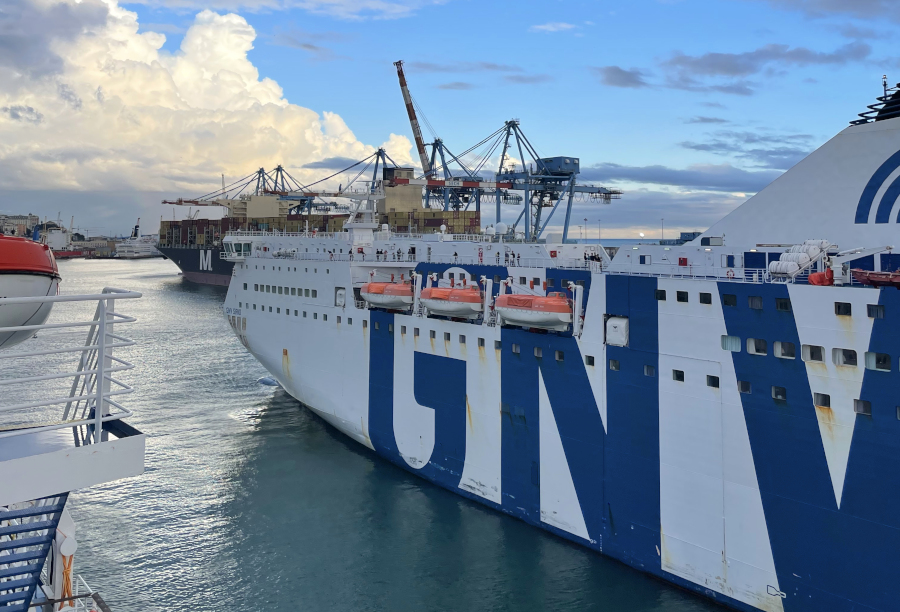
Luxurious? No. 60 bucks for both transport and lodging? Yes.
Back in 2024, I started testing the limits of what I thought was possible to reach with public transport. In June, I took a long-haul train journey to a Forest Science conference in Stockholm, Sweden, a nonstop three-stage train journey through Copenhagen and Hamburg that took me a full 24 hours. For my birthday in September, and also to celebrate the long-anticipated completion of my PhD dissertation, I wanted to go even further. To reach the end of the tracks and then keep going. That idea coincided with another quest I’ve been on for years: seeking the equivalent of the Caribbean in Europe. I’ve only been to the actual Caribbean twice, but I miss those unique laid-back beachy vibes. That water so turquoise it glows. The coral reefs bursting with life. During my European island quest, I’ve sampled a smorgasbord of wonderful places: Portugal’s Madeira, Greece’s Santorini and Naxos, Croatia’s archipelago, and Spain’s Gran Canaria. All of them were utterly fantastic islands in their own right…and all utterly unlike the Caribbean. The cultural vibes are always distinctly European. The sparkling Mediterranean Sea tends towards indigo rather than turquoise. And while the sea life was astonishing, the reefs are rock. And yet. I’d heard whispers. Whispers of another European island paradise: Sardinia.
I could have just taken a 2-hour flight from Basel to Sardinia. Instead, I took an 8-hour train journey through the Swiss Alps to the Italian coastal city of Genoa, spent a leisurely weekend there, and then took an overnight sleeper ferry to Sardinia. Once on the island I rented a car, since the island is one of the largest in Europe and I wanted to tent-camp at some fringe locations, but I still counted it as a win since it’s overland and I would have done it anyways even if I’d flown.
Slow travel does have its tradeoffs. Ever the optimist (haha), I’ll start with the upsides. Not dealing with airports is wonderful, first of all. I love the ability to sprawl out and lounge on trains and ferries, to get up whenever I want to and grab a coffee, or take a stroll, or go out and watch seagulls and feel the Mediterranean air on my skin rather than being miles above its surface. The window-seat views are way better too. Zoning out and watching the Swiss and Italian countryside scroll by felt a vacation in itself. However, there are definite downsides to slow travel too: it’s often slower, trickier, and more expensive. A 5-hour flight journey (including travel to the airport and waiting around) was replaced by a 20-hour journey, not including my voluntary stopover in Genoa. My train journey involved two connections, and I almost missed both connections because of delays on the inbound trains. A round-trip flight with a checked bag would have been 200 Euro; my round-trip train (2nd class) and ferry (with private sleeper cabin on GNV) was closer to 400 Euro (another option is to just pay the cheap pedestrian fare and then sleep on a couch in a common area). Somehow I’m always shocked by the price disparity between public transport and planes, until I remember lobbies and subsidies exist. In any case, I reached my destination at 7 a.m. well-rested and already in relaxation mode.
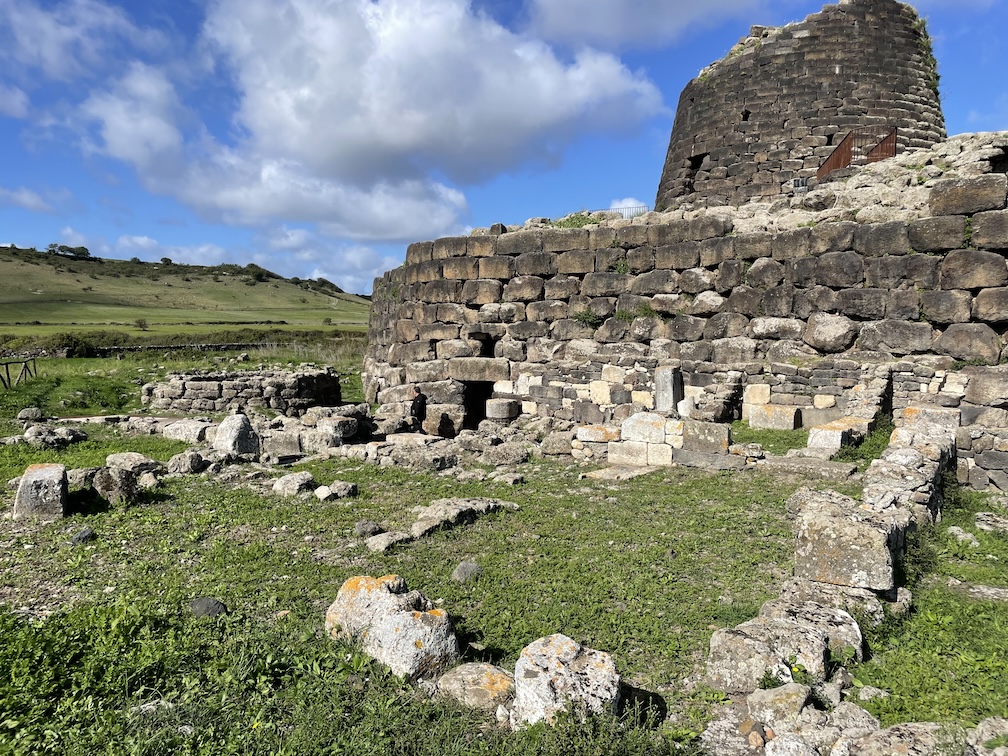
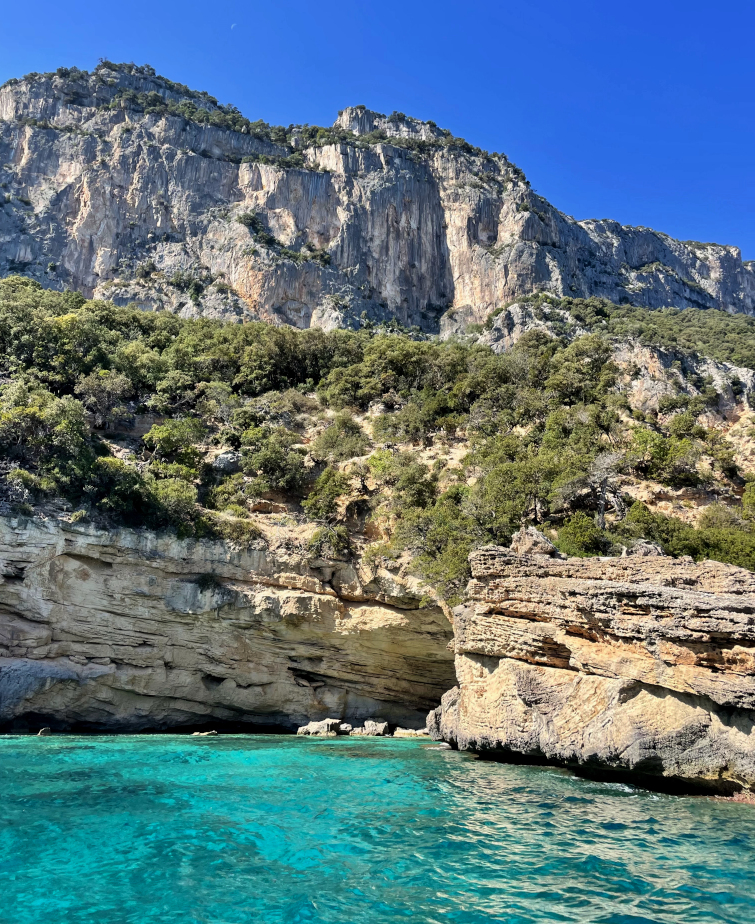
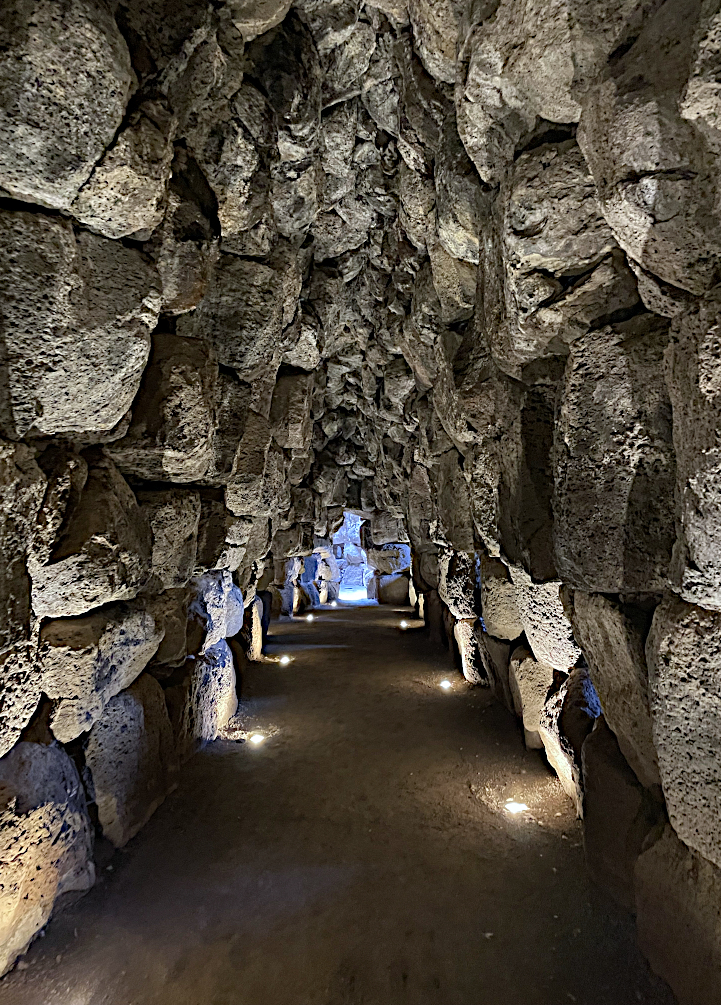
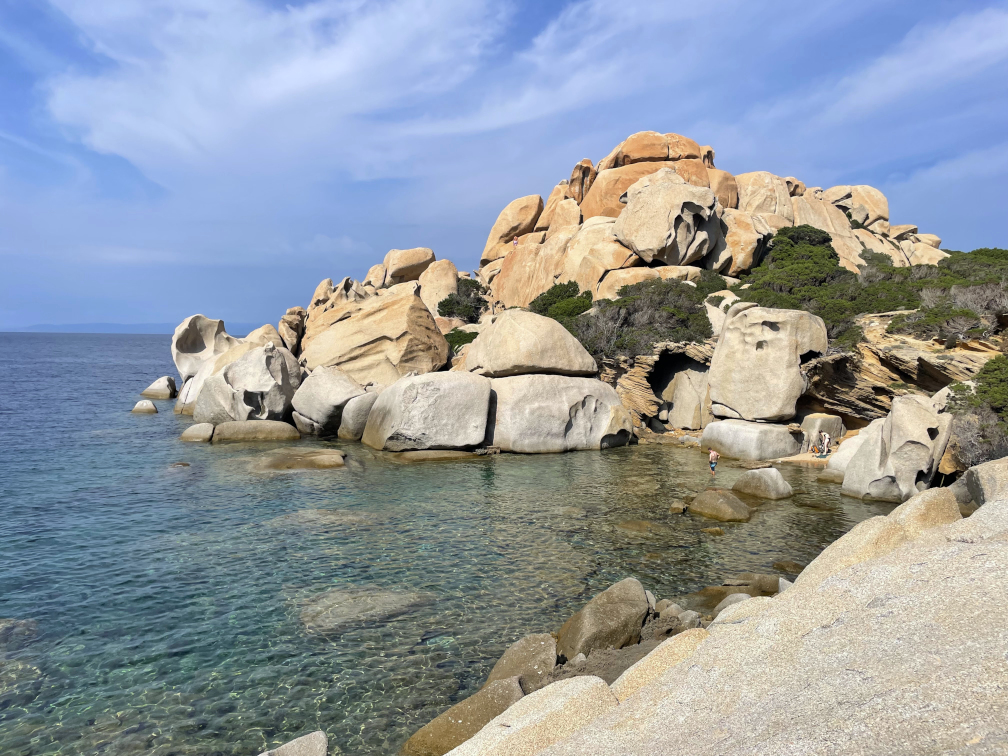
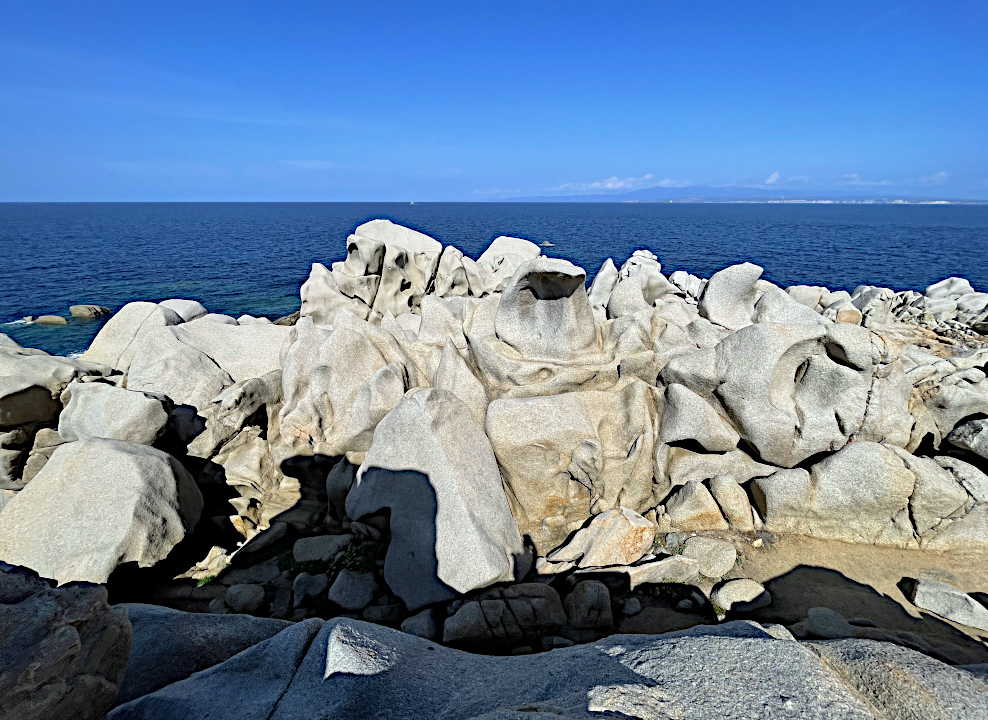
And Sardinia itself was absolutely unlike any other place I’ve seen in Europe. Geologically, biologically, gastronomically, and culturally, it’s a staggering place. Along a single 20-kilometer stretch of coast, I visited a red-rock seaside valley beach, a presque-isle with moonscape boulders, and a secluded beach cove where I laid out my towel inside a bright sandstone cave with just enough room for one. Its roads are the narrow and winding two-lane types, max speed 60 km. On my actual birthday I treated myself to a small-boat tour of the Golfo di Orosei, a wild stretch of cliffs and beaches that can only be reached by boat (or on foot in some places, if you’re dedicated enough). I stuffed myself with Italian island delights, a gluten-free grilled octopus sandwich chief among them. Tortoises, lizards, endless fish, and southern European birds crossed my path, although I was also unfortunate enough to find a bunch of lightly-stinging jellyfish. Sardinia is also one of the oldest known settled places in all of Europe. All over the island stand mysterious stone structures called nuraghi, Stonehenge-like castles that were built without bonding technology during the Bronze Age and for unknown purposes. I do love a good anthropologic mystery. Sardinia is even one of Earth’s five “blue zones,” with one of the world’s highest proportions of healthy centarians. And all of this, so relatively close to Freiburg.
Now for the big question: did I finally find the Caribbean of Europe? No. Would I still recommend you visit, and do it overland if possible? Absolutely:
 Window Seat Odyssey
Leave a comment