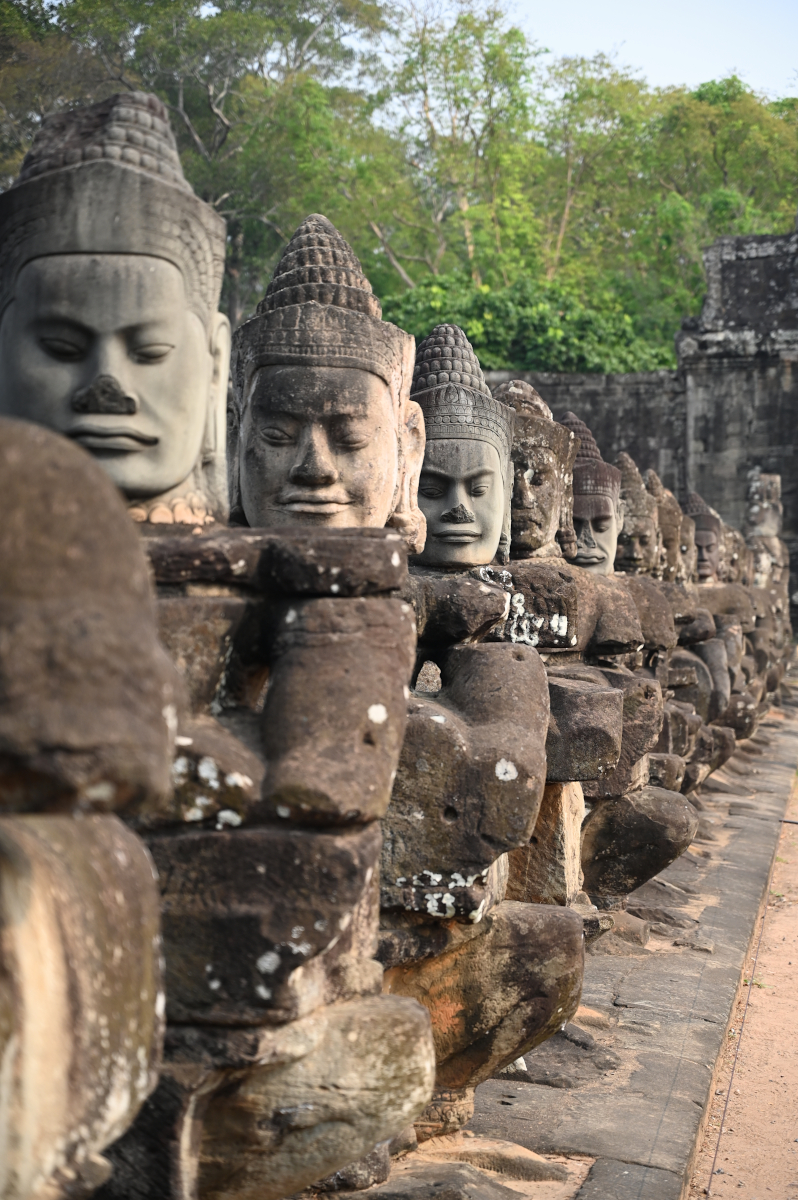
I’d sprawled across the back seat of the tuk-tuk, starfishing my body to get as much fresh air as I could. It was an easy task. My private hired tuk-tuk driver for the day, Mr. Mom, was careening down the main avenue of Cambodia’s Angkor city at a steady 30 miles an hour. An emerald jungle world sprawled out from the road’s shoulder, inhabited only by screaming monkeys and the odd hammock holding up a local on break. Finally the jungle’s green curtains parted. We sailed across an 800-year-old stone bridge, flanked on both sides by monstrous humanoid carvings. At the end stood Tonle Om gate, its three pinnacles carved with calm faces that watched over our crossing. We were almost completely across before I realized the laser-straight river below us was actually one edge of a square moat that was dug out by hand eight centuries ago. Mr. Mom barely slowed as we shot through the gate, which was fortuitously wide enough to accommodate 21st century traffic. Our bearing stayed True North and we raced for the heart of the moat’s protected island: Bayon Temple. The Ancient World skyscraper filled the sky before us, stretching 140 feet into the air. At first glance, its pinnacles just look like rough-hewn stones, but a closer look confirms that those stones have eyes: over 200 enormous faces bedeck Bayon Temple. The temple wasn’t on the day’s agenda, though, so Mr. Mom took a sharp right and we banked around a gigantic roundabout that cradles the temple. Our panoramic twirl around Bayon, watched over by all those sleeping stone faces, left me a little bit starstruck.


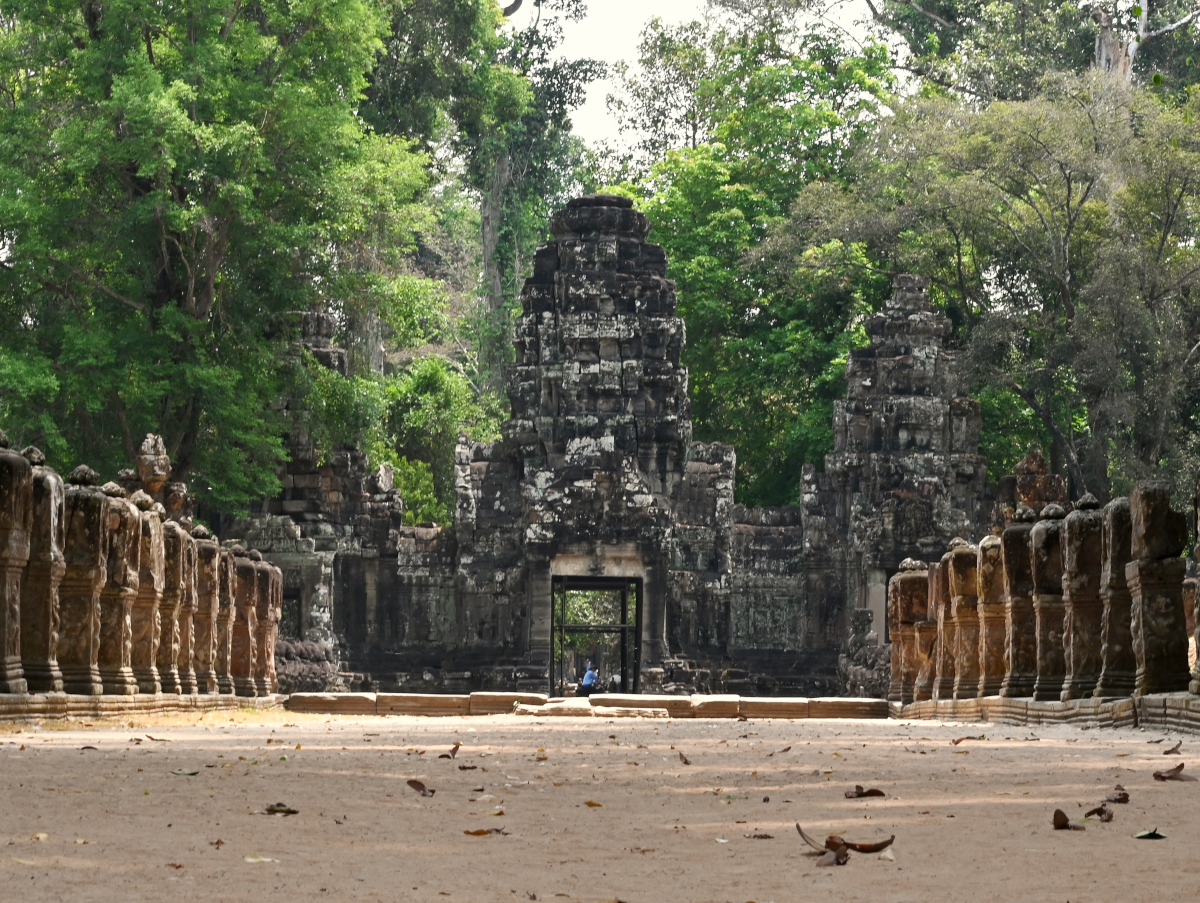
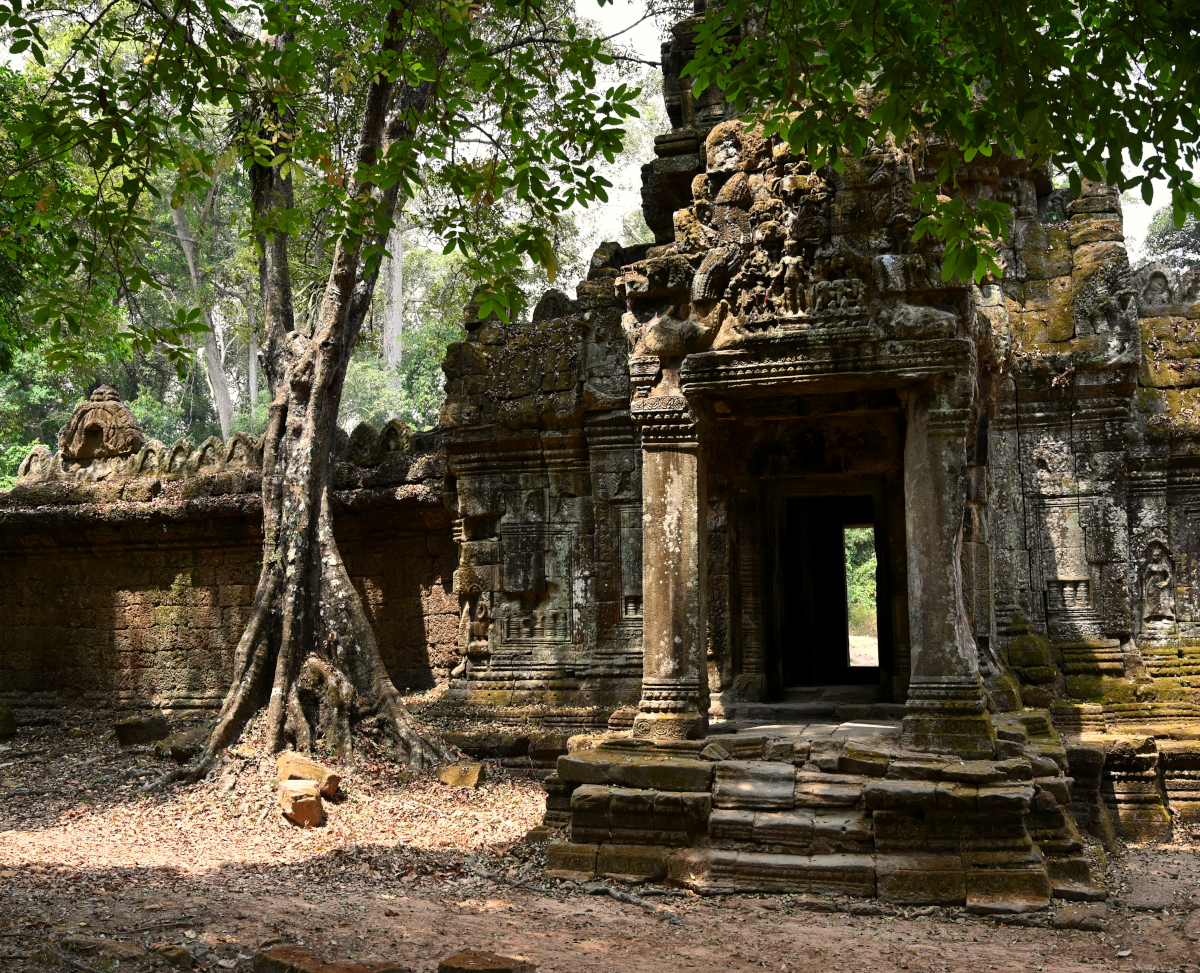
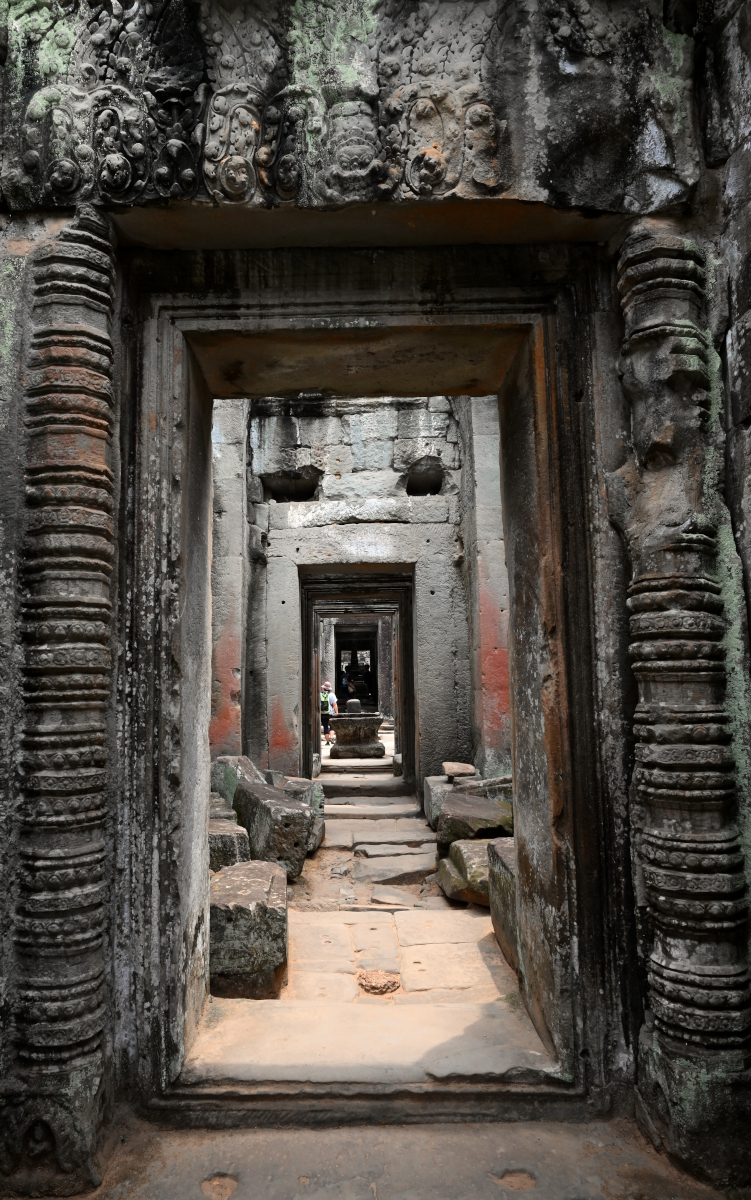
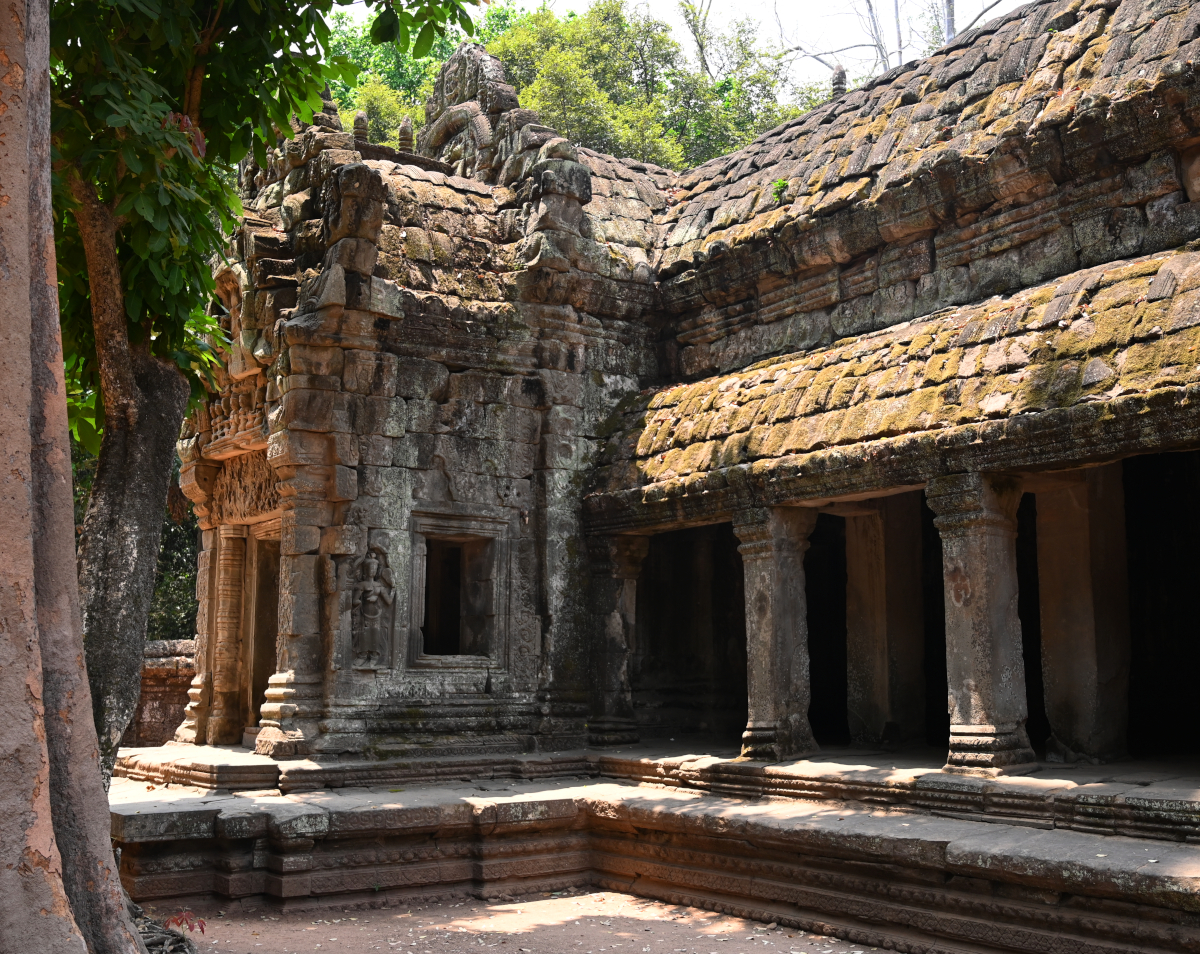
My first planned stop of the day was the lesser-visited Preah Khan temple, and I could tell from my first step through its silent gate that the day would be something to write home about. Next to me, a tree trunk was patiently gnawing at the temple wall. Whoops and whistles filled the sweltering morning air; the calls of unknown creatures. A series of carved archways and tunnels led away towards places unknown, and I followed my whims through a hatchwork of corridors. Worn stone altars the size of refrigerators lay upon the floor. Bas-relief carvings of humans and beasts dwelled around every corner and inside every cranny I could fit my head into. Despite the black-and-mint patina of oxidation and lichen that clung to the aged stone, some carvings looked like they’d just been finished the day before. Restoration of Angkor temples has been ongoing for a few decades, and the restoration crews have done a marvelous job of glowing up the temples without completely defanging the jungle. Packed earth or cropped lawns surrounded the buildings, while the bulk of wild forest hovered at the temples’ edges, like it’s just waiting for us to forget about the city. Yet a few towering trees were left inside the grounds, to say nothing of the roots that have wrapped themselves through the bricks of the temples. The complex felt like a gigantic playground where almost nothing was off-limits for scrambling. I exited a corridor through a low window, hopped across an ersatz bridge made of fallen bricks, and entered an empty hidden courtyard beyond. I could have spent days in Preah Khan alone, but I could feel the other temples somewhere out there in the jungle, waiting for me. I could also feel the tropical sun beating against my neck as it climbed high into the sky, reminding me that time existed. On my way out of the beautiful labyrinth, I passed only a handful of other humans who were roaming the bricks with me — a far cry from the swarms of tourists I’d encountered the day before, when I’d toured Angkor’s more famous temples.



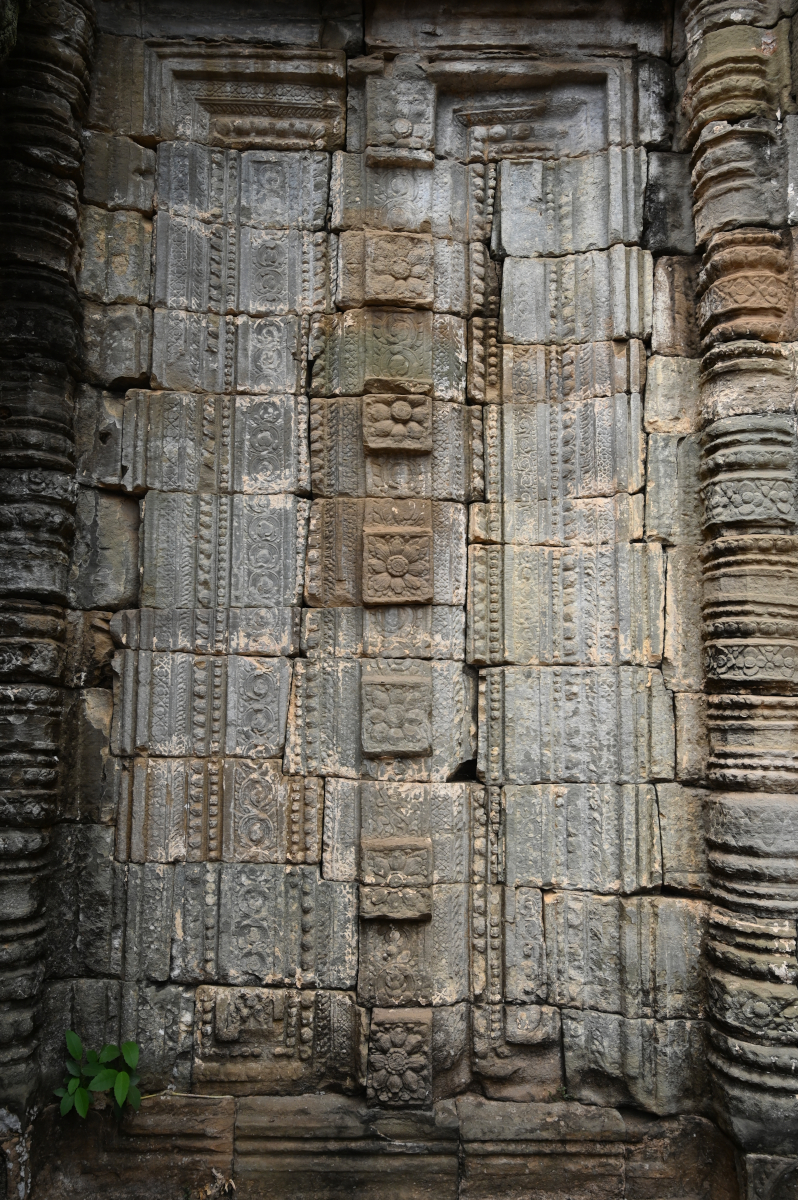

You might be familiar with the A-list temples of Angkor: Angkor Wat, the most well-known temple that towers 700 feet into the air, Bayon, with its larger-than-life faces, and Ta Prohm, a wild place of Tomb Raider fame. My first day at Angkor had been [mis]spent on a group tour of these A-listers, when I’d joined 20 people on a minibus tour around what’s known as the Small Circuit. The temples themselves were everything I’d dreamed of – imposing, wild, flabbergasting – if overcrowded. At heart, though, I’m an aimless wanderer, and the tightly packed schedule of the tour really threw off my groove. Before even finishing that group tour, I’d decided to spring for a private tuk-tuk the following day to explore the wilder temples on the edge of Angkor, which is called the Grand Circuit. The swanky tuk-tuk life was perfect for me. With no schedule and no route to follow, I could finally explore to my heart’s content. Mr. Mom picked me up from each stop, gave me an iced bottle of water from the cooler, drove me to the next temple, told me how long the average visitor stayed there, and let me loose until I decided to come back. He would putter off and park among a sea of tuk-tuks, hanging out with his hired-driver friends who were all doing the same thing. When I returned to the parking lot, Mr. Mom’s machine was easy to spot thanks to the enormous black-and-yellow Batman symbol tooled into its seat, one of a million unique decorations that help us tourists find the right one. I’d climb aboard, Mr. Mom would give me a thousand-watt smile and a fresh cold bottle of water, and we’d zoom off to the next temple.
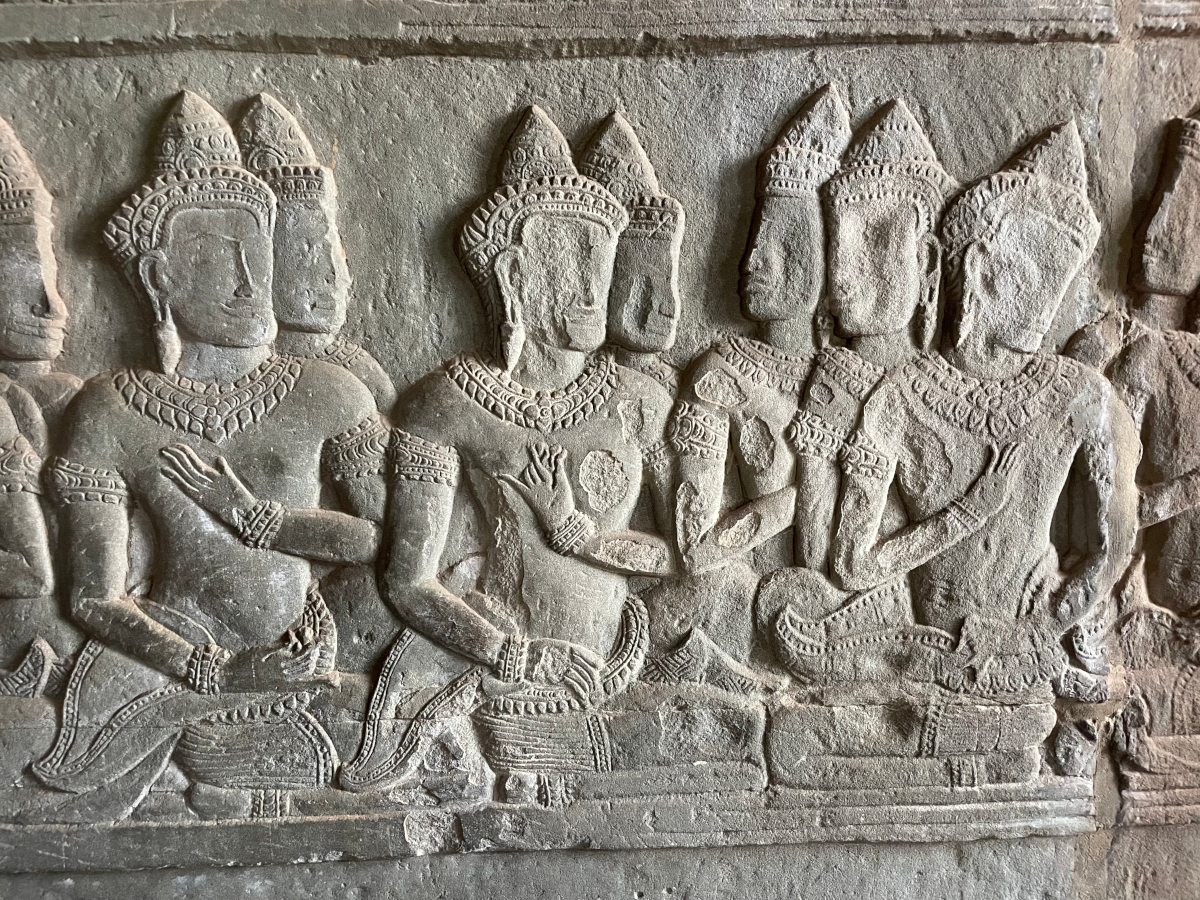
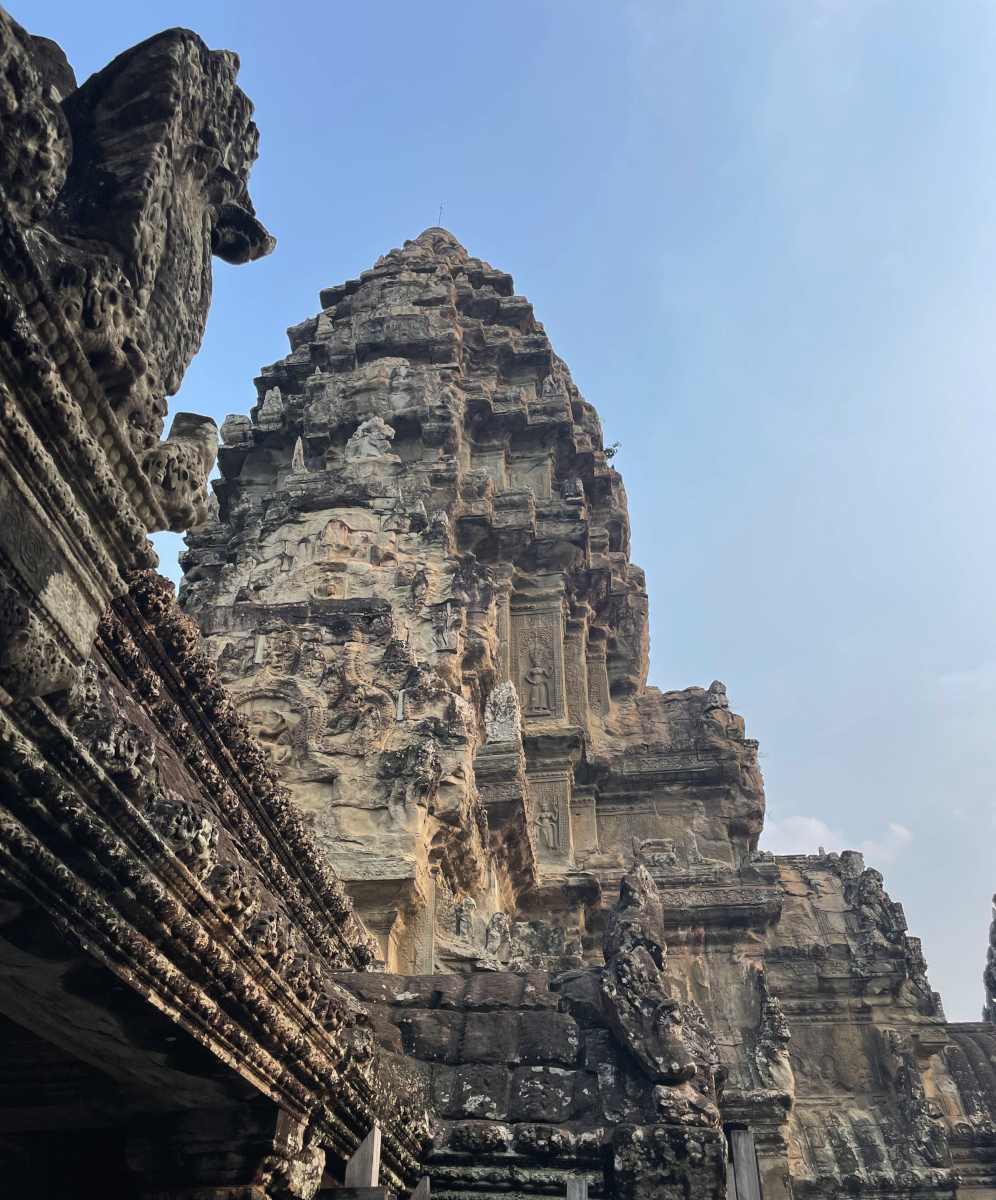

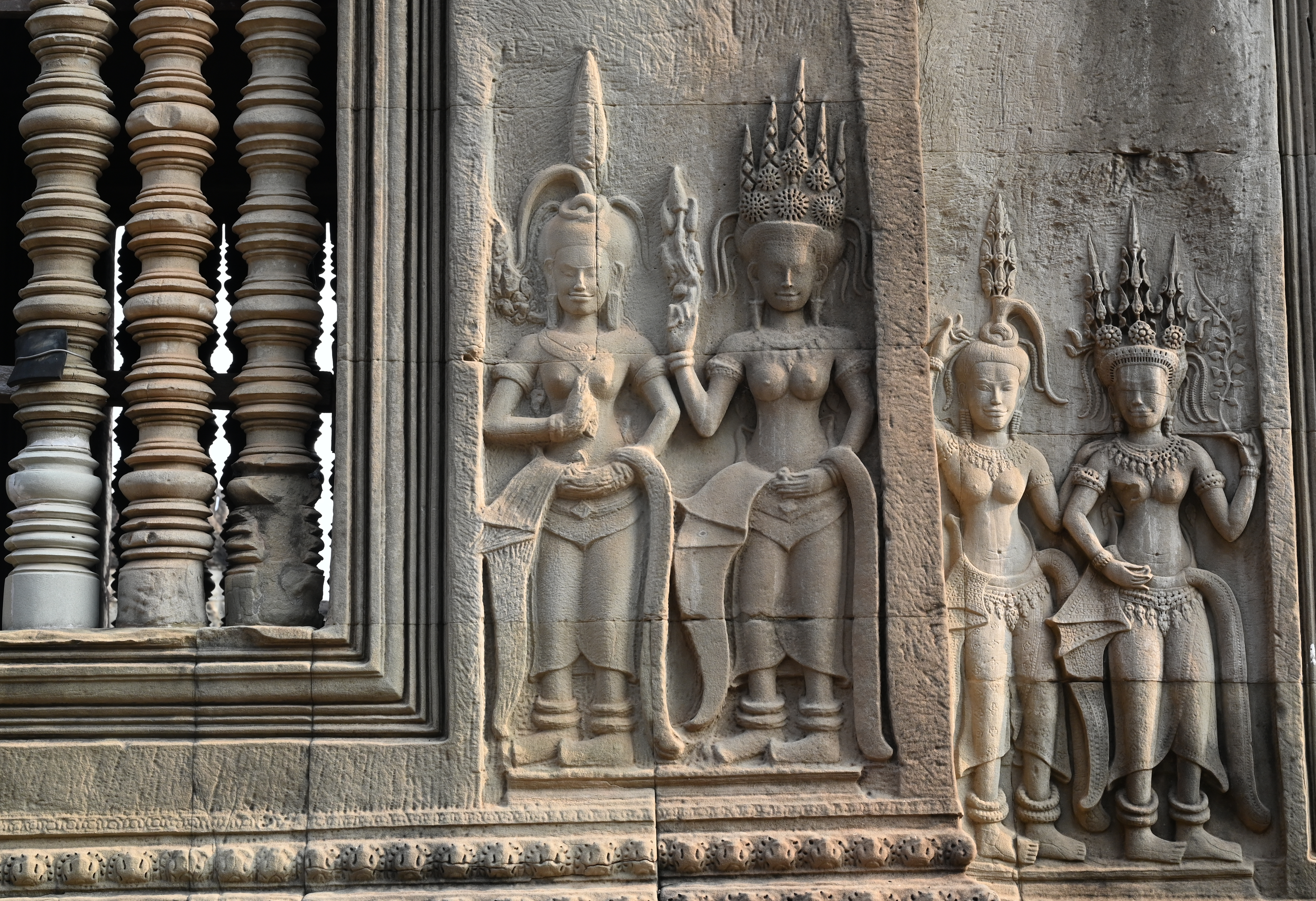


Water, while we’re on the subject, is integral to the story of Angkor. Scattered across the ancient city are a series of huge brick-like barays (artificial lakes) that always face East, meaning they’re all longer on their West-East side than the North-South. All of Angkor is startlingly cardinal: the roads and temples and moats exist along laser-straight lines that point almost perfectly North or East. Our Grand Circuit route soon took a hard turn towards the East and followed the border of a smaller baray that was choked with blooming lotuses and dead trees, having been completely dry for a few centuries until 2008, when scientists finally figured out how to re-flood it. All these angular lakes and canals also point towards the fact that eight centuries ago, the clever Khmer built themselves a hydraulic city. The complex system was probably used to float the 10 million (!) stone bricks into place from the nearby mountain quarries and also to equalize the precipitation seasonality between the monsoon and dry seasons. It’s been suggested that the Khmer empire’s collapse was partially caused by climate change in the 15th century, when monsoons failed and droughts lengthened. Even today, water is critical. Groundwater levels need to be stable so the heavy temples can actually stand up straight on the sandy soil, which is a real struggle considering the water demand that comes from the locals and tourists in nearby Siem Reap.
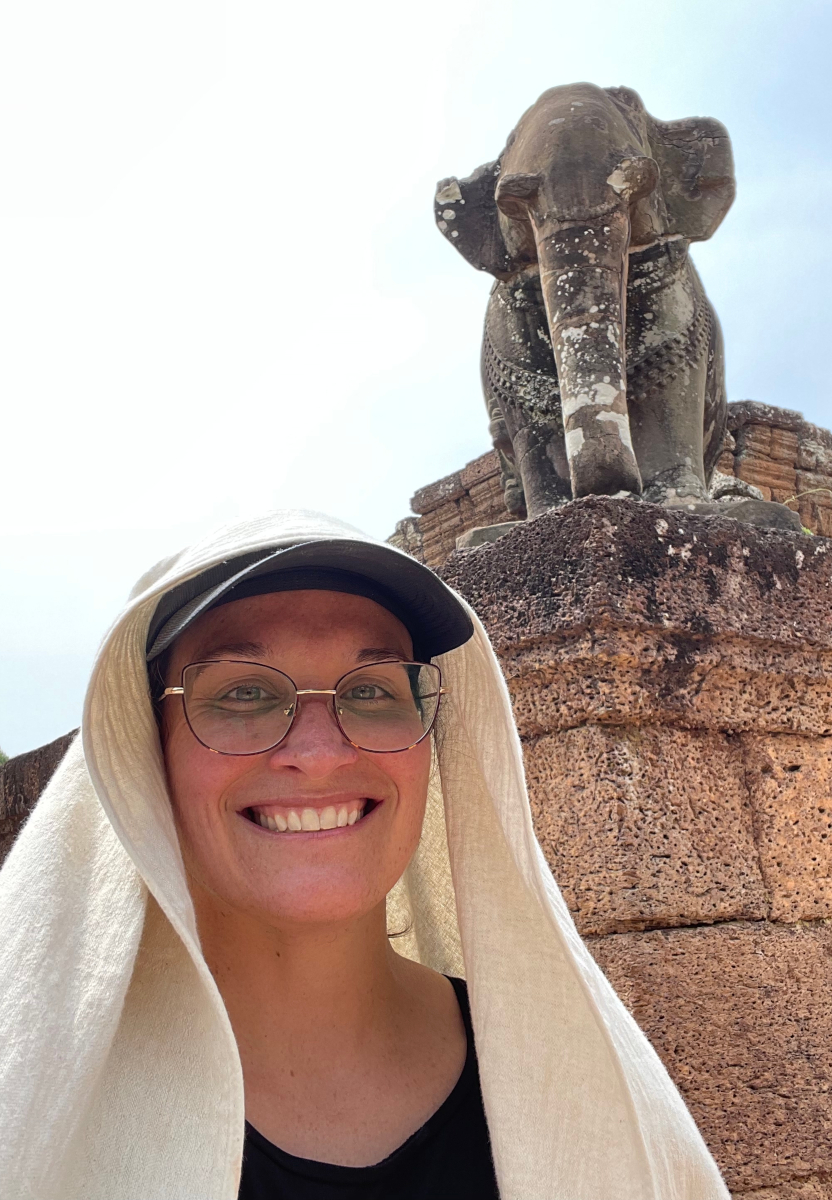
Neak Poan temple perfectly encapsulates this relationship with water. My tuk-tuk halted at the center of the smallish baray, where I dismounted and crossed a new wooden footbridge to the ancient artificial island where Neak Poan sits. The temple-in-a-pond-on-an-island-in-a-lake is also surrounded by four pools that represent the four elements and were apparently thought to contain healing waters. The waterlogged temple was too small and far away for me to really see, but the sheer engineering that went into its creation made it seem unreal. Although the skies above were hazy with smoke from nearby crop burning and the sun’s gaze was veiled, the morning’s heat was similarly unreal. I draped my linen travel towel over my head and shoulders to simultaneously block the sun’s rays, soak up my sweat, and capture whatever limp breeze I could generate by walking through the temple grounds.
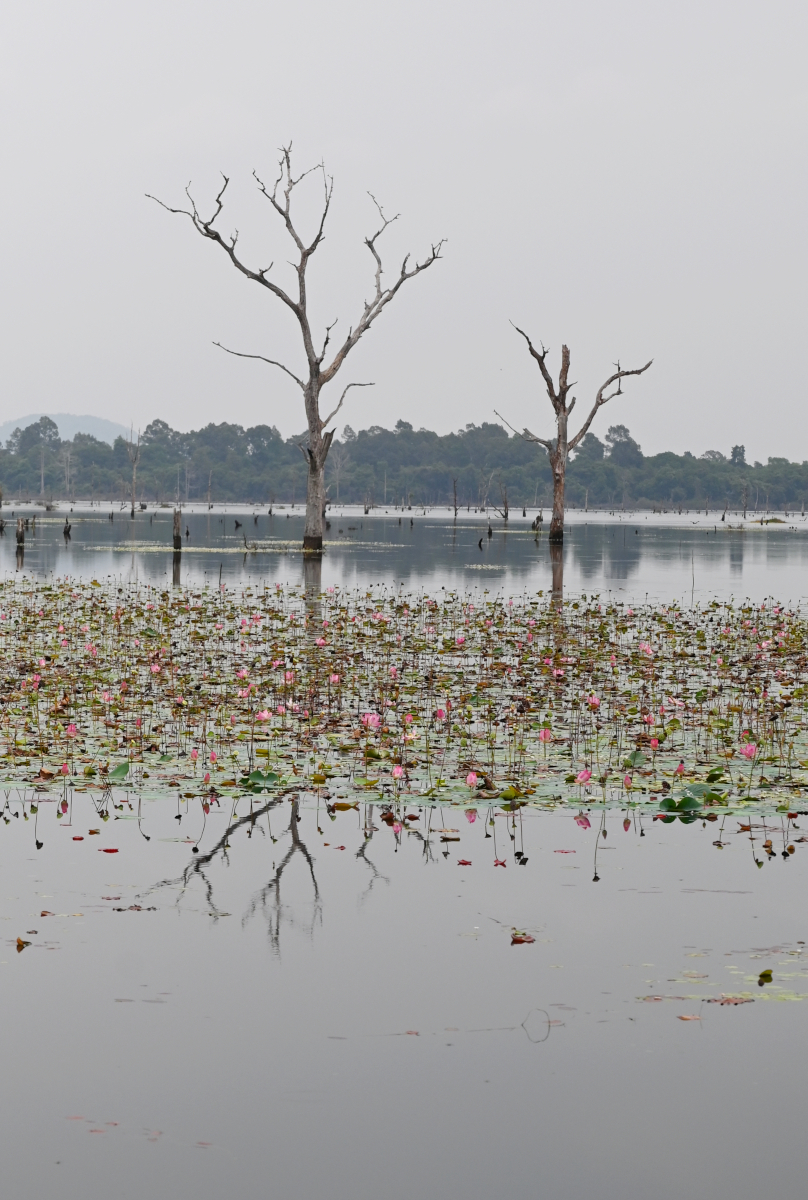

Neak Poak’s baray / A map of the main Angkor temples and the cardinal waterways, including West Baray, which is over 6.5 kilometers on its longer side!
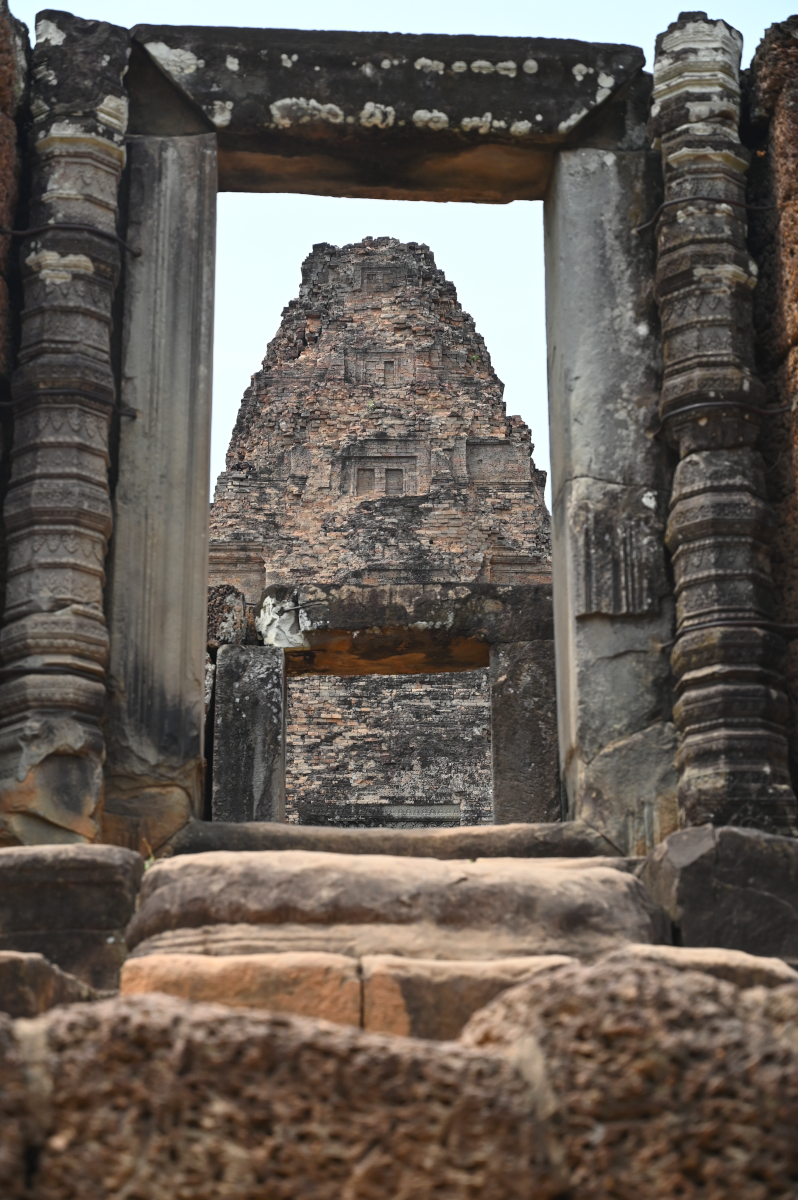
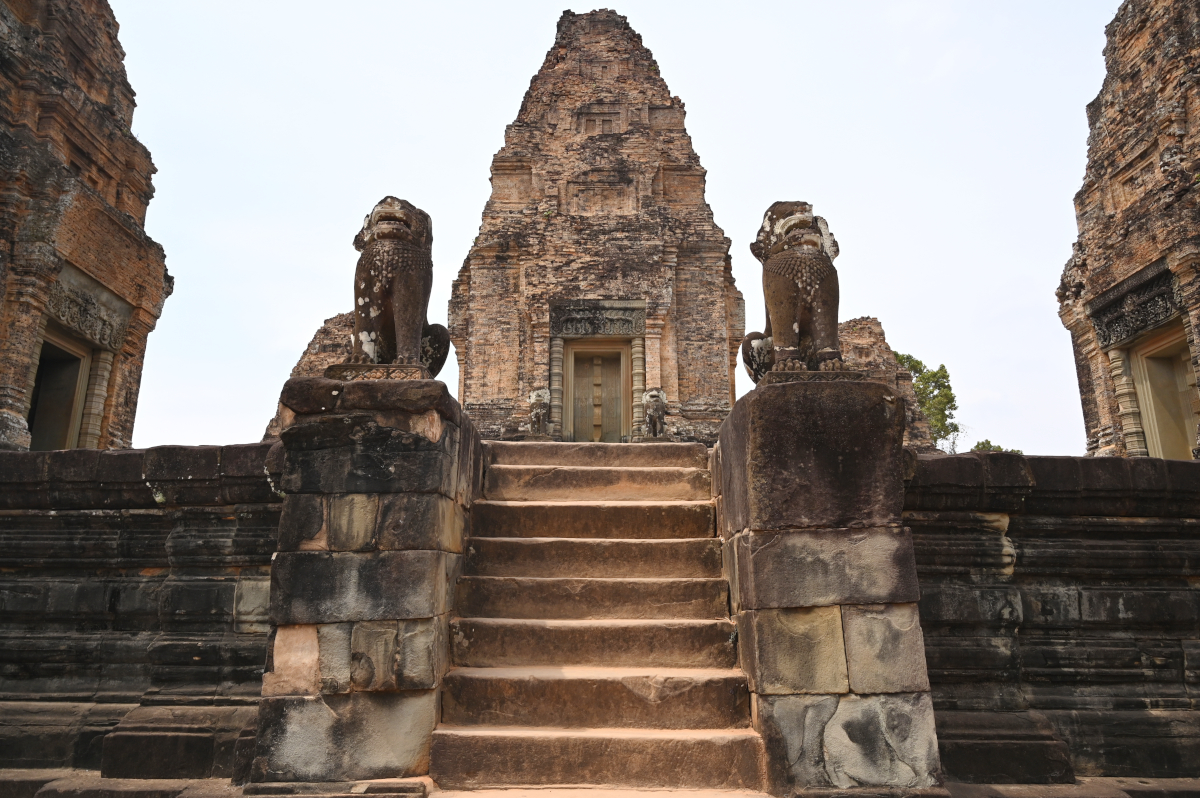
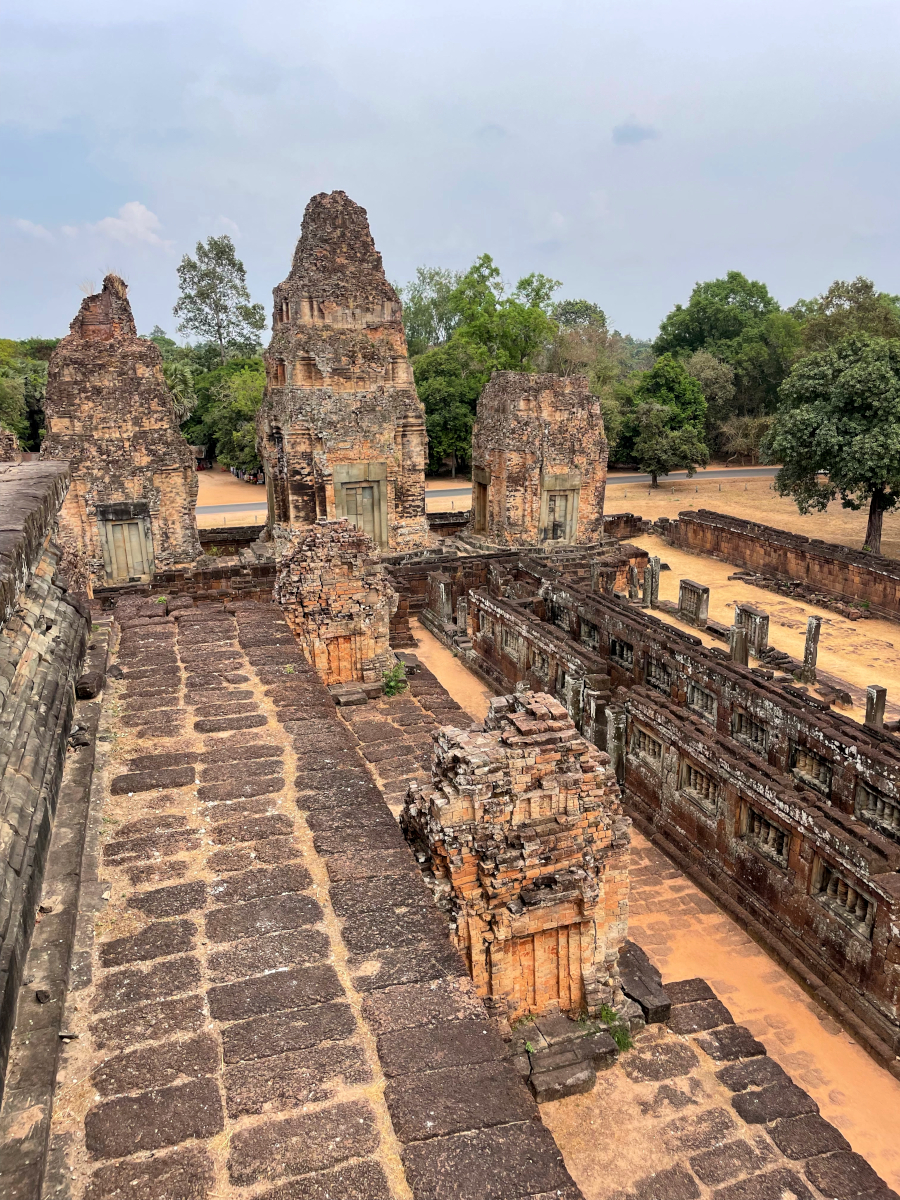
The temples came hard and fast after lunch. You’d think I might have grown sick of them after spending that morning and the whole previous day and literally the whole preceding month touring temples, from Japan to Korea to Thailand to Cambodia, but you’d be wrong, my friend. In fact I couldn’t get enough of them. Ta Som was a compact temple that packed a visual punch, like Preah Khan in miniature. I took advantage of its abandoned state to test my videographer skills and decided I will be sticking with photographs, thank you very much. Eastern Mebon and Pre Rup are huge stepped pyramids that predate Angkor by a few centuries. Their towers are meant to be climbed, much like the Mayan pyramids, which predated them by a few centuries. I clambered up a hundred feet into the white-blue sky and was rewarded with a proper birds’ eye view of the surroundings, towering over the jungle’s canopy. Urban sprawl has taken large bites out of the surrounding forest, and somewhere nearby I could hear a wedding being thrown. The distinctly Eastern music wafted up towards me as I rested in the shade cast by one of the towers. Unfortunately, the shade offered no actual relief from the heat, and sitting down made my walking-breeze disappear. Fortunately, I’d bought a woven bamboo fan the day before and I carried it around in one of the exterior pockets of my backpack for easy access. I whipped it out and fanned myself as frantically as a 23-year-old Elizabethan girl at the ball who was very aware of her impending spinsterhood.

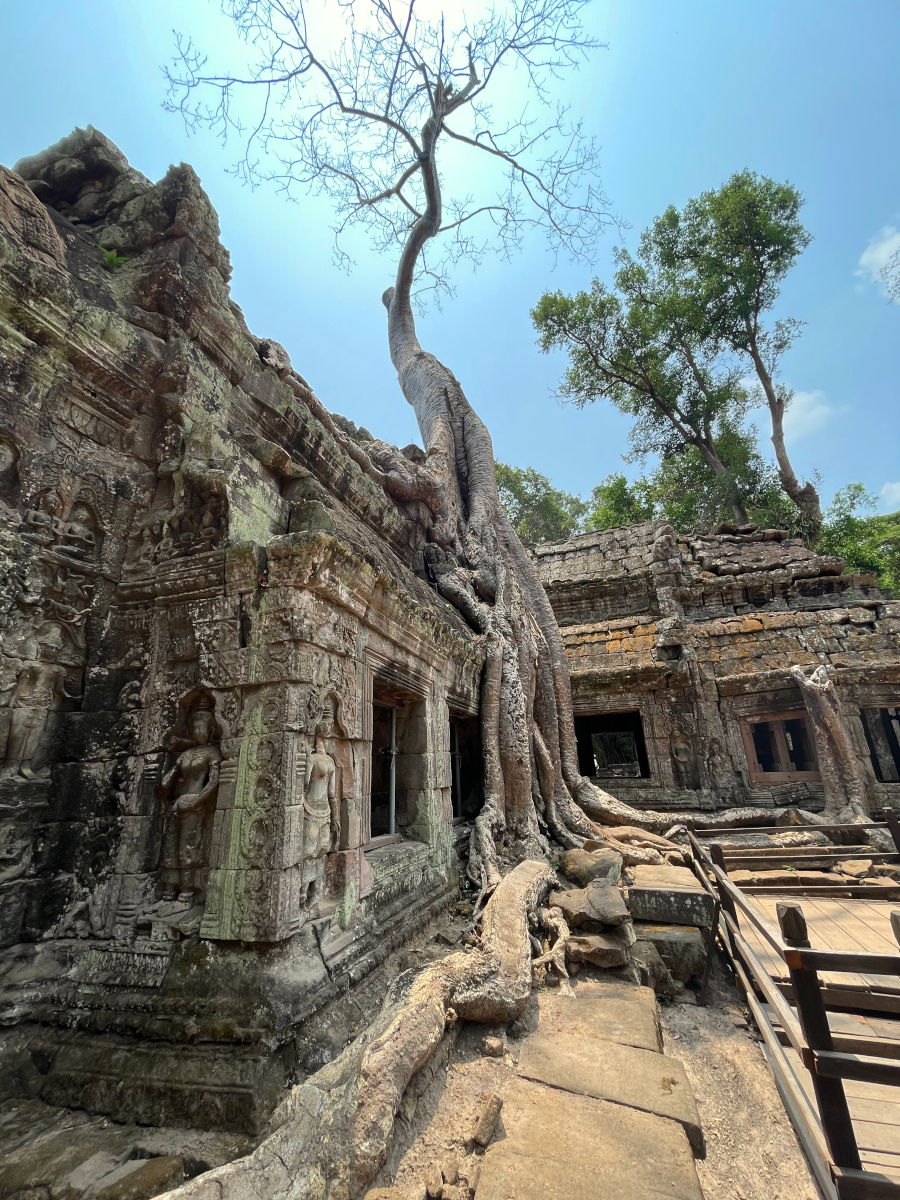
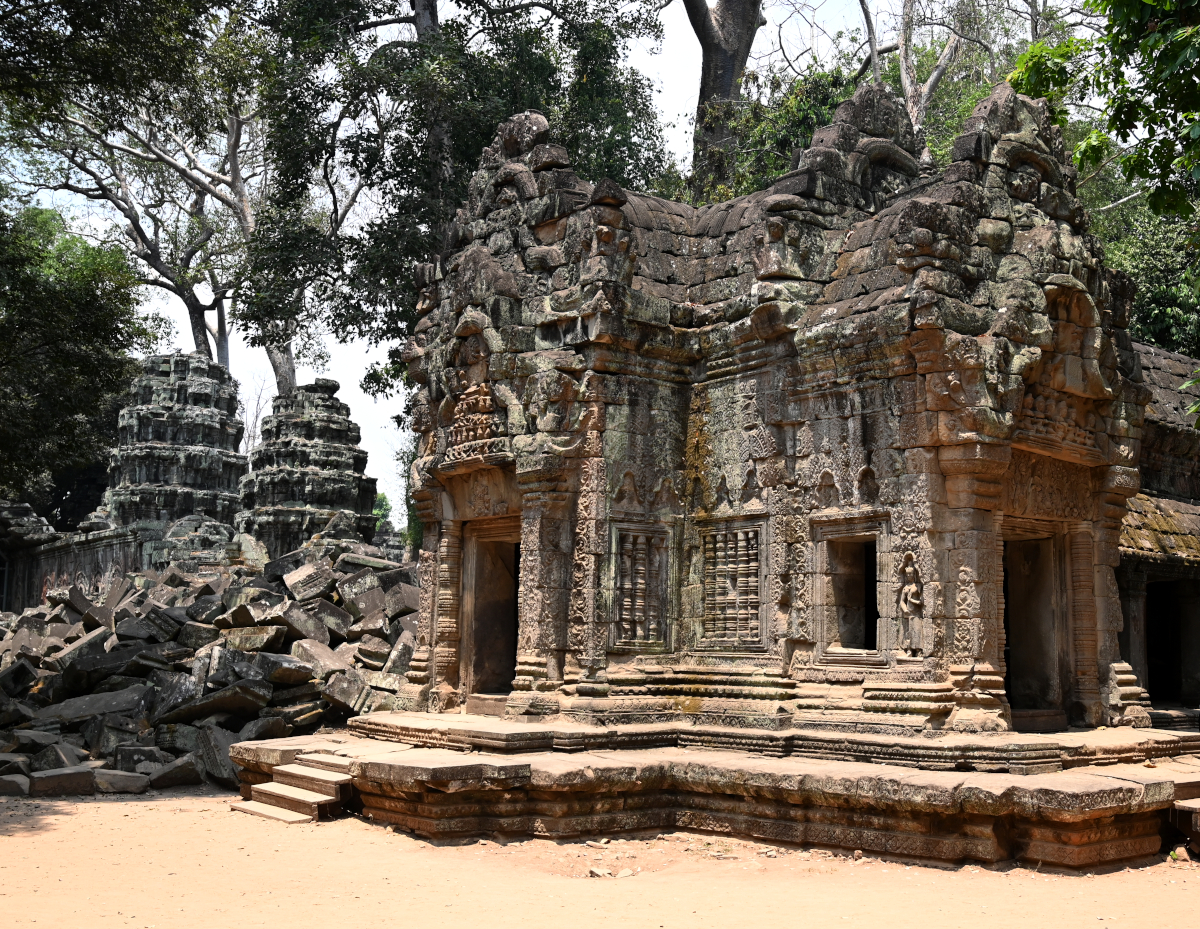
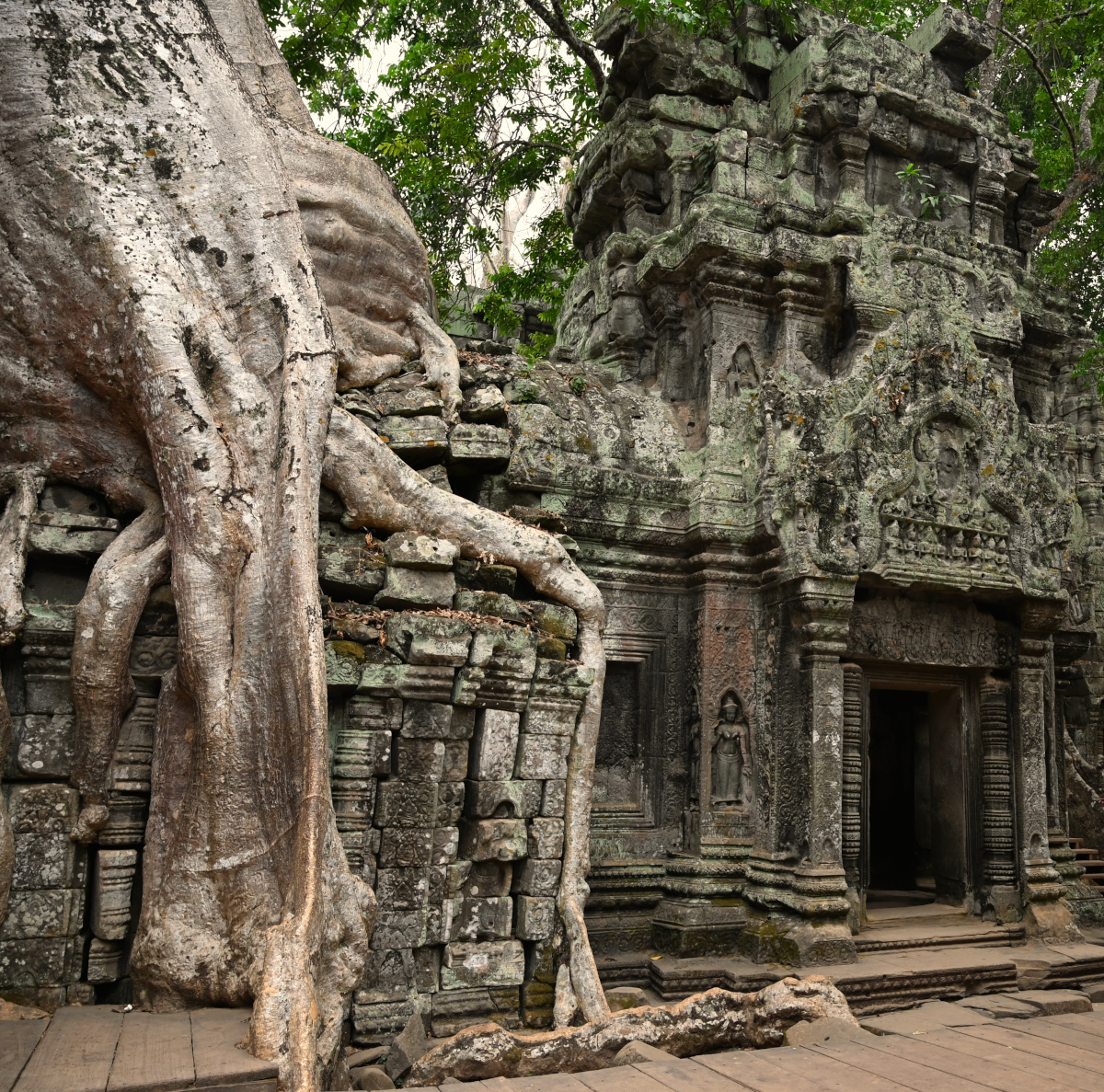
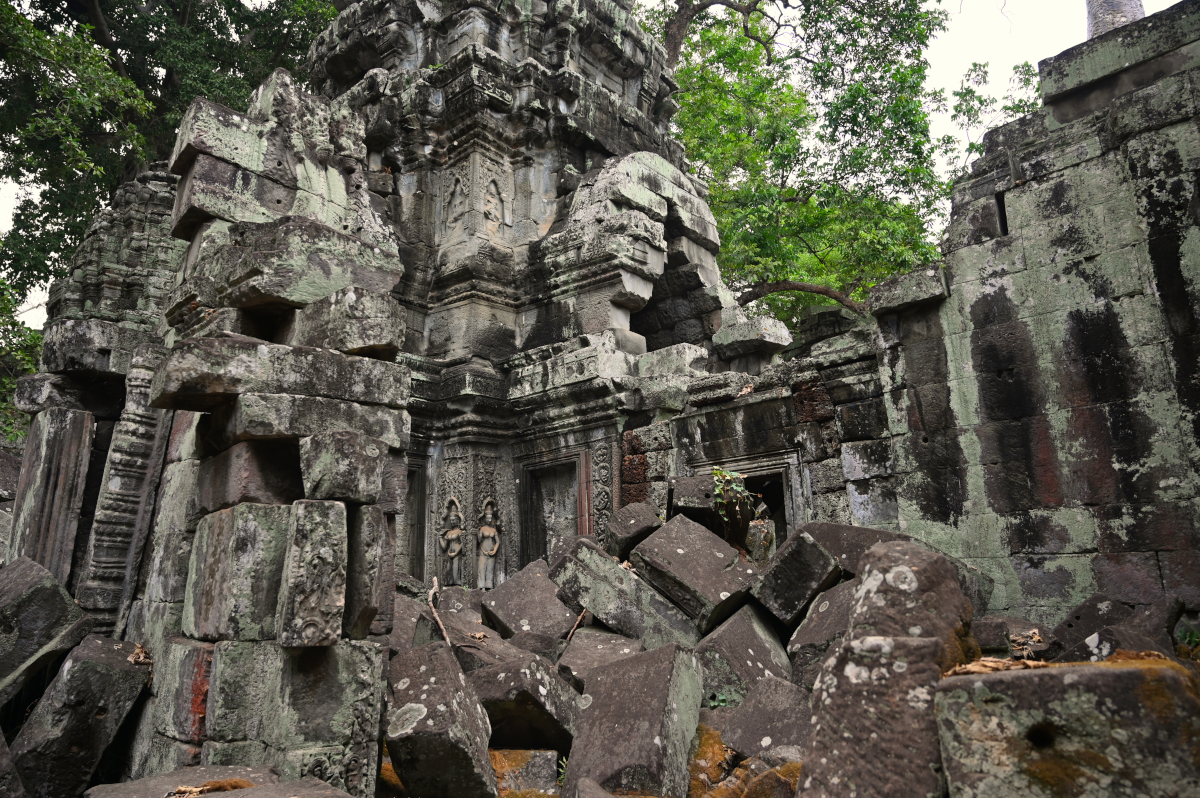
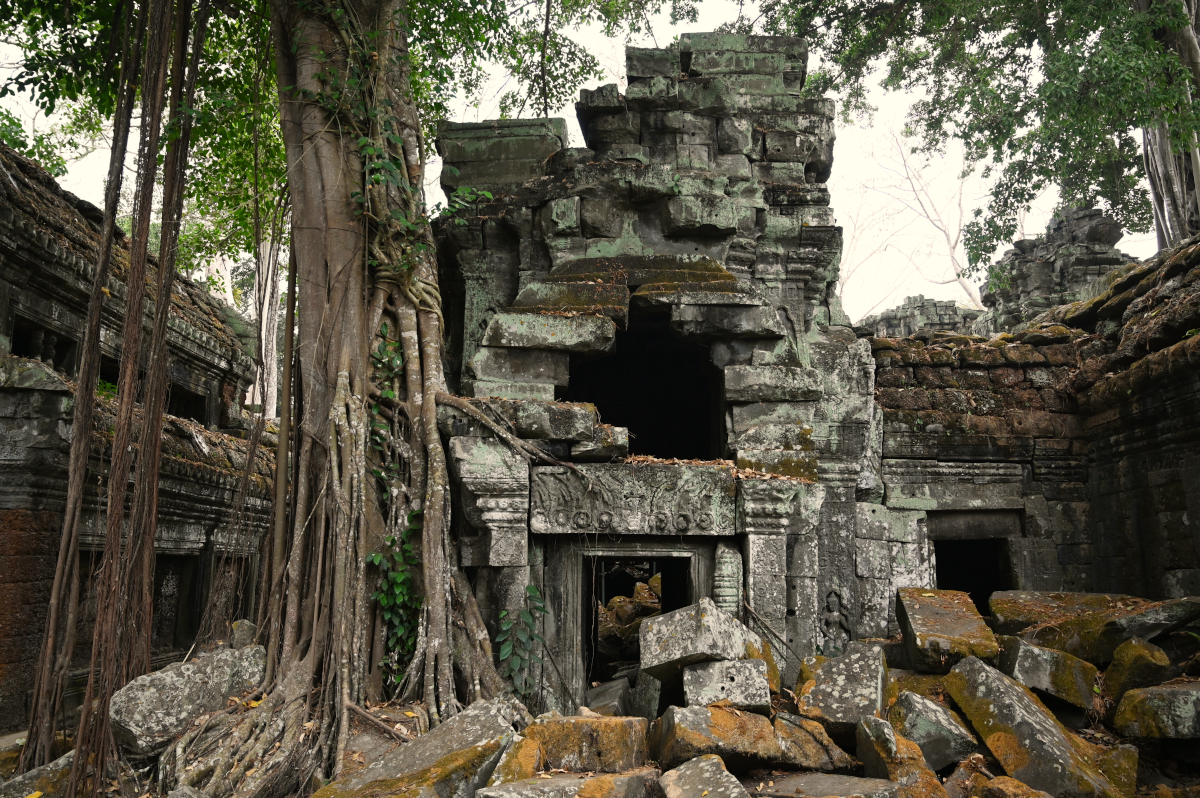
While other temples in Angkor are host to a few gigantic trees, Ta Prohm is being actively devoured by them. The trees don’t so much grow up from the ground as they do ooze down from the sky, their pale bodies and roots pooling against the dark brick. They grow on, in, among, and through the stones of the temple, using the walls as a jungle gym (ha!). It’s impossible to tell where Nature ends and architecture begins. Some of the trees have actually been felled, but their roots were left in place — wood and brick are so entangled that, although dead, the wood physically holds the walls together. Ta Prohm is traditionally part of the Small Circuit, and I’d actually already visited the temple the day before. The problem was, I had immediately lost my guide when I’d entered the temple. No, that’s not the right word. I’d abandoned my guide. The sensory overload of Ta Prohm caused my brain to short-circuit and my attention span to evaporate. I was an unleashed puppy in a dog park, an unsupervised child at Disneyland. I would’ve liked to hear some history and facts about the temple, but in the vernacular of Millennials, I could not even. Just imagine it for a minute. You are presented with an endless series of open doorways. One will lead you into a slot canyon of carved walls and gnarled trunks. The next leads into a tumbledown courtyard filled with beehive temples. The next has you following the taffy-like trunk and roots of a single behemoth tree. You wind between brick piles that were left where they fell, each of them colonized by a fresh crop of tree seedlings. On my first visit to this wonderland, I was only granted 45 minutes to explore. 45 minutes! The travesty. Luckily, when you hire your own tuk-tuk, your route is customizable, and I asked for Ta Prohm to be my penultimate stop. On that second visit, I took the opportunity to slow down. I sought out the biggest trees I could find and just co-existed with them for a while. I caught informational tidbits from passing tour guides. I “found” some famous things I’d completely missed the first time, like a nondescript chamber that was actually built as an echoing meditation room (according to a tour guide), and if you stand inside and sing or thump your chest, the sound will thrum through the hollow air. I wiled away the rest of my afternoon at Ta Prohm, just basking in its atmosphere.


Most of Angkor’s temples close promptly at 5:30pm, but a select few stay open until 7 for the sunset hounds. Phnom Bakheng, one of the oldest temples at Angkor, sits atop a lonely mountain. To reach it you have to hike up a steep 20-minute trail through proper forest, past an unrestored temple still buried in the bush. I was sweat and sweat was me by the time I reached the summit. I sat down on a black brick outcrop that was about the same temperature as a sauna bench to wait for the sunset, fanning myself like I was having a hot flash. In the end, I waited for a sunset that wasn’t. The sun dove behind a cloud and the grey skies deepened to a bruised purple. I was only rewarded with the faintest smears of orange and yellow before the sun presumably set. Precisely at 7 p.m., a roaming pack of park officials descended on us and literally herded us off the mountain. “Go home!” the normally cheerful Cambodians snapped, standing uncomfortably close to anyone who stopped to grab one last picture before heading down into the gathering dark. All the way down the trail, I kept a weather eye on the sky through the gaps in the jungle canopy, but the sun had truly disappeared without a trace, and the anticipated post-sunset colors never appeared.
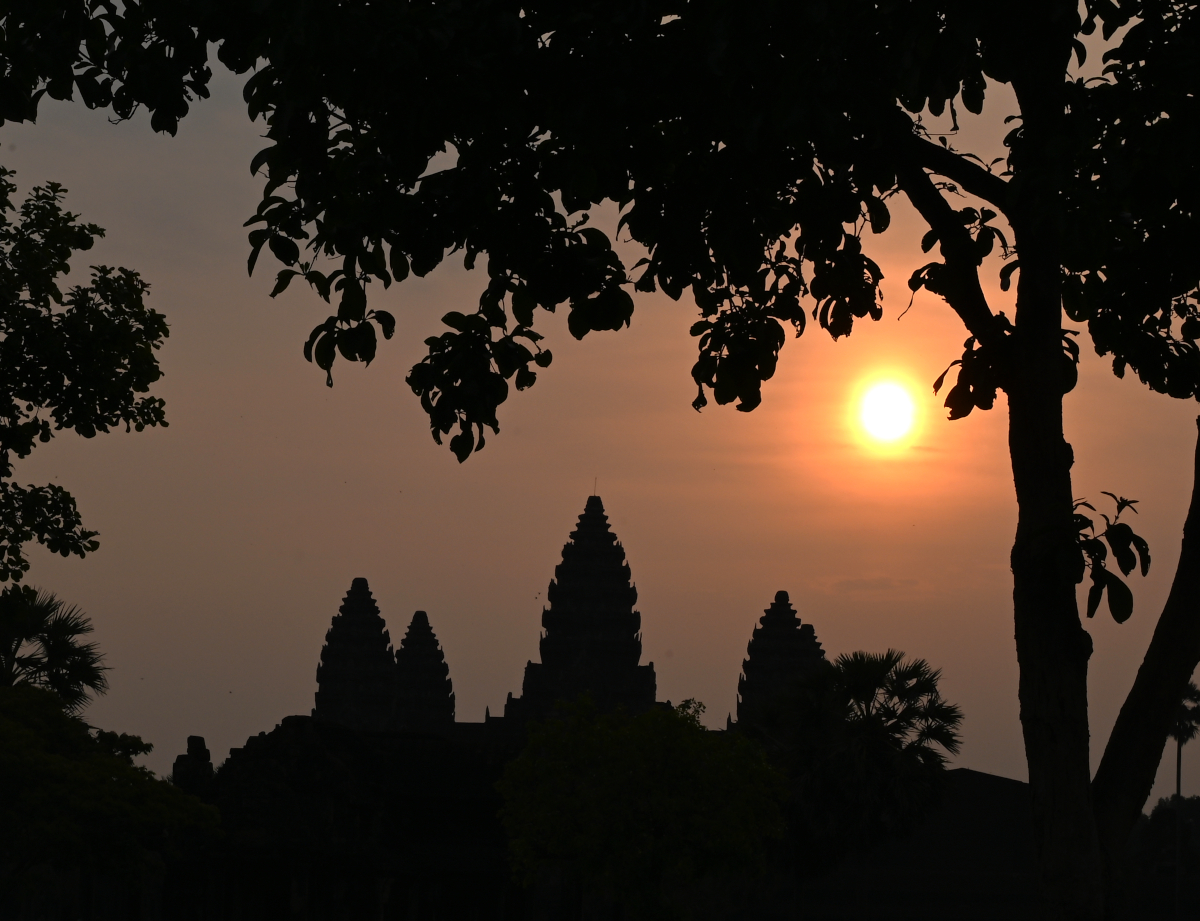
It wasn’t the first time Southeast Asia’s burning season threw a wrench into my sunset and -rise plans. The previous evening, after the minibus tour, I’d hired a tuk-tuk out to Phnom Kraom, another hilltop temple south of Siem Reap that overlooks Cambodia’s largest [natural] lake, Tonlé Sap. We’d driven for 20 minutes past rice paddies and lotus farms and sprawling bars comprised of connected open-air huts on stilts, which were strung up with hammocks where people could literally hang out. Again I’d hiked uphill for 20 minutes, accompanied by a few stray children and cats and the resonating tones of chanting monks at a newish temple nearby. My efforts were for naught, and I watched the late-afternoon sun simply vanish into a thick bank of smoke. On two different mornings, although I’ve established by now on this blog that I am not a morning person, I rose before dawn and headed for Angkor Wat, where people gather every day to watch the sunrise. The atmosphere was always intense: swallows swooped overhead, monkeys squabbled in the trees, a thousand tourists gathered on the lawn with their eyes locked Eastward, all waiting with bated breath for the sun to appear. My first morning I was entirely skunked — the sky briefly turned pink, then just as quickly went back to grey. On my third morning, I made a harebrained decision to detour to Angkor Wat again on the way to my 8 a.m. bus departure back to Bangkok. At the moment of sunrise, the skies lightened from iron to silver, but otherwise remained monochrome. Nervous about the time, I began heading back. I was out of the temple and halfway across the Westbound moat when my spidey-senses tingled. I hazarded a glance back over my shoulder and saw an orange eye staring back at me, finally appearing at the proverbial eleventh hour. The clock was ticking but I had some wiggle room, so I ran back inside to snag my longed-for photograph of the sun as it hovered over Angkor’s silhouette. No sweat: I made my bus with plenty of time to spare.

My overall impression of Angkor is that it’s overwhelming (and I loved it). In terms of sheer size, the 100 temples comprising the archaeological site are scattered across 400 square kilometers – for reference, Manhattan is around 60 km². In terms of visiting options, you can hire private tuk tuks for cheap, take a solo or group tour, rent a bicycle, or just show up and choose someone from the absolute gauntlet of professional guides that lines the bridge of Angkor Wat each morning. I visited in spring 2024 and found healthy crowds, but I apparently also showed up before tourism had fully recovered from the Covid lockdowns. For example, we were able to immediately summit the precarious wooden staircase leading to Angkor Wat’s highest point without having to queue, which our guide said was impossible in the Before Times. Also speaking of time, two days absolutely were not enough for me to explore everything, even just at the 11 temples I visited. Of course your mileage may vary, especially if you’re not as much of an archaeology nut.
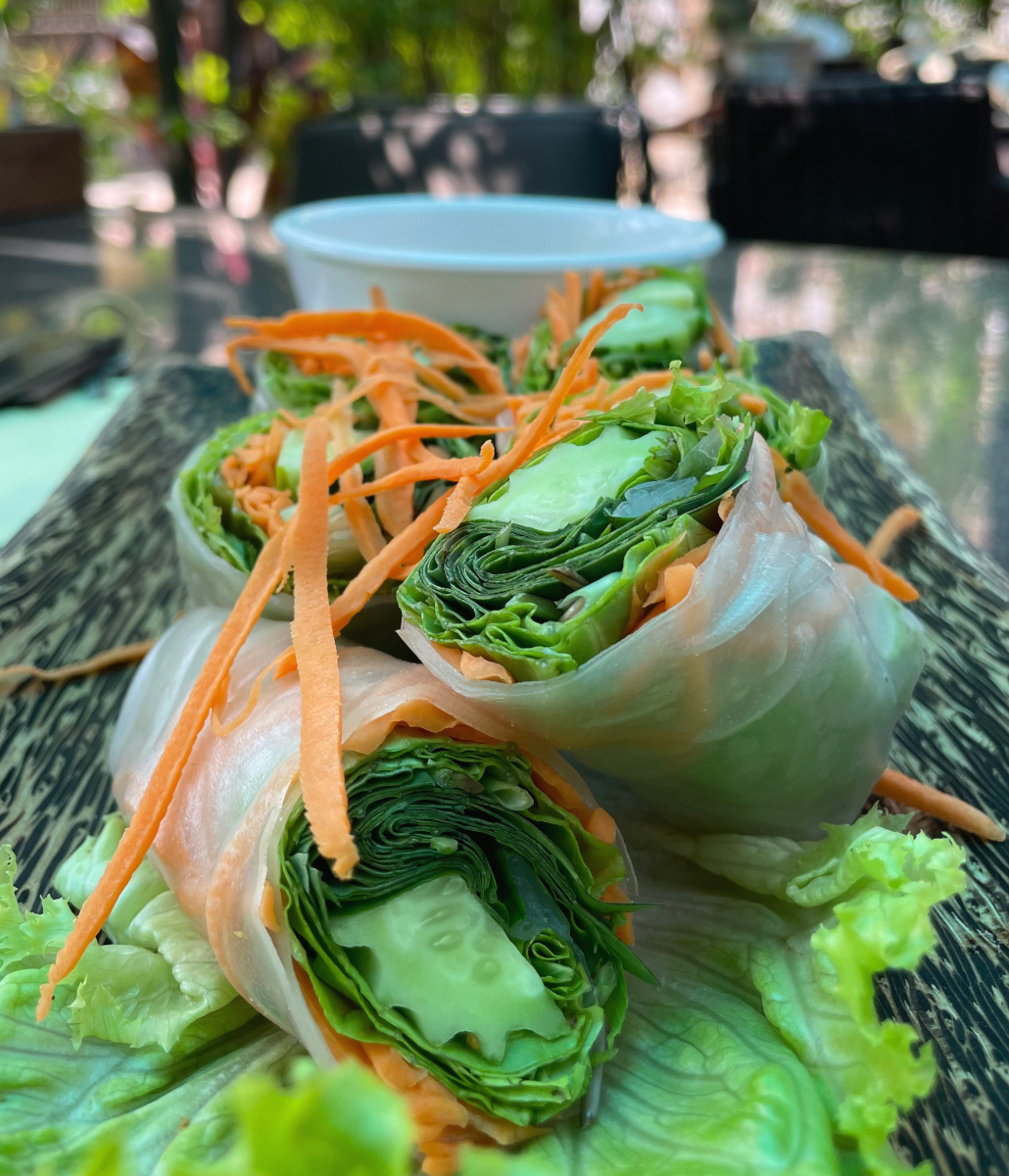
Cambodia is also an overwhelming place (and I similarly loved it). Coming from Thailand, where decades of tourism have funneled money into the country and streamlined its infrastructure, it seemed to me like Cambodia is still finding its way onto the map. I really enjoyed the local vibe, although I admittedly only spent three days in one city. The food reeled me in from day 1. Stir-fried morning glory, spring rolls, fresh dragonfruit every morning. Cambodians are wholly warm people too. My dinner waiter kept stopping to chat in between courses and told me he’s a high schooler who dreams of traveling the world but has so far only made it to the temple down the street. A bazaar shopkeeper took 20 minutes to talk instead of just selling me a dress. At the same time, the place has some grit to it, and poverty can be apparent. More than once I was followed by very young children who grabbed onto my hands and beeseeched me for money, parroting English phrases like “Needmoneyfornumnums” (food) and “Needmoneyforschool.” It seemed cold-hearted to refuse them, but time and time again I heard from local sources that giving money to begging children does more harm than good. Only once did I manage to actually talk with some of the kids. On group-tour day, after lunch in one of those soulless restaurants designed to feed as many group tours as quickly as possible, I paid and went outside to wait alone on the curb. A pack of children all younger than 8 approached, and at first they half-heartedly tried to sell me some magnets. I somehow convinced them on the first go that I wasn’t interested, and their demeanors pivoted towards curiosity. They tested their slow English. “Where are you from? What’s your name? How old are you?” they asked, touching my hands. When the rest of my tour group came out, though, the spell broke and the children lost all interest in me.
All in all in all, I’d certainly go back to both Angkor and Cambodia, and if/when I do, it’s tuk-tuks all the way.


 Window Seat Odyssey
Leave a comment