In honor of my Dad reaching his 70th (!) birthday this summer, I’ll begin the second chapter of my 2024 Thai narrative with a little story about him. Back in the 1970s, Dad spent a year stationed at a U.S. Air Force base near Bangkok, fixing jet engines. The few stories he’s seen fit to tell his [adult] children confirm that he had some pretty wild adventures while he was there, and I try really hard not to imagine the stories he didn’t tell us about, because who wants to think about what their young single father probably did in the 1970s near Bangkok? Anyways, he always had an enduring fondness for Thailand (which was a major factor in my wanting to visit), and during my childhood he often cooked a spicy fried rice dish that he wrote as kao pot and pronounced “cow pot.” Of course I was determined to try as many versions as possible when I got to Thailand to see if Dad’s cooking skills were up to snuff. Upon opening my first dinner menu, it took me a solid minute to realize “kao pot” was actually Dad’s personal phonetic spelling of the Thai name for “fried rice” which is more commonly Anglicized as khao pad or khao phad. To masterfully segue into the rest of this post, my next two Thai destinations were called Khao Lak and Khao Sok. Khao as in phad means “rice,” and in Lak means “mountain.” While I’m sure they actually sound completely different in the tonal Thai language, to me they all sound like “cow.” As in “holy.”
See, we came full circle in the end.
Khao Lak
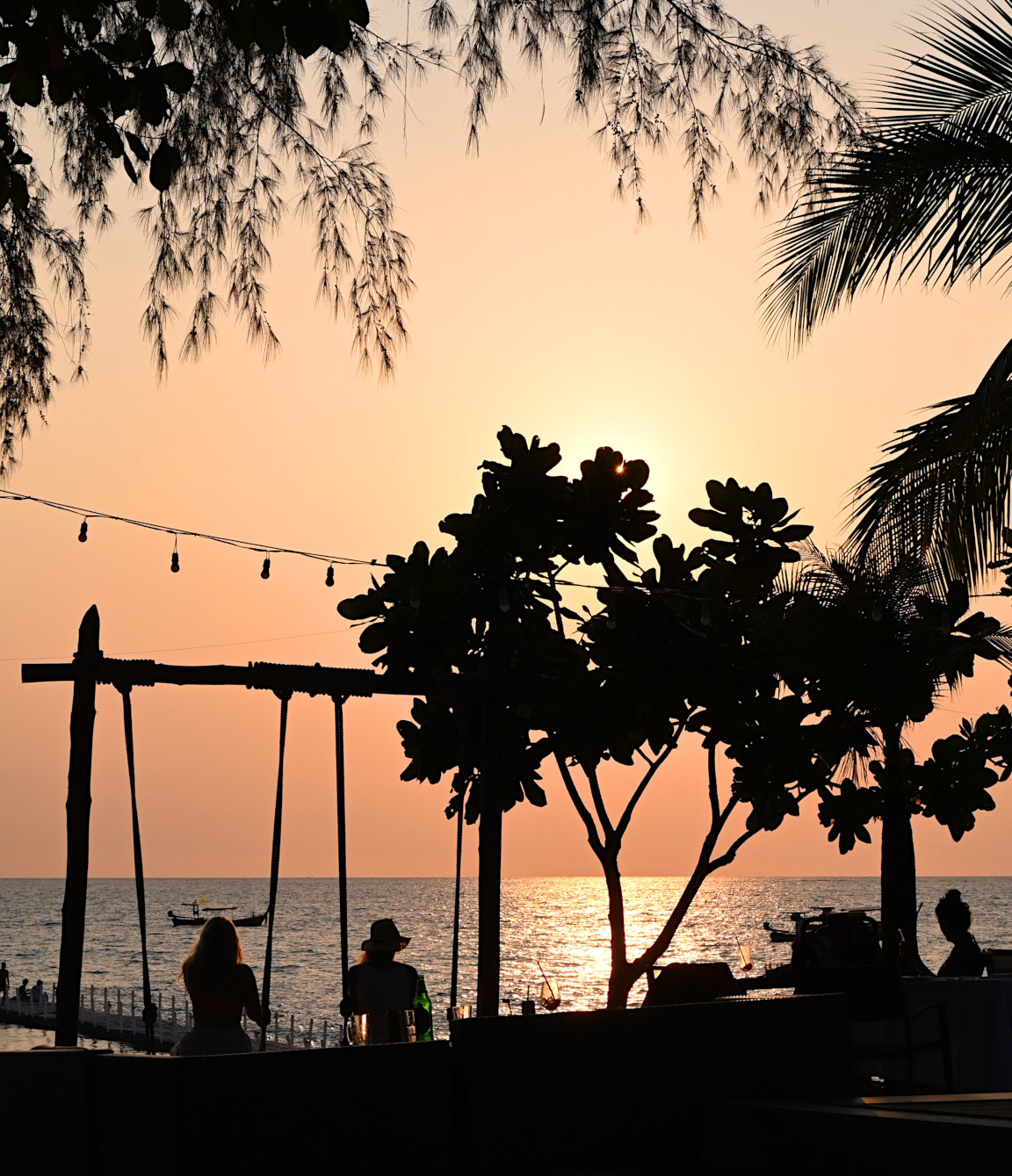
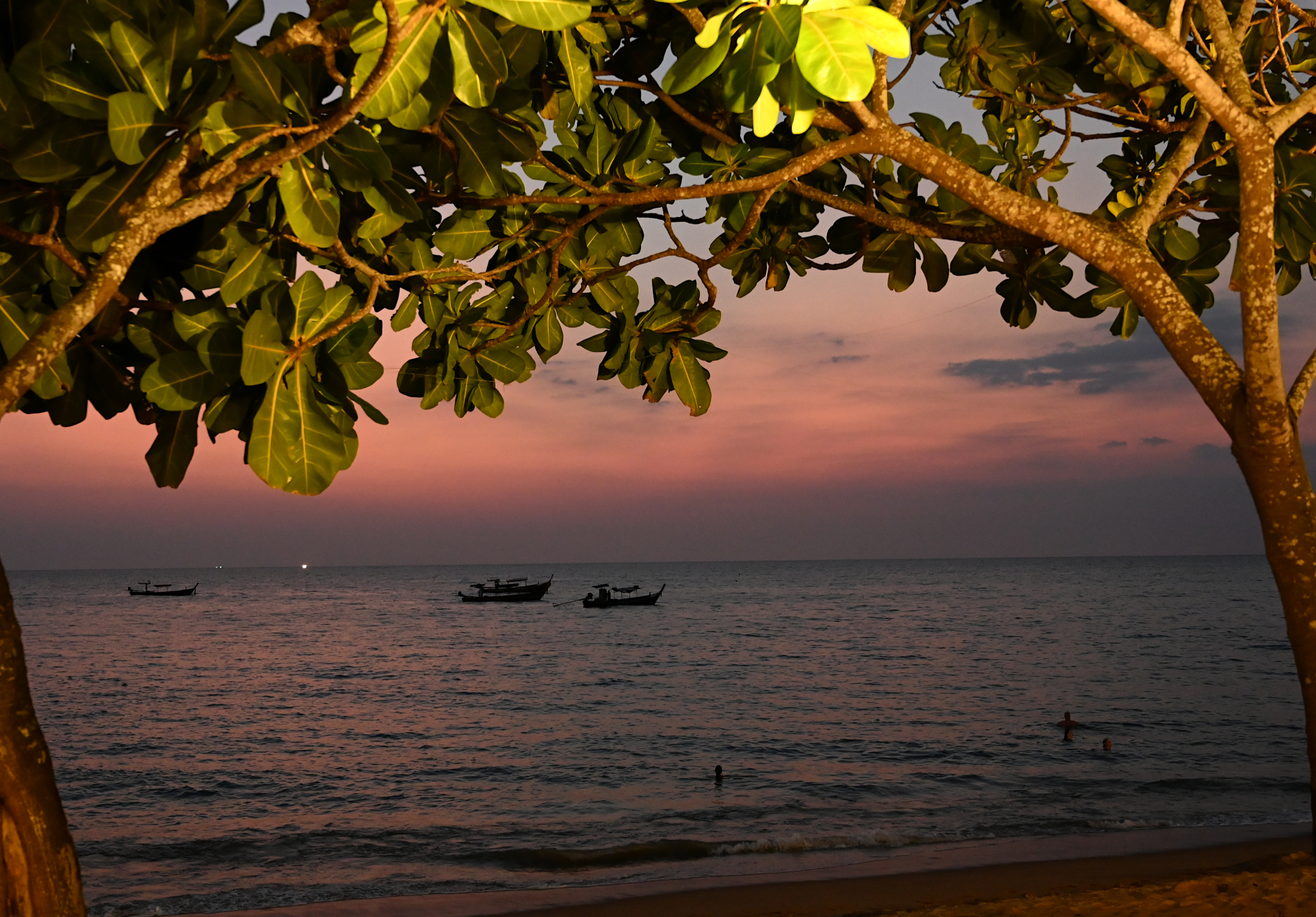
My first order of pleasure after arriving in the seaside village of Khao Lak was to be like Zac Brown and “put my toes in the water and ass in the sand.” From across the calm Andaman Sea, the sun’s fluorescent magenta eye glared at me through the smoky air. It hovered just a few fingers above the horizon, silhouetting a few lonely fishing boats bobbing in the surf. The boundary between my body and the warm salty air dissolved and I wasn’t sure where one ended and the other began. I was too keyed up after my long journey from Chiang Mai to sit still, so instead I walked along the shore checking out washed-up bits of coral and skittering crabs, feeling the rhythmic push and pull of the ocean’s waves gnawing at my ankles. It seemed the whole beachfront within sauntering distance had been colonized by resorts and restaurants, until I finally came to a narrow sandy-bottomed river that stood like a sentinel, protecting a wilder-looking beach on its other bank. I took a few steps into the thigh-high and rapidly moving river before I glimpsed the nearly-set sun and remembered that tropical night falls much faster than temperate. Turning back, I put the wild beach on my still-blank To-Do list for following day and settled down instead for a beachside dinner, staring out at the surf as the falling twilight dimmed the water’s hue from rose to mulberry to navy. Dinner was a lively affair, spent with my feet still in the sand, a khao phad on the table (A+ effort, Dad), and a Thai couple in traditional costumes dancing to music spilling out from a quick-fingered band.

A few months prior, when I’d been designing my itinerary, I waffled about what to do on Thailand’s famed southwestern coast. I was hankering for at least one Thai beach destination, ideally one with less hullabaloo than perennial tourist favorites like Phuket, and I even flirted with the idea of an island-hopping sailing trip before realizing it would involve spending nearly a week in very close quarters with strangers. The Internet search engine gods instead pushed me towards Khao Lak, a quiet beachside village that’s close to some high-quality offshore snorkeling sites called the Surin and Similan islands. Khao Lak reminded me of a tropical island where everyone builds close to the water, resulting in a pearl necklace of fancy villages that are scattered along the shore. The layout is perfect for resort-goers and people with their own wheels. For me, it was just the perfect spot for a beach day.
Like many humans, I enjoy a good beach day. I’ve never gotten the hang of just lying on them, though, and much prefer to walk and beachcomb and sit shoulder-deep in the shallow surf. The tide was on my side the next morning when I reached the sentinel river mouth. Its brackish water trickled by at knee height and the morning sun was reassuringly bright, painting the sandy ford in a much friendlier light than the night before. Nevertheless I hesitated on the bank when I noticed a longtail fishing boat headed into the mouth of the river, captained by a lone fisherman skillfully navigating upstream. Longboat motors are dangerous affairs, essentially being a diesel-fueled propeller that’s attached to the end of a free-moving 3-meter-long pole, designed so the captain can flick it high and completely out of the water and then plunk it down somewhere else to quickly change directions. The engine gave a guttural roar and chewed at the air as the captain dodged around a large boulder. Valuing my life and extremities, I waited for him to pass. Once the coast was finally clear I waded across to Hat Nang Thong beach, carrying only my beach essentials and a few baht notes, never to return…until sundown, at least.
What greeted me on the other side was a deserted golden crescent that rambled away south. It seemed all the resort-goers were happy to stay close to their all-inclusive home bases, which left this wide sunny beach free for me and a handful of other mid-morning adventurers. A few laid-back cafes and bars were tucked beneath the shade of the scraggly forest, nearly invisible from my walking path along the shore. The sparkling sea looked calm that day, although I soon learned the truth when I passed four retirees playing waist-deep in the surf. They were absolutely howling with laughter because one of their own had just been knocked over by a wave and couldn’t find her feet. By the time she finally popped up laughing, another one had been knocked down and cheese-grated against the sand, like the ocean was bowling for retirees. I made a mental note to do all my swimming in one of the wide rocky coves that could protect me from the sneaky surf. The sand swirling beneath my feet was amber occasionally marbled with black, which I later learned are mostly-harmless ore cinders left over from the area’s tin mining past. Mountains of organic treasures dotted the wet sand: long corkscrewed shells and tiny smooth shells and dense coral skeletons. Many found their way into my palms and pockets, although they’d find their way right back out again before I crossed the river back home. Take nothing but pictures, and all that.
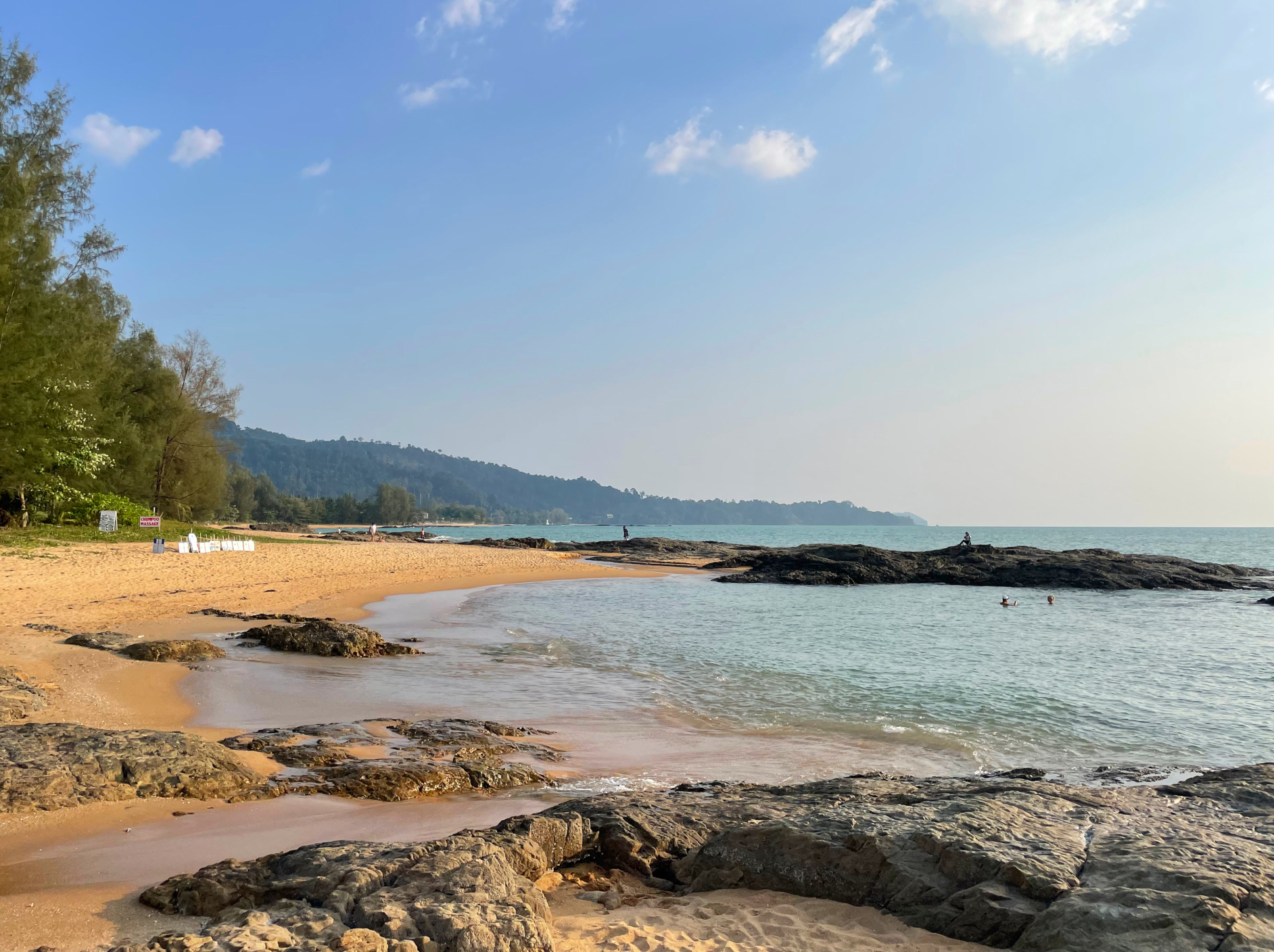
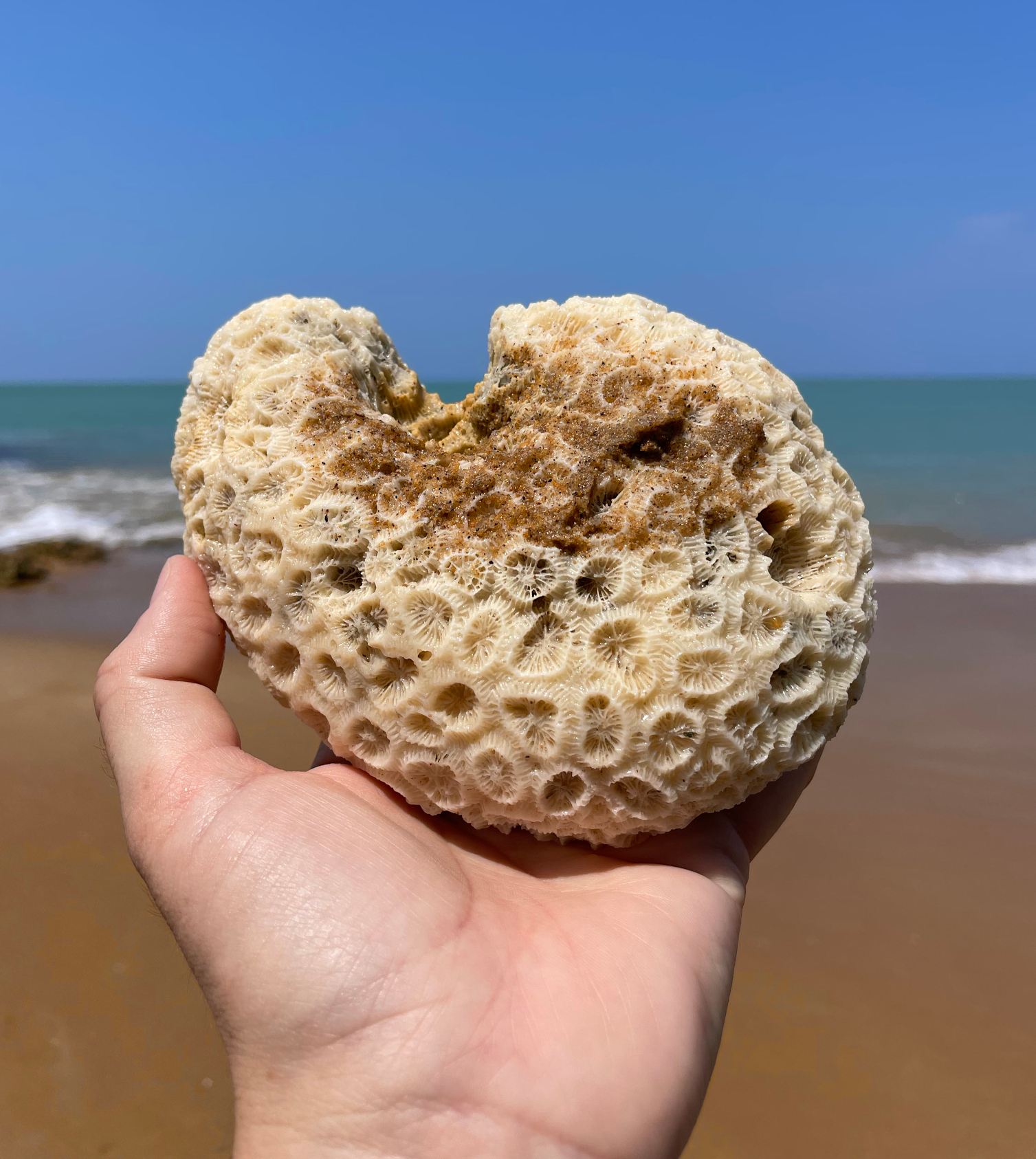

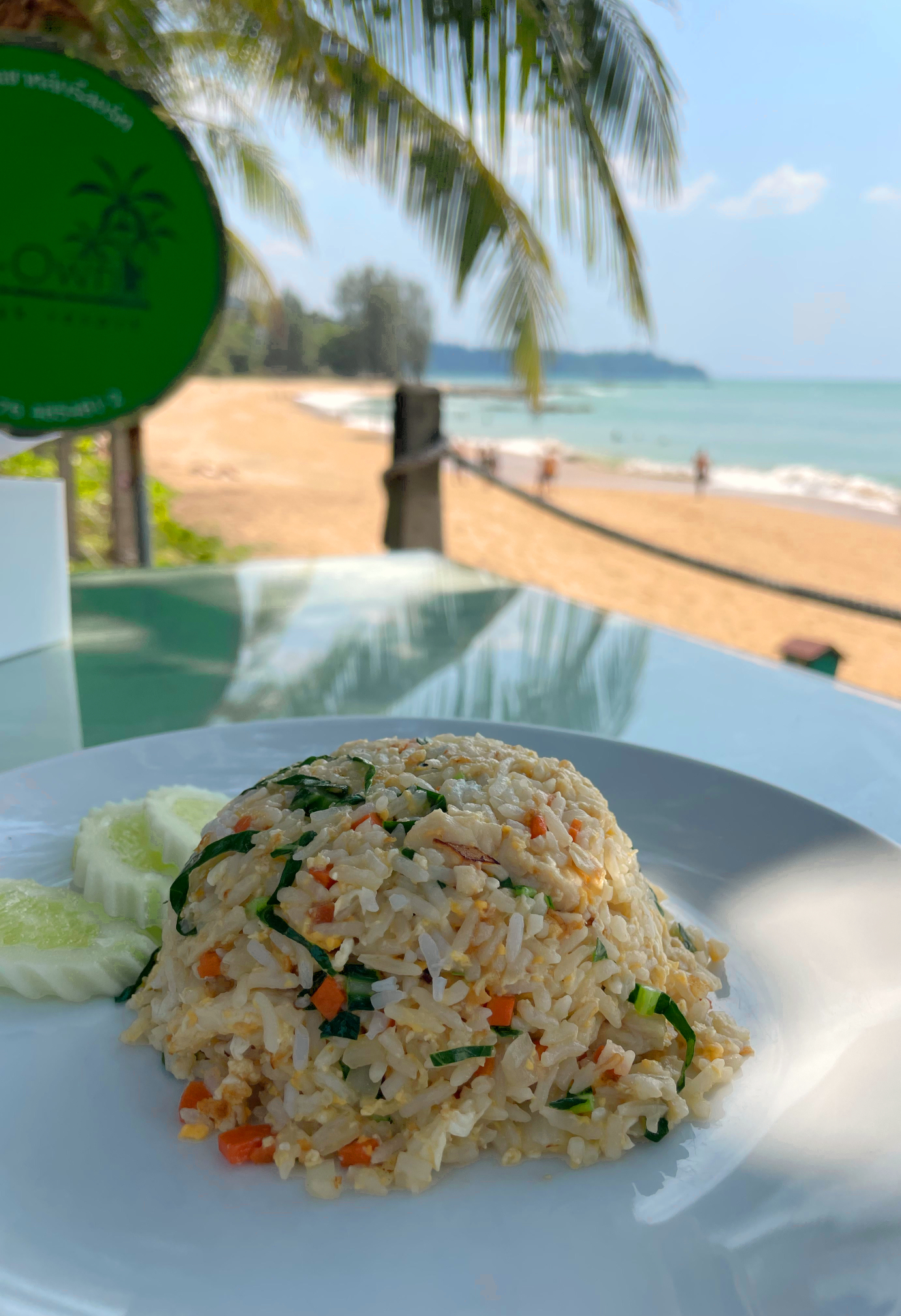

Top: Hat Nang Thong beach near sunset right before I headed back across the ford / a huge dead coral chunk
Bottom: The longboater / khao phad lunch / Hat Nang Thong beach and the ore cinders
When the blistering sun became too much, I set up a beach camp in the spindly starfish-shaped shadow of a drunken palm tree. The ever-shifting wind and sun meant my shelter lasted about five minutes before I had to find a larger and more permanent solution closer to the edge of the forest. Even then, my protection kept shrinking as the near-equatorial sun slid closer to high noon. Finally surrendering land altogether, I tore off my shorts and sprinted across the pizza-oven sand, flinging myself into the nearest protected cove and allowing both my self and my mind to drift through space and time. I nearly pickled myself in the soothing bath-temperature water. Hunger eventually drove me into the forested shelter of a lonely restaurant, where my afternoon iced tea and khao phad break was serenaded by a diminutive black bird looking for snacks. Even with my Ray-Bans pressed flush against my cheeks and the closed forest canopy shading my whole body, the beach’s impossible glow made me squint. Not particularly keen on returning to the baking beach, I eyed a neighboring massage parlor and decided I could submit to an hour-long full-body Thai massage instead. At the time, I was unclear about what exactly a Thai massage was. It’s a good thing, too, because I might not have gone through with it if someone had explained it to me first.
For the uninitiated, Thai massage is somewhere between a deep-tissue massage, origami, and one-sided wrestling. Your masseuse, who is probably half your size, will inexplicably be stronger than you. Gravity is her trusted friend. She will climb up and put her entire body weight on you for most of an hour, often putting all of that weight behind one of her elbows or forearms and pressing it deep into one of your muscles, then repeat with every single other one of your muscles. I do mean every one. Each individual finger and each individual toe will get its time in the spotlight. Your limp body will be expertly folded and twisted in such a way that gravity can deepen the stretches. Heaven help you if she discovers that you’re naturally flexible, because then she will do her best to turn you into a paper crane. My masseuse and I spoke different languages, so when she wanted to communicate, she’d just slap me a bit until I got the message. Usually she just wanted me to lift an arm or flip over. Once, though, I was lying facedown in a half-doze with my lower leg in her lap, contemplating the telltale burning feeling along the top of my foot that clearly meant my SPF-50 sunscreen had been powerless against the Thai sun. She patted my heel, and I opened one lazy eye to see that all the masseuses had stopped their administrations to watch a monitor lizard that was roaming around in the forest nearby. I laughed with them, just happy to be included, even though my glasses-less eyes could barely see the small dinosaur.
Weirdly, I rather enjoyed being manhandled by a complete stranger, despite the unexpected pain. Maybe my years of inconsistent yoga practice had helped prepare me for the discomfort. I breathed into each fleeting stab of pain and trusted the process. I focused on the refreshing ocean breeze that dried my sweat and rustled the palms above and carried the sound of the waves up into the hut where I lay. The only unpleasant part was when she got near my bad shoulder, which has been repeatedly injured by competitive swimming then unfortunate accidents then age a computer job, and I fought against her almighty pull with as much strength as I could muster. At the end, after a surprisingly gentle facial massage, she sent me back into the world feeling like a million bucks that had been hit by a truck. The only logical followup was to drop my things, sprint back across the boiling sand, and spend the next hour bonelessly floating in the sea, letting the rhythmic pulse of the warm salty water soothe away the lingering throb of my muscles.
Shortly after sunset I scuttled away from the beach and all the way back down the main tourist drag inland, stopping briefly for dinner and a freshly-cut mango sticky rice at the street market, before I dodged across the six-lane highway to get to my hostel. It was a freshly-built building that sat on a quiet jungle-facing street at the edge of town, a mile inland from the ocean, so far away you can no longer smell the brine. Yet just across the street, there sat a 60-foot police boat. It looked fairly seaworthy, despite a bit of rust and its improbable position in the middle of a lawn behind a metal fence. Here my Khao Lak narrative will take a melancholic turn, because I would be remiss if I failed to acknowledge this beautiful town’s painful truth. The boat has sat in that position since 26 December 2004, the day a tsunami killed over 230,000 people in the Indian Ocean basin. The ship had been guarding a jet-skiing member of the Thai royal family when the waves took it and pushed it a mile inland to its final resting place. Local survivors left it there to serve as a memorial to the 4,000 lives lost from Khao Lak alone, and then rebuilt their city and lives around it.
The tragedy had happened almost 20 years before I visited, yet the event clearly remained a touchstone. Reminders were everywhere. An open-air museum next to the boat was still manned by locals who handed around battered photo albums filled with community contributions. On Hat Nang Thong beach, when I’d taken refuge from the sun in a tree’s shadow, I looked up to see three bleached photographs of young tourist victims affixed to the trunk, each one bearing a farewell message in familiar Latin script. Next to the palm had sat a half-bleached tree clinging to life, from whose branches hung dozens of found-item wind chimes made from fluorescent fishing lines that strung together broken bits of shell and coral. As I walked through the reaching arms of branches, I wondered whether the tragedy and decorations were related. The gently waving chimes put me in mind of so many tropical dream-catchers, perhaps made to snatch away the peoples’ lingering feelings of sorrow. I realize the tsunami’s aftermath is a dark inclusion for a travel blog post otherwise dedicated to the sunny beaches and jungles and food of Thailand, yet I’m a big proponent of learning about and acknowledging the local history and challenges when traveling in foreign lands. I’ve lived in enough lovely tourist towns to know that one woman’s vacation destination is another’s home, filled with all the joys and tribulations of human life. Even if you’re just passing through a beautiful place, on your way to a beach or an origami massage parlor or to chase other hedonistic pursuits, the kindest thing to do is respect the locals and the things that matter to them along the way.

Khao Sok
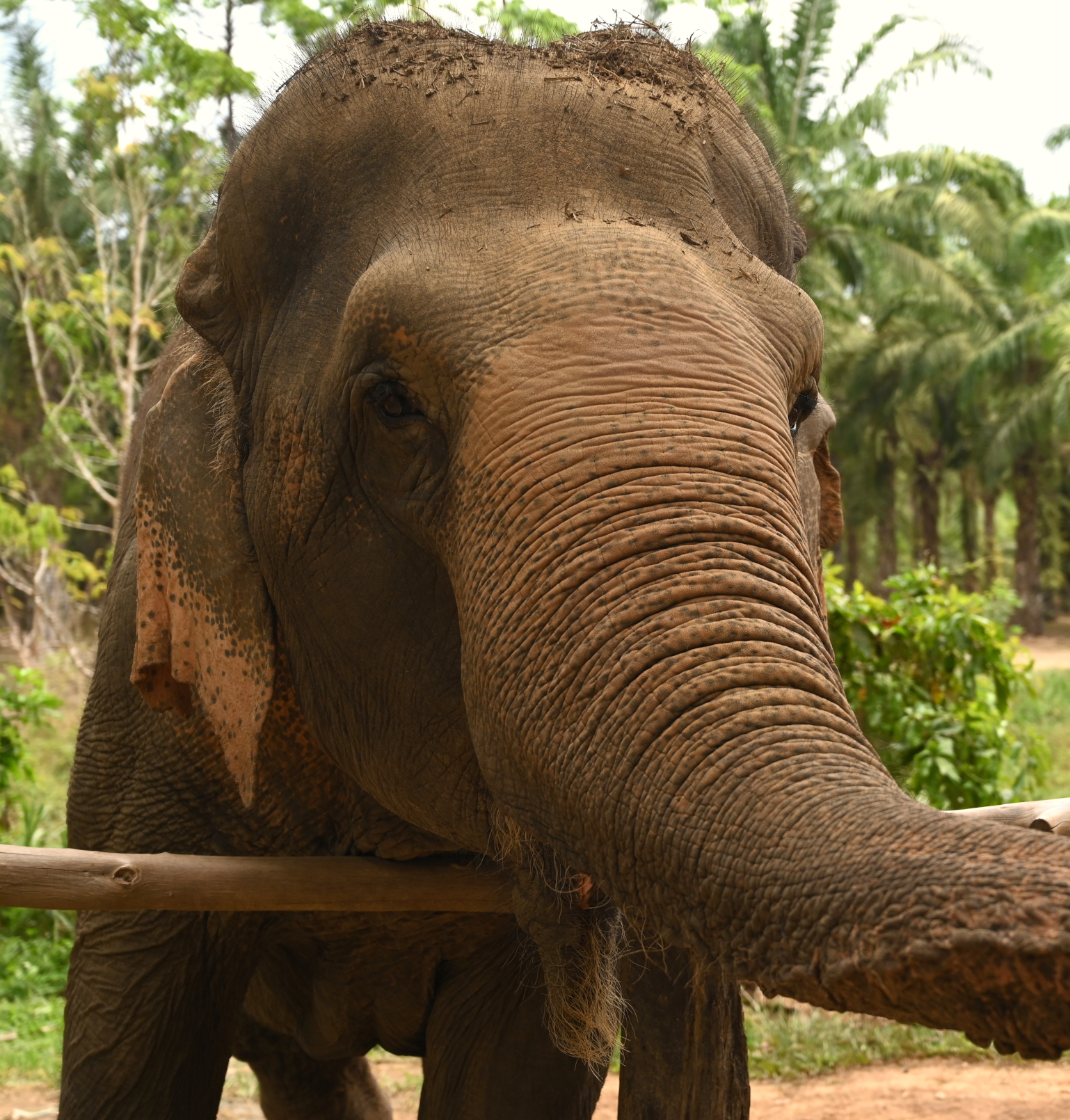
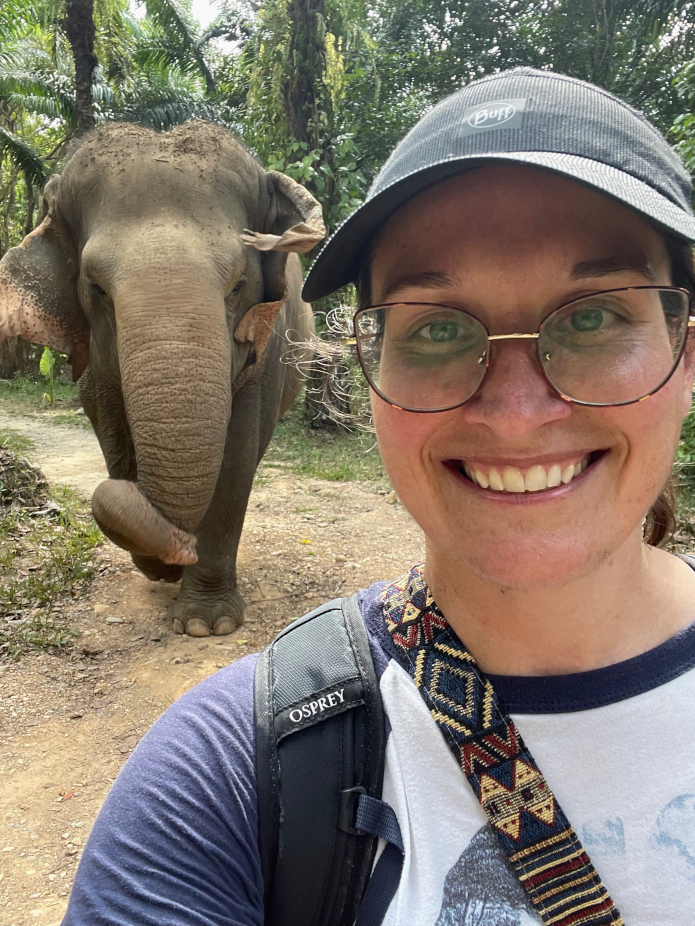
She was older than me – just barely. Her shining mahogany eye considered me from underneath a patch of wiry black eyelashes. Surrounding the eye was deeply crinkled skin, its texture that of crumpled parchment and its color that of earth. I stood so close to the elephant named Wassana that she filled my entire field of vision in Picasso-esque bits: a trunk here, an ear there, a foot down there. A rib-high wooden fence was all that separated her body from mine, and a single calculated step on her part could have ended my life. Still, all I felt was awe. I pressed my hand against her warm trunk and the bristles tickled my palm. When I offered her a banana tree heart the size of my forearm, she delicately plucked it from my hand, the tip of her prehensile trunk curling around my hand like a moist thumb before she flicked the juicy treat into her mouth and crushed it with gusto. It was clear that both she and the other elephant preferred the malleable flesh of the banana trees over the spiky pineapple greens, which was understandable since the latter are just ludicrously outsized version of pineapple fruit tops that didn’t look terribly appetizing. I also preferred the banana trees because the pineapples had to be beaten against the ground a few times before they could be eaten, and an 8-foot-tall elephant flailing what is essentially a pineapple mace at the end of her trunk is a bit terrifying. I finally backed away.
Any kind of paid encounter with captive animals makes me leery, since it’s hard to know whether the organization’s practices are truly humane or charitable, or how the animals feel about being exposed to a constant stream of generally well-meaning but loud and untrained human strangers. The popular local tourist activities of trekking (riding) or even bathing elephants have been exposed as notoriously terrible ideas, since they include training-related trauma and are a source of ongoing stress for the animals. Yet the elephant sanctuary in Khao Sok seemed mostly harmless: they just had two older “eles,” Wassana and Maruay, who had been rescued from the trekking and logging trades. Your only option for interaction is joining a small group tour to pet and feed them some bananas and leafy greens, while walking alongside them in their forest sanctuary home. Leave only footprints, and all that.

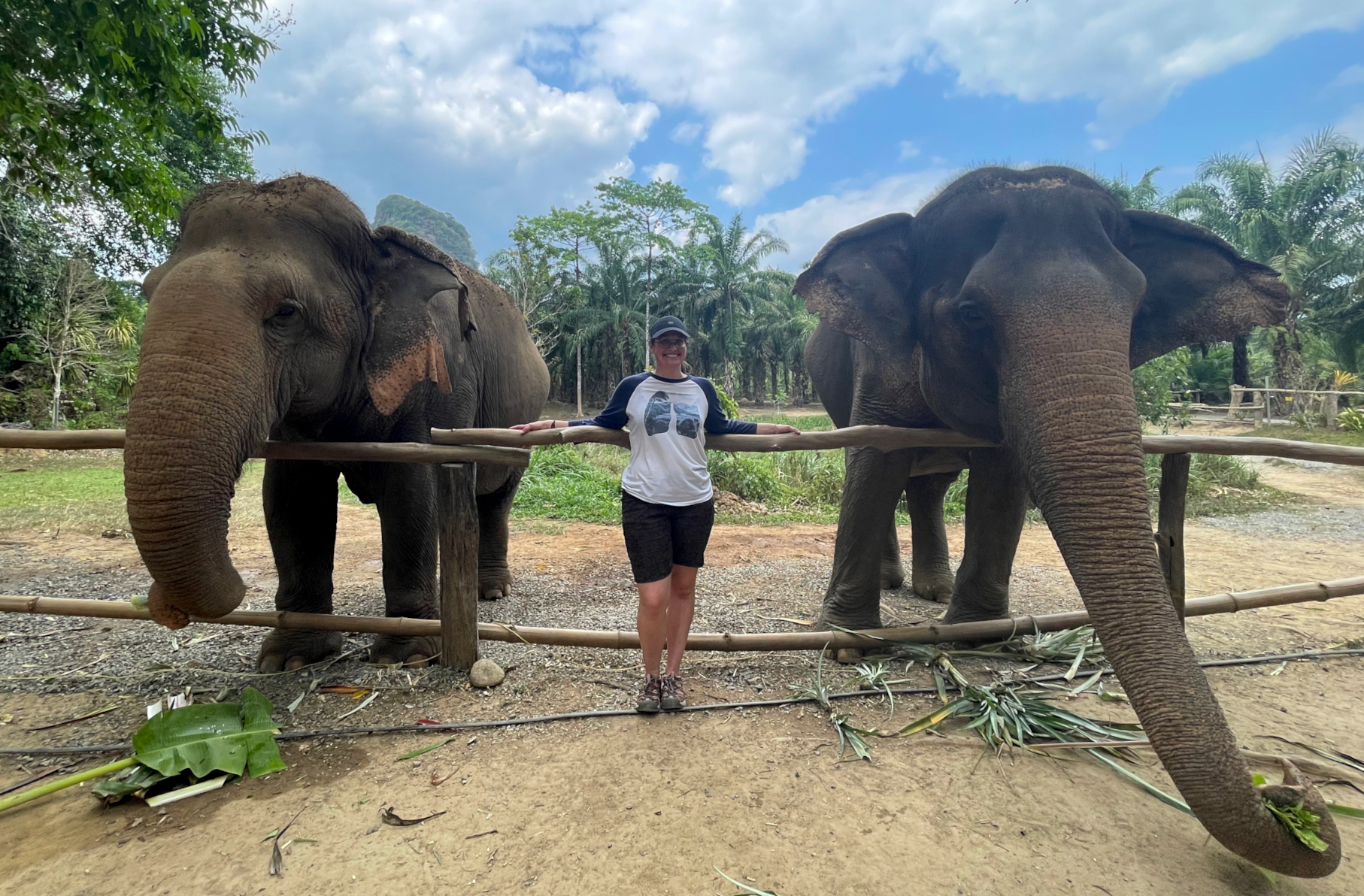
Once the leafy greens were gone, the eight humans on my tour group were handed buckets filled with tiny bananas. As soon as I was in possession of premium snacks, the elephants became as interested in me as I was in them. Jackpot! We took a ponderous loop through their open forest home, and it felt like I was being followed by two enormous senior dogs. Every few steps I would stop and hold out a banana, and one or the other would plod towards me, her trunk extended to reach the fruit faster than her lumbering feet would allow. I had plenty of time to contemplate their size-to-speed ratio and wondered if this was how housecats feel about us. Soon I was brave enough to put the bananas directly into their soft mouths. Their human caretakers seemed just as enamored with the creatures as I was, caressing their solid-muscle trunks and laughing when the elephants playfully swatted at their arms with their wire-brush tails. Too soon, my foray into the eles’ world was over and I was back in the cargo bed of the sanctuary’s battered pickup truck, sailing through the baking evening streets of Khao Sok towards my jungle-hut lodge home.
In classic Jill travel style, I had arrived in Khao Sok earlier that day without any kind of itinerary. This included arriving at my lodge a few hours too early to check in. The hosts were kind enough to give me a binder full of activity ideas and a free (hot!) coffee while I sat on the shaded veranda, and I watched a troop of wild macaques terrorize a staff of domestic waiters at the restaurant across the river. Judging by the scripted reactions of both parties, it was a war that had begun many moons ago, and everyone knew it would continue for many more. Finally the macaques conceded the battle and slowly retreated across the roof before melting back into the jungle. By the time I had reached the chunky dregs of my instant coffee, I’d formulated a half-baked plan: kill an hour at the Khao Sok National Park, which spills straight up to the edge of town, before my tour with the elephants.
The National Park contains an incredibly biodiverse ecosystem as old as the Amazon. It’s also home to one of the world’s largest and stinkiest flower species, the rafflesia, which are insectivorous red flowers that can grow up to a meter across and are nicknamed “the corpse flower” due to its rotten fly-attracting aroma. The flowers are so threatened by poaching that their locations are kept secret and you have to hire a guide to get to them, but I didn’t particularly need to witness in person a gigantic fly-eating flower that smelled like a corpse, so I opted to just wander into the jungle unguided (classic Jill travel style). There were only 300 meters between the park boundary at the edge of town and the trail head, yet they managed to squeeze in two manned check-in points where I had to write my name and arrival time in a paper ledger so the rangers could track every visitor and ensure we all made it out alive before nightfall. The underlying message was that the jungle is no joke, and I received it loud and clear – as I walked into it alone wearing sandals and shorts and carrying no survival gear whatsoever. As an afterthought I bought an ice-cold Singha soda from the little park shop and cracked it while walking into the jungle. It felt a bit absurd to be carrying an ice-cold aluminum can as I was swallowed by the sweltering wilderness, but welcome to the 21st century I guess.
The welcoming path was so wide and flat you could have driven a car up it, and there were reassuring glimpses of the village through breaks in the canopy. In all other regards it felt like a proper jungle. Clusters of bamboo hollowly knocked around in the humid breeze above my head and warning signs about wild elephants and monkeys dotted the path. Huge karst monoliths typical of the region jutted upward from the valley floor, like so many Douglas-Adams alien spaceships that had swung by to visit Earth. The dozen other hikers I encountered all excitedly told me about all the monkeys they had just seen and gestured at the path in front of me. I kept one eye on the path, looking for simians, and the other on the clock, knowing I’d have to turn around soon to be on time for my elephant date. It was with a stab of disappointment that I finally pivoted and started heading back out, only to find that a small troop of juvenile long-tailed macaques had snuck up behind me. I crouched motionless on the path, letting them dictate how close they wanted to get. The teenage monkeys wrestled with each other in between foraging for snacks and playing with leaves, keeping tabs on me without seeming overly concerned or curious. I held my ground and watched as one by one they bounded past, finally vanishing down the path.
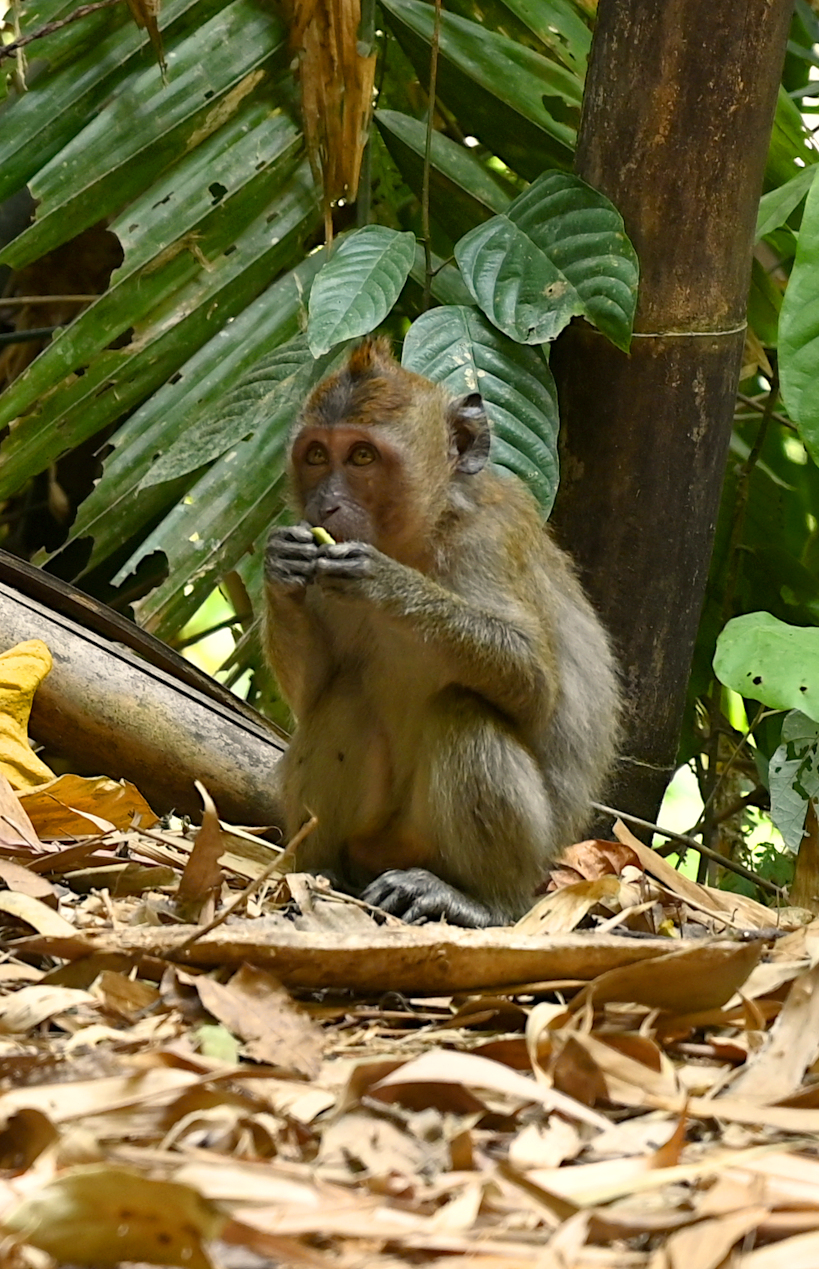
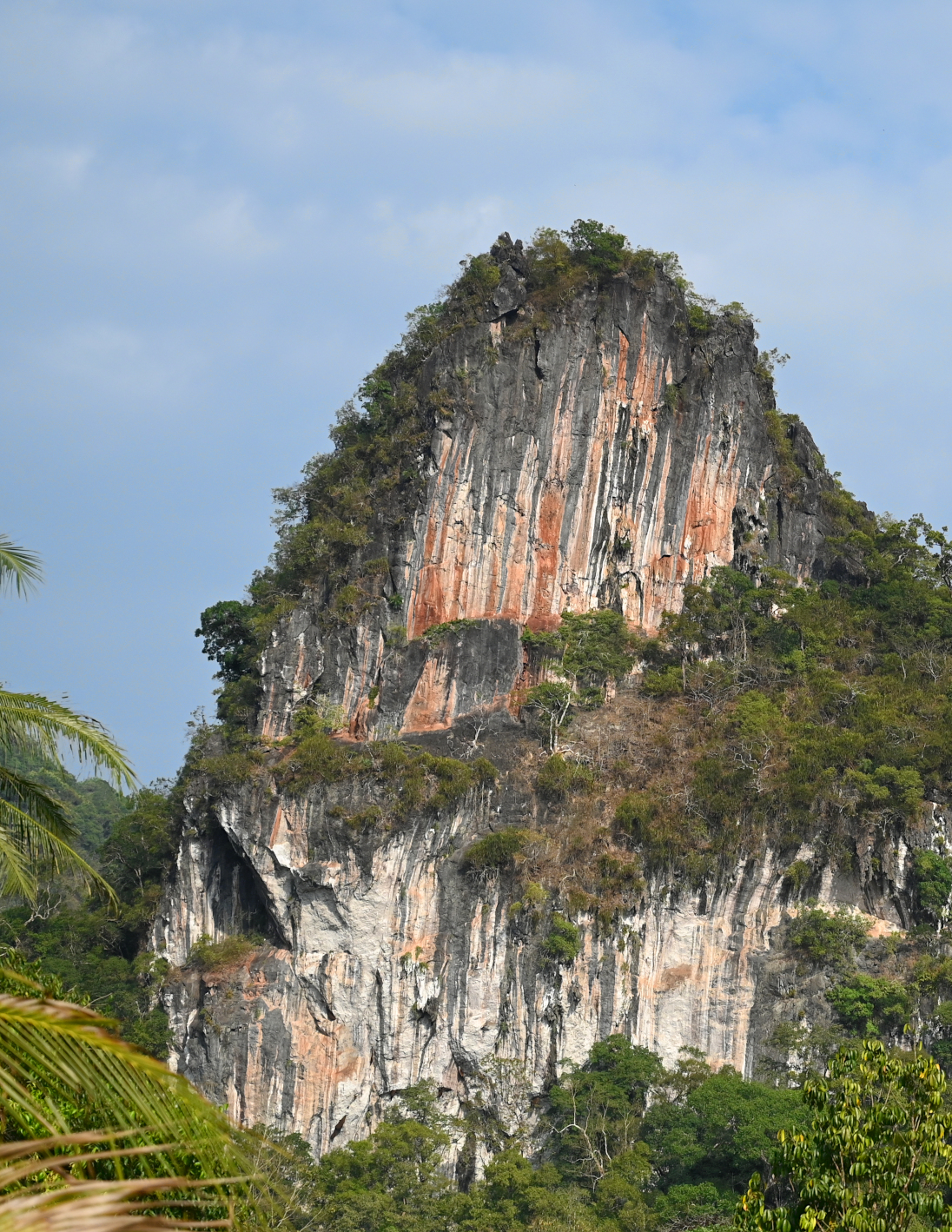
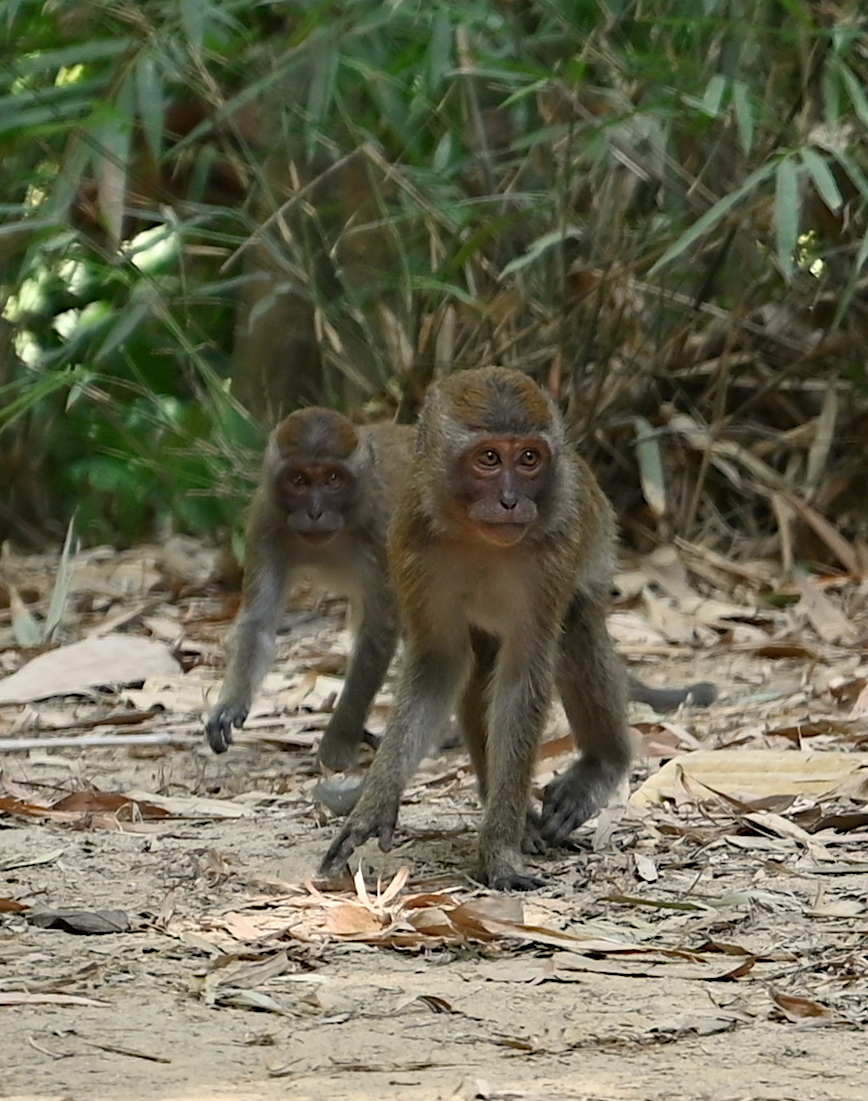
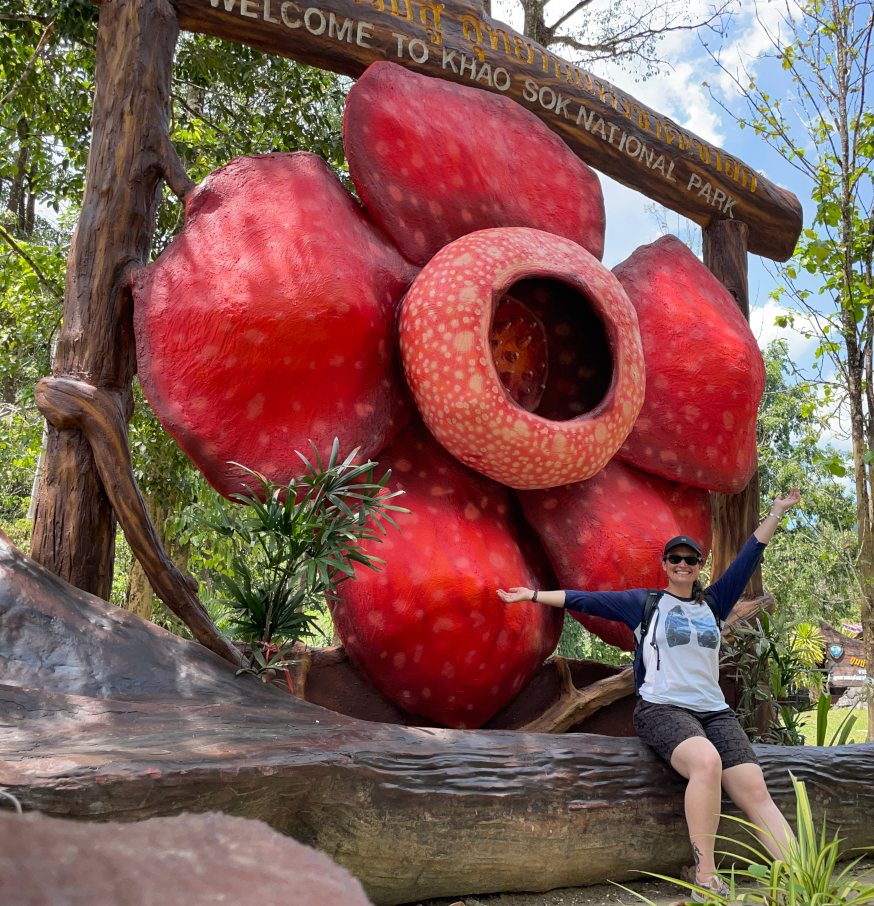

We’re all monkeys here
Khao Sok was only really meant to be a layover point for me, since my 36-hour guided tour to the Cheow Larn Reservoir would begin at a nearby hostel early the next morning. The walkable little jungle village charmed me anyways. The welcoming jungle paths and having delightful animal encounters and even eating delicious curry, served to me by a chatty local, stood out among my 14 Southeast Asian days as one of my favorites. It was certainly a place where I wish I’d had more time.


Delicious curry options at Nongsaw Thai Food / My daily mango sticky rice and the jungle environs
 Window Seat Odyssey
Leave a comment