This time, I was in luck. Before I even boarded the tour minibus, the driver/guide Brian* offered me the copilot’s seat right at the front and directly next to his. I accepted before he’d even finished explaining the footnote that my seat folded down to block the bus entrance so I’d always have to be first off and last on the bus. Maybe normal people would be annoyed by this, but I was blinded by the silver lining: it would give me plenty of chatting time with the local at every stop while we waited for the stragglers to return. Jackpot!
Brian technically hailed from Glasgow, the “rival city” of Edinburgh. It’s a geographic rivalry that runs along the same lines as Michigan-Wisconsin or Michigan-Illinois or literally any neighbouring state-state or city-city relationship that forms when the two cultures are indistinguishable to anyone who isn’t directly embroiled in the rivalry. The Glasgow-Edinburgh conflict seems mostly above-belt, at least. One of the first things we saw as we drove out of town was a statue wearing a traffic cone as a hat. It’s a practical joke that began in Glasgow over 30 years ago and has cost their city council thousands of pounds per year for cone removal and/or statue raising, which has done a sum total of nothing to dissuade Glaswegians from continuing the tradition. The gag has recently been emulated by Edinburghites, and Glaswegians (or “Weegies” as they call themselves) are not amused by this intellectual property theft. As we crossed the city’s border, Brian quipped that he was proud his day job allowed him to do what what all Weegies dream of doing: taking people out of Edinburgh.

Regardless of the Weegies’ opinion of the place, I was loath to leave Edinburgh even for a day, but I couldn’t very well go to Scotland without at least dabbling in the Highlands. I didn’t fancy a death by accidentally driving on the right-but-locally-wrong side of the road, though, so guided minibus day tour it was. I’d always envisioned the Highlands as being “up” and therefore strictly North, showing my true colors as a geographically-challenged Northern Hemispherian, but the mountains actually bleed down into the western half of the country too. The Highland mountains are ripped from the same geologic cloth as the Appalachians, meaning they’re weathered chains of grandfather hills rather than jagged young peaks like the Rockies or Andes.
My copilot seat came with a wide-angle view of these hills that undulated in a visual lilt, soft and rambling toward the horizon. Patchwork clouds cast dancing shadows upon hillsides that have been stripped almost entirely of their native forests but are swathed in heather and moss. The roads we traveled were originally lain by invading Romans who’d struggled to defeat the resident Highlander clans, whose knowledge of their own lands meant they had a knack for winning battles (go figure). I’m not sure how much of the winning came down to the challenging landscape and how much could be attributed to the locals’ behaviour, though. Apparently the Highlanders would completely remove their kilts before a fight, since the long bolts of fabric were cumbersome, and then run bare-assed into battle.
You’d think Hollywood could do something interesting with this information.
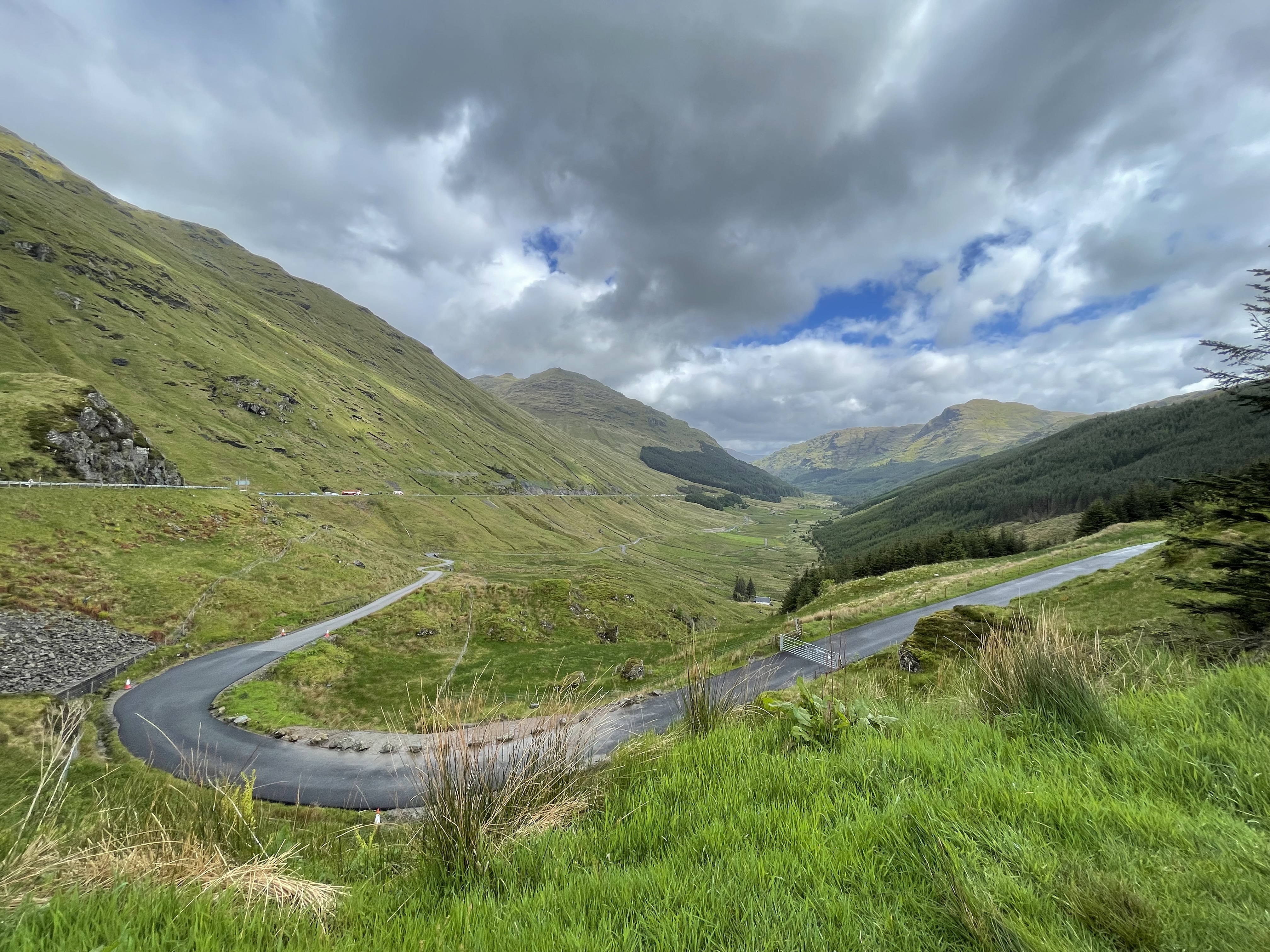
I’ll answer the most important question you must have now: no, I did not see Nessie. I’d gone in the completely wrong direction from Loch Ness, choosing to head to the west highlands that I’d recently learned about rather than the north. However, I did see something equally fantastic swimming in the lochs: scantily-clad Scots. In May. I stood shivering on the shore in a fleece-lined sweatshirt and watched a flock of grandmas all splashing around like they were basking in the mid-summer Mediterranean. I’ve seen surfers in Lake Superior in May, but at least they wear wetsuits over their Speedos. It seems Highlanders might be cut from an even tougher cloth.

Where my other tours were all short enough to likely have been scripted and memorised, Brian was given the mic for almost twelve hours. He did an impressive job of verbally going off the rails without driving off the road and managed to keep track of more than a few running threads all throughout the day. By his own reckoning he only havered a little. I shudder to think how much he knows that didn’t make it into that particular day’s speech, though.
One of his interwoven threads was rating the fake Scottish accents by non-Scottish actors. The highest rating went to Michael Meyers’ Shrek performance (9/10) thanks to his growing up with a Scottish grandma. The lowest was somewhere between Mel Gibson’s Braveheart and Liam Neeson’s Rob Roy, in a shockingly poor show for an Irishman. James Doohan’s Scotty got an honorable mention, since the Star Trek actor had a mediocre accent but his character did wonders for Scottish representation in 60s mainstream media. Obviously, zero points were awarded to the Simpson’s Groundskeeper Willie.
My favorite ongoing bit was the choreographed soundtrack. Music is one of the oldest forms of magic, capable of changing moods, setting scenes, and transporting you through time or space. I’m a soundtrack nerd who often listens to scores while I write, throwing on Harry-versus-Voldemort scores while tackling the foe that is my thesis or Braveheart scores while spinning yarns about Scotland. So hearing the Outlander opening track as we drove up to the well-used filming location of Doune Castle and then Monty Python’s “Knights of the Round Table” as we drove away, I was flooded with emotion and an itching in my palm that demanded I start writing immediately. During the longer driving stretches we got more generic Scottish songs that ran the gamut from every Proclaimers song ever written to Runrig to pipe bands to the Proclaimers. Hands-down the best part was that the songs were given context by Brian. For example one of Scotland’s favorite songs is “Loch Lomond,” which is inexplicably played both as the final song at weddings and a bloodlust song at football matches, even though its lyrics are depressing and have myriad tragic interpretations. Brian’s lightly-havered version involved two brothers who had to decide which one of them would be executed for a crime, and in the end the elder brother sacrificed himself after the younger fell asleep in the middle of their debate. Lovely note on which to end a wedding or encourage a football team, no?
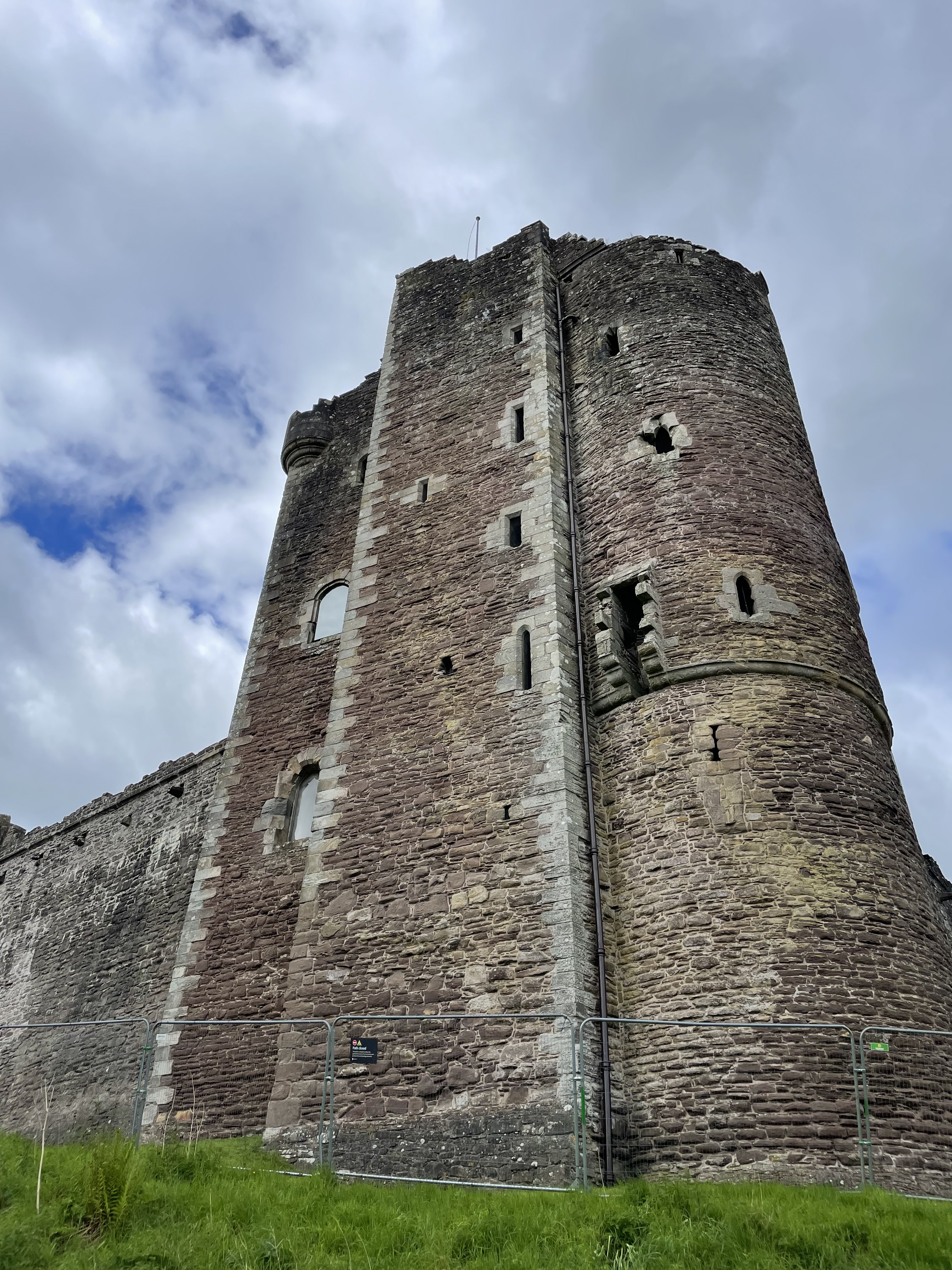

⇐ Doune Castle is a well-used filming location / ⇒ Kilchurn Castle
One upside to befriending guides is that they’ll often tailor the speech to suit your interests. Upon learning that I was studying forest genetics, Brian gave a ten-minute spiel about the history of forestry and the impact of climate change (you’re welcome, other tour participants). Why more people don’t take advantage of this perk, I’ll never understand. It’s like getting a window seat and closing the blind before the plane even leaves the ground. Another upside is that they might spend another ten minutes helping you rescue your phone after you tried to take an auto-timed selfie on the shore of Loch Lomond and instead dropped the phone down a narrow crack in a two-ton boulder. Brian, you absolute legend.
We arrived back in sunny Edinburgh and I readied my things to go post up in a whisky bar somewhere to dull the throbbing pain in my hands, which had been scraped raw during my desperate bid to retrieve my phone. As I hopped out of my beloved copilot seat for the last time, I patted my pocket for the hundredth time that hour to check that my phone hadn’t wandered off again. Like a normal and polite person I hung around to give a final tip and some pleasantries to Brian. His final comment was a much-dreaded one about my future career plans but I managed to deflect by complimenting Scotland and saying I would love to move there. He said if immigration laws were up to him then they’d also love to have me, which is basically a legally binding verbal agreement and now they have to let me in, right?
Right??!

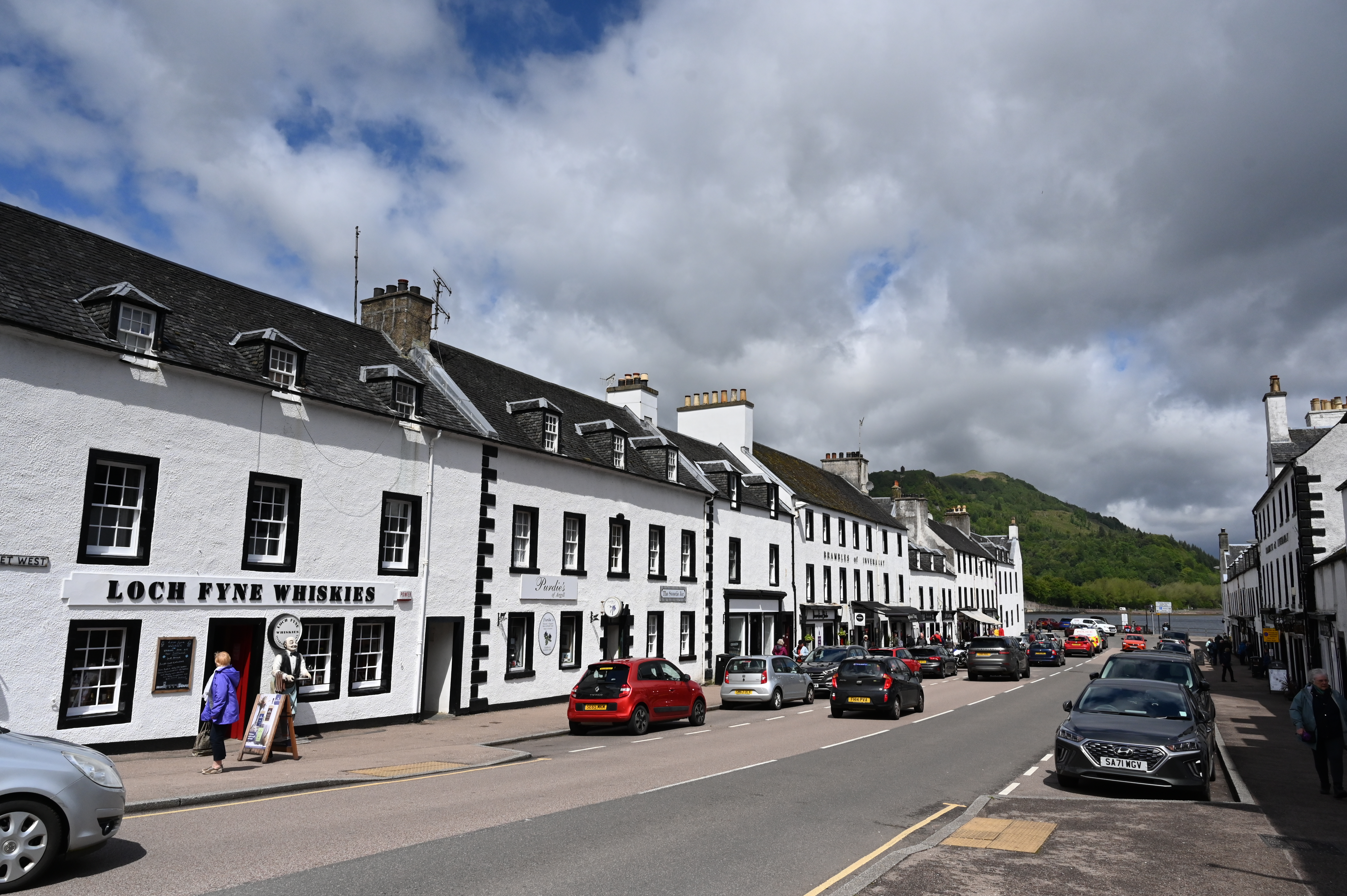
Inveraray Castle & town
* Name changed to protect the guilty
 Window Seat Odyssey
Leave a comment