Dates of visit: July 5 – 11, 2021
On the third day, I made my peace with the salt.
You could say it was only a matter of time, considering I’d arrived on the Mediterranean coast in the middle of a July heat wave, but given my history as a heat-phobic woman I’d say it’s a miracle it happened at all. The salt came to me in many forms: breathed into the humid air by the pounding surf, painted onto my clothes every time I brushed against a wall, created by my every pore. Eventually the water would take its leave, pulled up and away by the tireless wind and relentless sun, until only crystal remained. From the moment I arrived in Zadar I was endlessly frosted in white.
At first I tried living in the shadows and taking multiple showers a day in freshwater so cold I could only stand under it for five seconds, but nothing changed the amount of salt I encountered or ingested or produced. I finally reached the breaking point while standing on the edge of Dugi Otok Island’s sunbaked cliffs at high noon, which I’d hiked up despite the mercury pushing 105. Orange cliffs met cerulean sea so far below my feet that I had a birds-eye view of the birds themselves, but any pleasant thought I could muster about the beauty of this place was overridden by my discomfort. And then, just as I was about to wipe my brow for the fortieth time that hour, something finally snapped.
This was first real trip I’d taken since March 2020. The simple act of booking the flight had been a cathartic ray of hope after the lockdowns and loneliness and despair. Planning this whirlwind tour of Croatia’s coastline, in which I’d fly to Zadar, bus to Split, then ferry onward to Dubrovnik and back, was a borderline-religious experience for this starved travel zealot. And it wasn’t just me: all throughout the country I’d meet an endless string of solo travelers who looked just as dazed as I felt. We were all so shocked to finally be on the road again after being grounded for so long that nearly every one of our awkward conversations began with the mutual admission that we had forgotten how to talk to strangers. I, for one, had lost my grip on who I even was. This trip was to be my great re-introduction to the world…was I seriously letting a paltry thing like salt stand in the way of it?
As I stood there contemplating this, an invisible army of screaming cicadas offered to drown out my thoughts completely. I took a deep scalding breath and then accepted, exhaling all my negativity and frustration into the humid air. With that breath I also surrendered my plan to hike further along the cliff, and instead scrambled back downhill to seal my acceptance by immersing myself in the original source of all this salt: the Adriatic Sea.
And the stuff I found when I finally submerged! Soft ochre sponges dancing in the turquoise current. Camouflaged gobies doing an excellent job pretending to be rocks. Black urchins wearing actual rocks as protective helmets, cobalt sea-cucumbers doing important cobalt sea-cucumber things, spindly starfish so orange they glowed in the navy depths. Once I knew what lived within that wide blue expanse I could scarcely keep myself out of it, and I spent hours every day immersing pieces of myself: my feet or my body or my mind or my entire being at once. The whole focus of my trip shifted, from wandering across land to wandering through the sea, from the history and architecture of Croatia to its natural beauty. I surrendered to the current and the adventure became more organic, more familiar, more me.
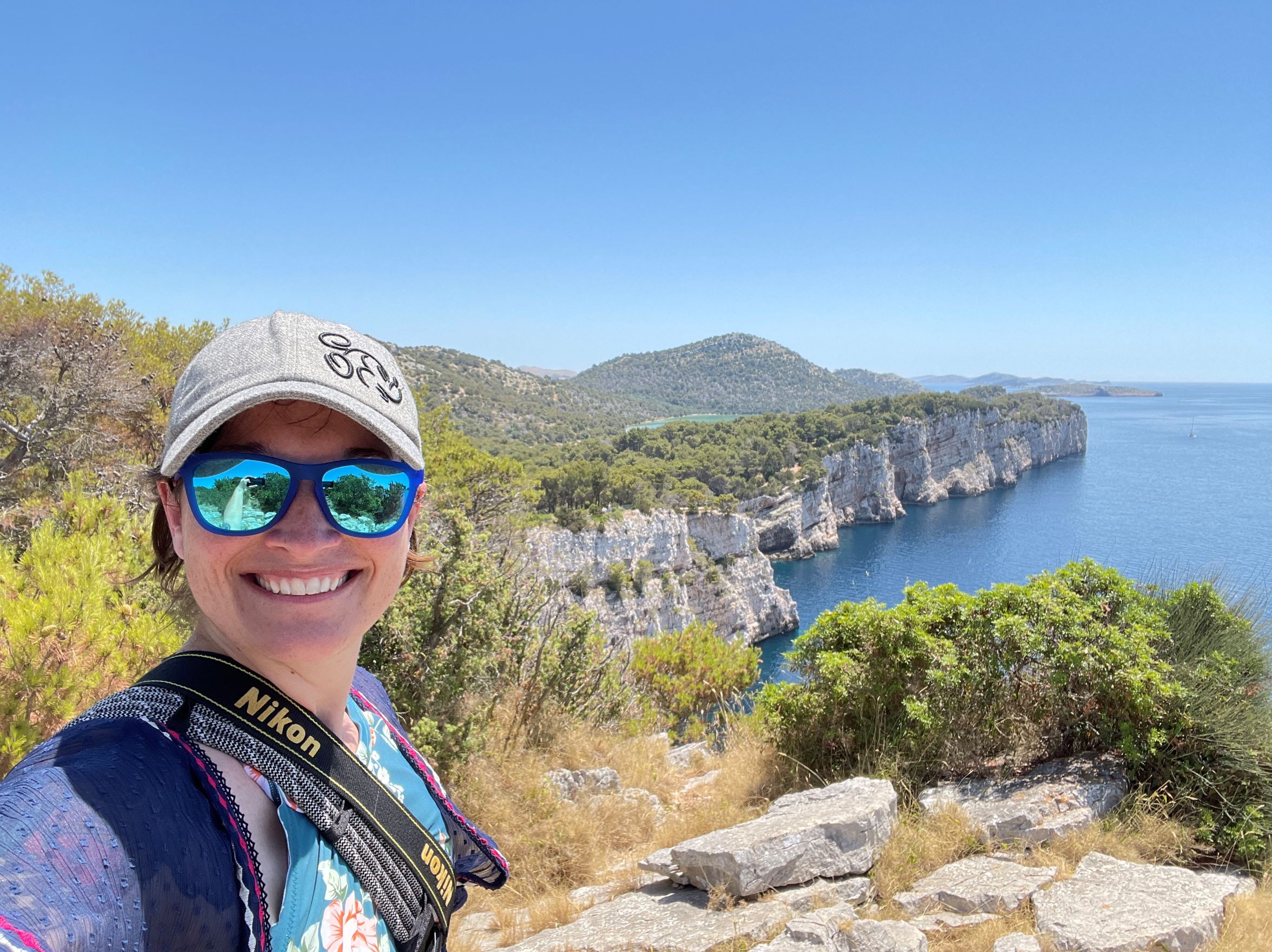

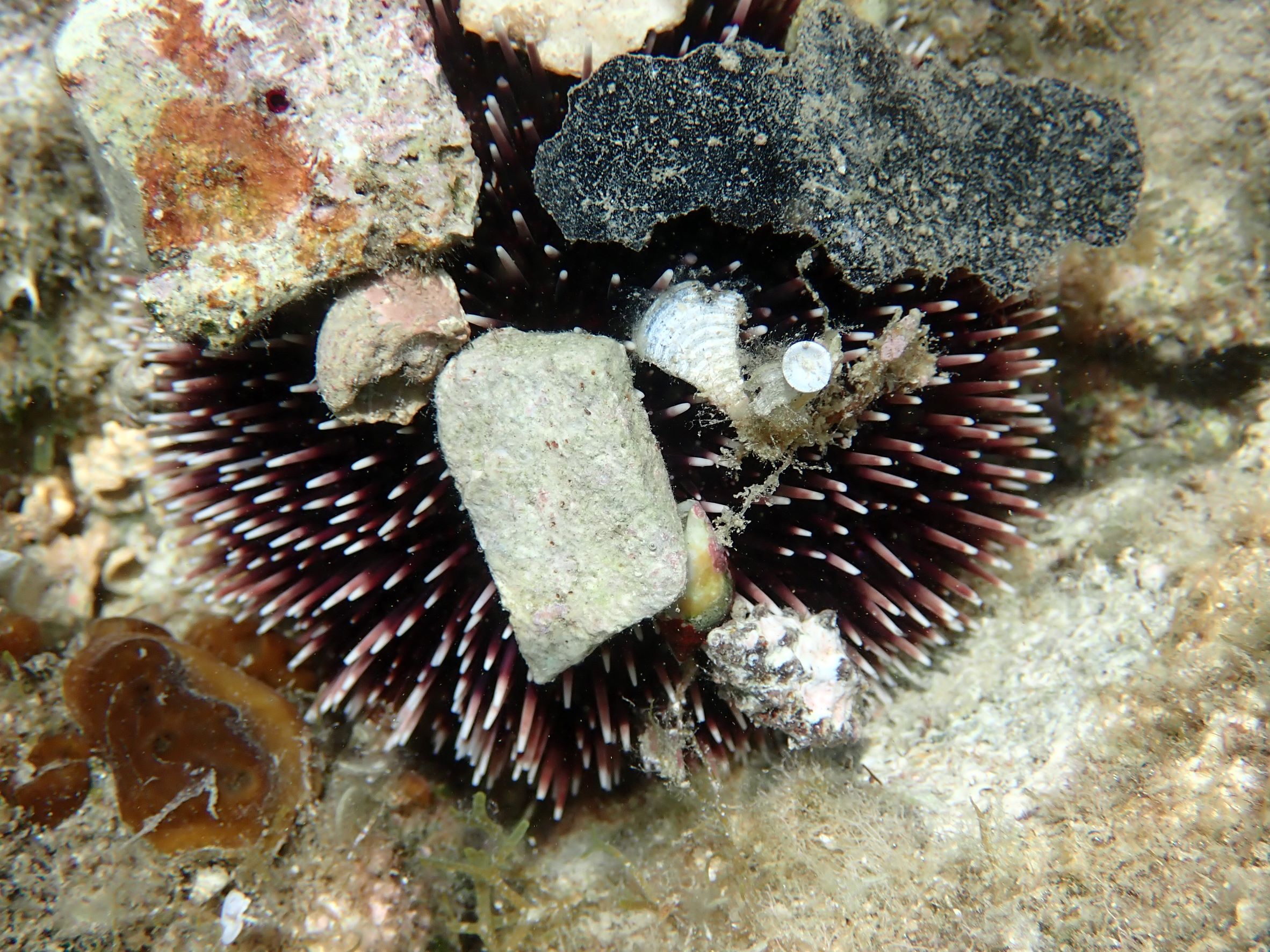

Dugi Otok’s cliff shortly before The Great Salt Reckoning, sea cucumber and sea urchin wearing rocks as protective hats, and a sponge.
Zadar
I’d chosen to start in Zadar because I wanted to experience a more local side of Croatia and I’d heard this was where they all gathered for their seaside vacations, like how Germany’s Black Forest region mainly attracts German hikers. As I strolled through the gate into Zadar’s old town near sunset on my first day, though, all I saw was foreign tourists. Waves of confuddled humans wandered sun-struck through the streets, their cheeks glowing with the unmistakable pink that foretold of lobster-red waiting in the wings. Why do I always notice the tourists first? The noise, I guess, or their incongruity against the Ancient Roman backdrop.
The next morning I changed tack and woke up early to watch the main square wake up, hanging my whole torso out my hostel dorm’s window to get the full panoramic view. Oystermen hauled their morning catch through the back doors of restaurants and resident street artists shuffled around their wares in the pastel light. One of my dormmates, an older Croatian housewife, pulled up a chair next to me and told me in broken English about her life further inland and how she comes to Zadar as an annual pilgrimage by herself, for herself, to “take the healing” of the sea. Looking back, I owe her thanks for planting the idea-seed in my head.
I wandered down a street of contemporary cobblestones sandwiched around ancient Roman flagstones and fell in with a squall of grandmothers who came from every direction but were all headed in the same: towards an open-air farmer’s market. I nabbed overflowing bags of hazelnuts and last year’s dried figs for about $2 each. I bit into the first fig and sweet sunshine flooded my tongue, and I was grateful that at least this one bright thing had come out of the year 2020.
My Morgenmuffel* ways eventually pushed me back into the role of a lazy tourist and I stumbled into the closest cheap coffeehouse looking for a hit of caffeine. I asked for a “plain coffee,” which earned me a confused look and a question-rebuttal of “Americano?” Yes, I nodded. I resembled that remark. Only as I navigated the already-baking streets at 8 a.m. while trying not to also scald my hand on the cup did I remember that iced coffees exist. I settled at a shaded perch next to Zadar’s sea organ, a fusion between art and engineering that turns the Adriatic’s waves into music. The breeze and waves were still fast asleep so the song was quiet and slow. By noon, though, the sound would grow into a moody hum that could be heard for miles around.
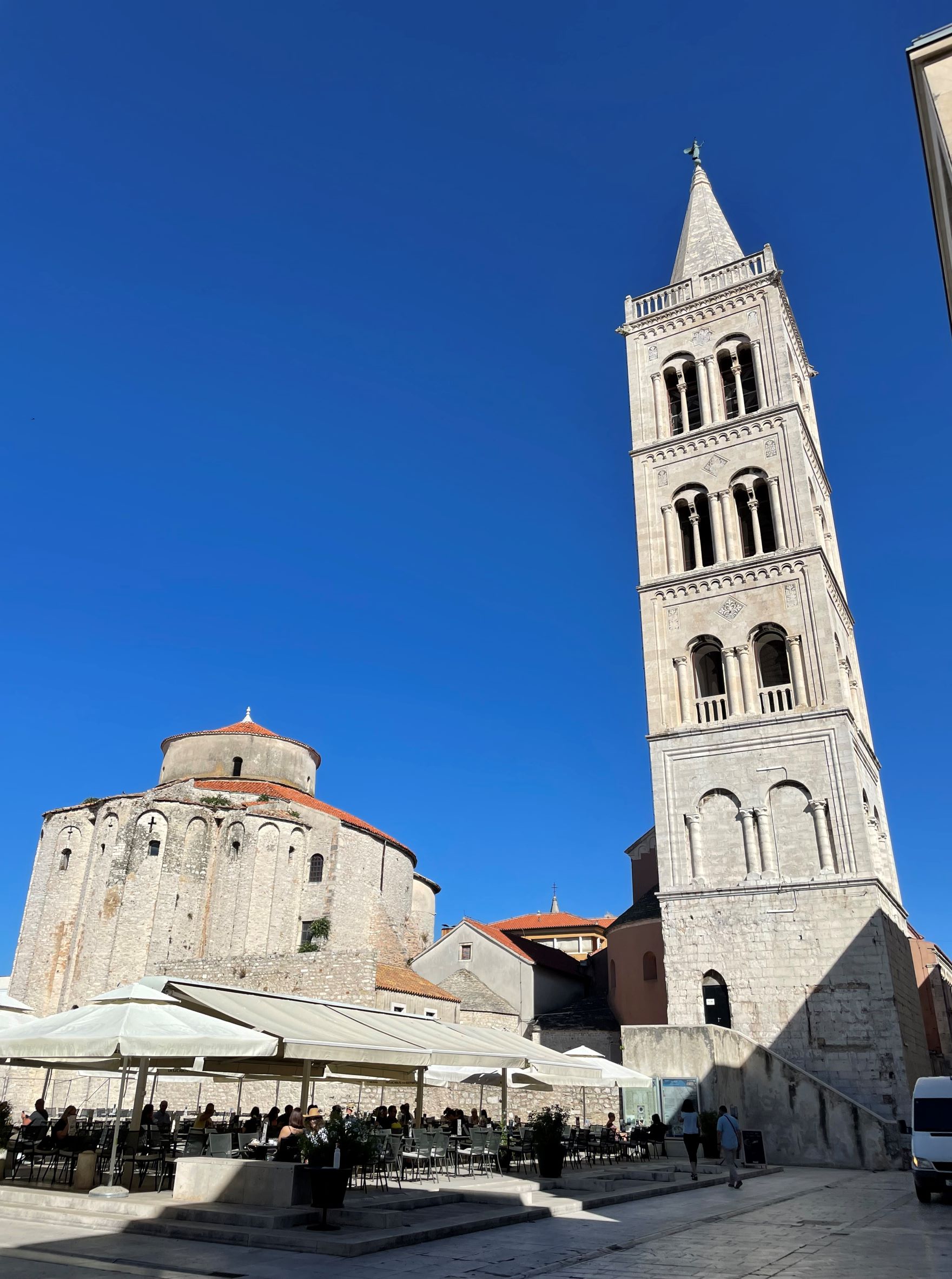


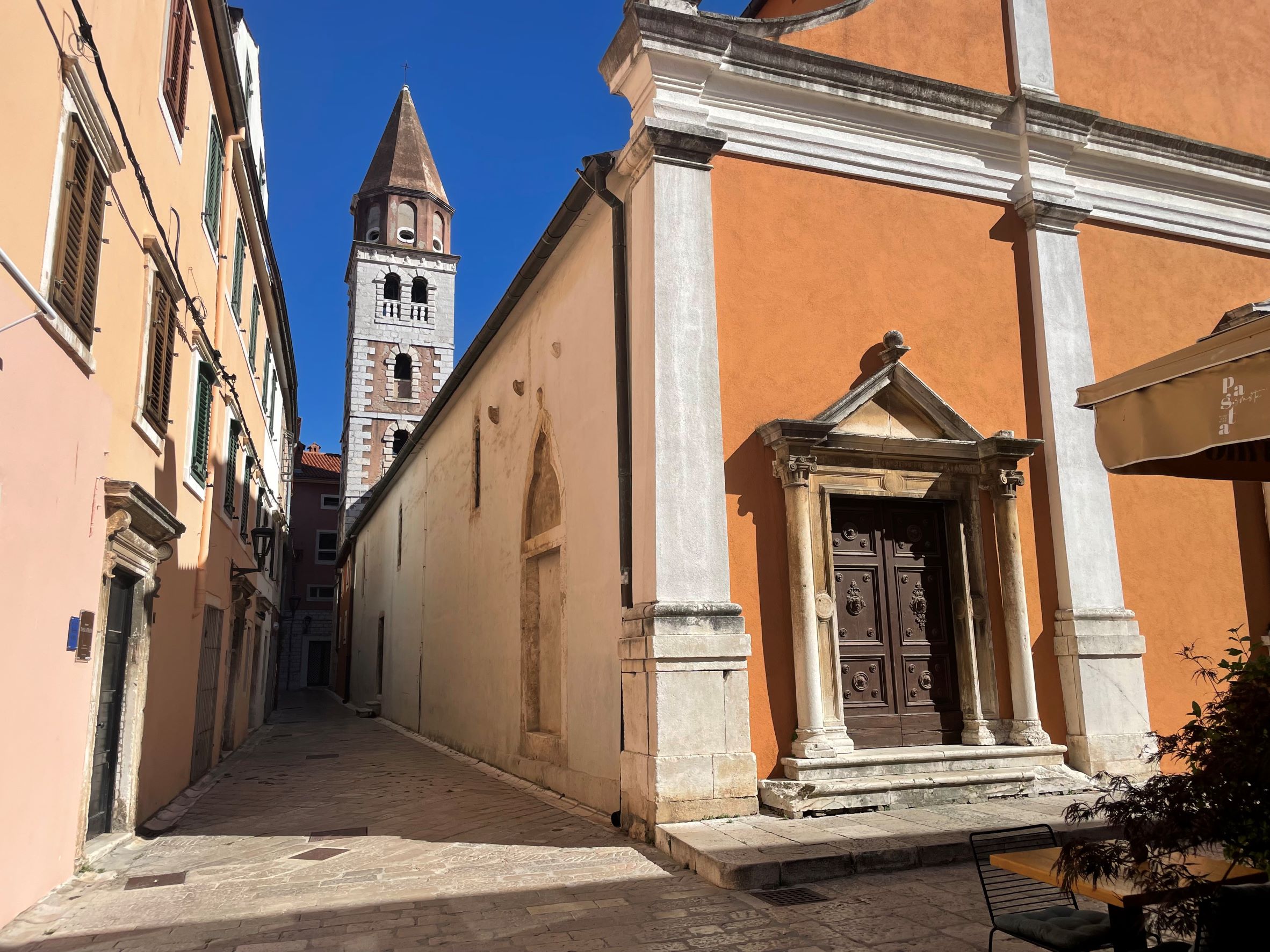
Zadar. Top left: the Roman Forum, top right: tourist waves along the waterfront, middle: Roman flagstones with modern, bottom: the Church of Saint Simeon.
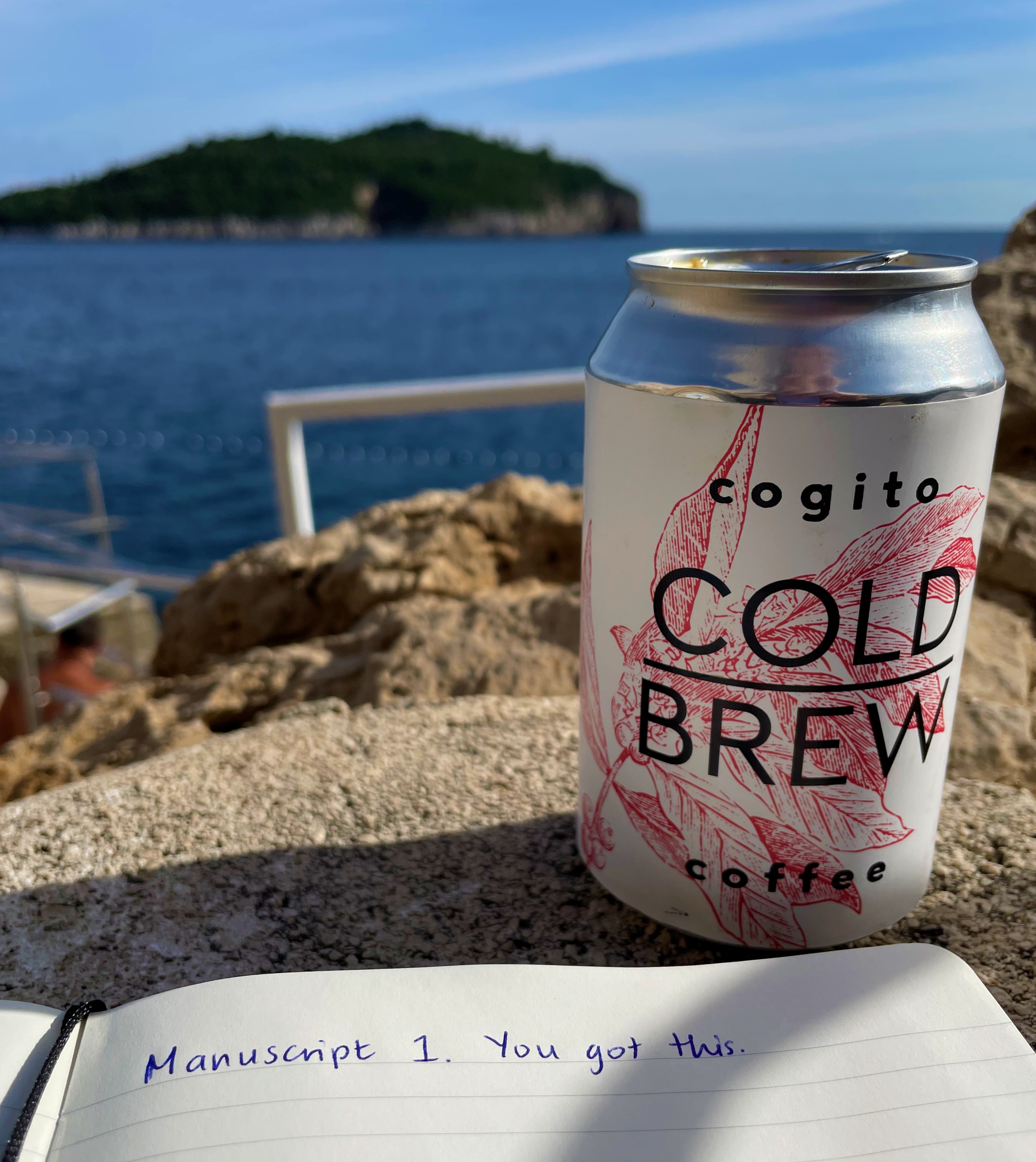
The good news about waking up at the crack of dawn to follow grandmothers and devour figs and sit by the sea organ is that there was plenty of morning time left for me to hunt down a better – and colder – second cup of coffee. There was no squall of local hipsters to lead me to a better cafe, so I resorted to Google and found the Cogito local coffee chain, which was far cooler than I. My favorite kind of cafe! Sitting still, I could finally watch how the locals blended into the city and surfed inconspicuously through the building waves of tourists. It turns out they really were everywhere. Maybe the locals just don’t call attention to themselves – they know where they’re going and what they’re about. They effortlessly camouflage with the environments because they’re a part of them. I noticed I was the only outsider in the joint: one passerby fist-bumped a seated friend on the way by and another pair got caught in a conversation-eddy with girlfriends before deciding to sit and stay awhile themselves. By the time I was three sips deep into my can of cold brew, I knew a morning trip ritual had been born.
Zadar is a tiny peninsula that wears a pearl necklace made of islands. Croatia has over 1200 of them: car-free islands, family-friendly islands, entire islands for rent, an island that looks like Mars and throws annual headliner techno festivals. Combined with daily tradewinds, Croatia is a sailing hotspot, and the shorelines north of Zadar have been so thoroughly colonized by marinas that there’s barely any space left for the few pebbly beaches. As a proud nature nerd, I picked a small-group sailing tour that took me to a sparsely-inhabited outer island with a national park: Dugi Otok. With just a local skipper, a couple from Austria who spoke Croatian**, and another woman from Zagreb who had come to take the healing of the sea, we motored out into the dead-calm morning through a maze of islands. The extreme salt and relentless wind has painted the islands’ windward slopes with a unique brush: little can grow in the hypersaline conditions, leaving bare the white knucklebones of karst limestone. The leeward side is a greener story, and sometimes two islands within a stone’s throw distance can be perfect opposites. We slipped through natural canals too shallow for most boats and witnessed Roman ruins crumbling into the hungry sea before finally drifting into the secluded bay of Telašćica nature park.
We were set loose for an hour to run around and play, either at the local Dead Sea (a self-contained hypersaline lake currently the temperature of a hot tub – no thanks!), the cliffs upon which I’d had my salt reckoning, or a soak in the cove where I fell in love with the sealife. All things considered it was a pretty eventful hour for me. On our return journey the wind finally began to build and we unfurled the sails as we rounded the passage through Ugljan island. Caught in a vortex of heated wind that tossed my wild hair and keeled us portside, we flew past the Roman towers and streets of old town, painted deep gold by the afternoon sun.


Left: Church of Saint Simeon, center: the wood-and-stone piano bench along the top of the sea organ (the actual pipes are underneath the pier at water level), right: sparsely vegetated islands near Zadar
Split
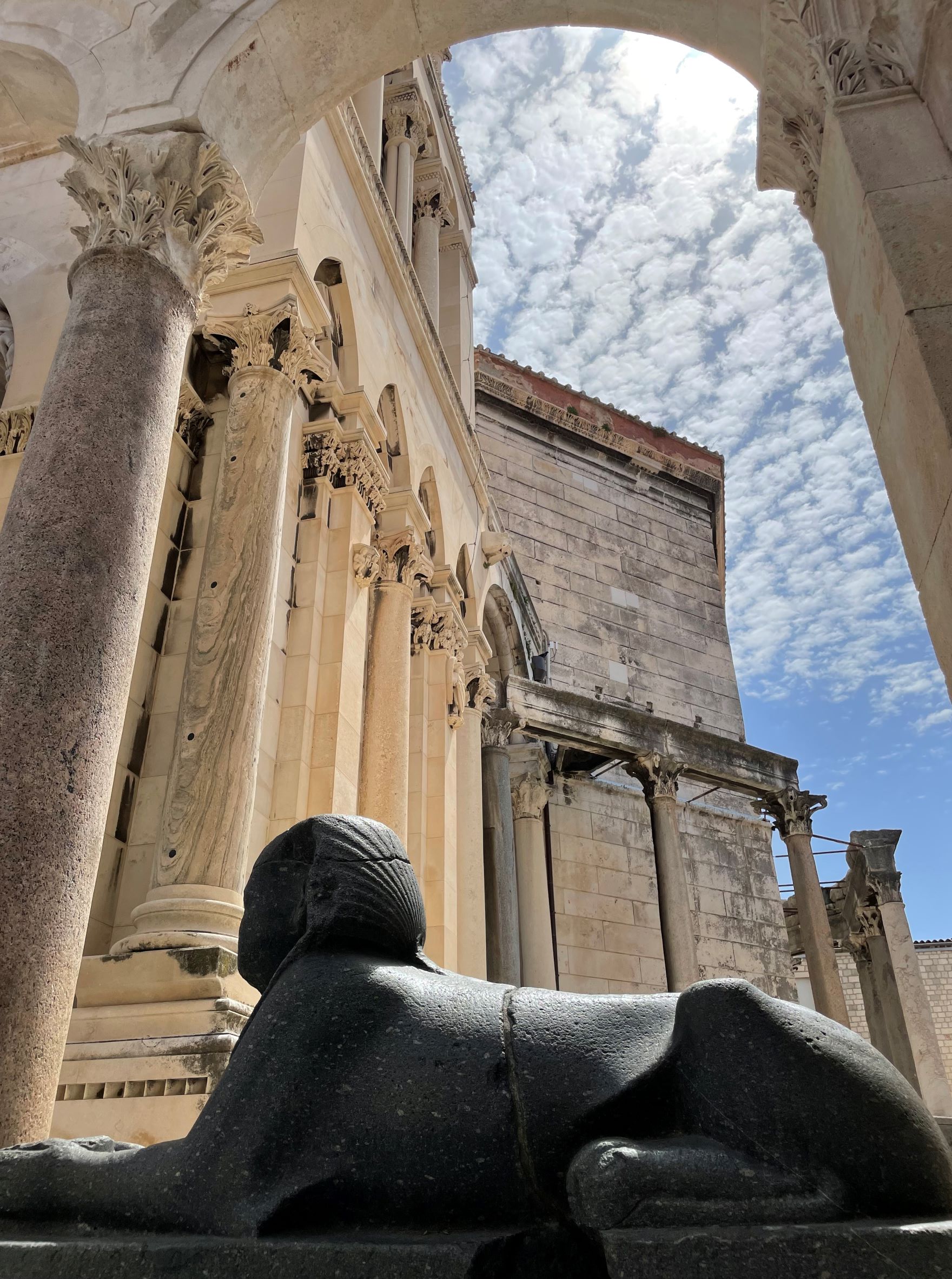
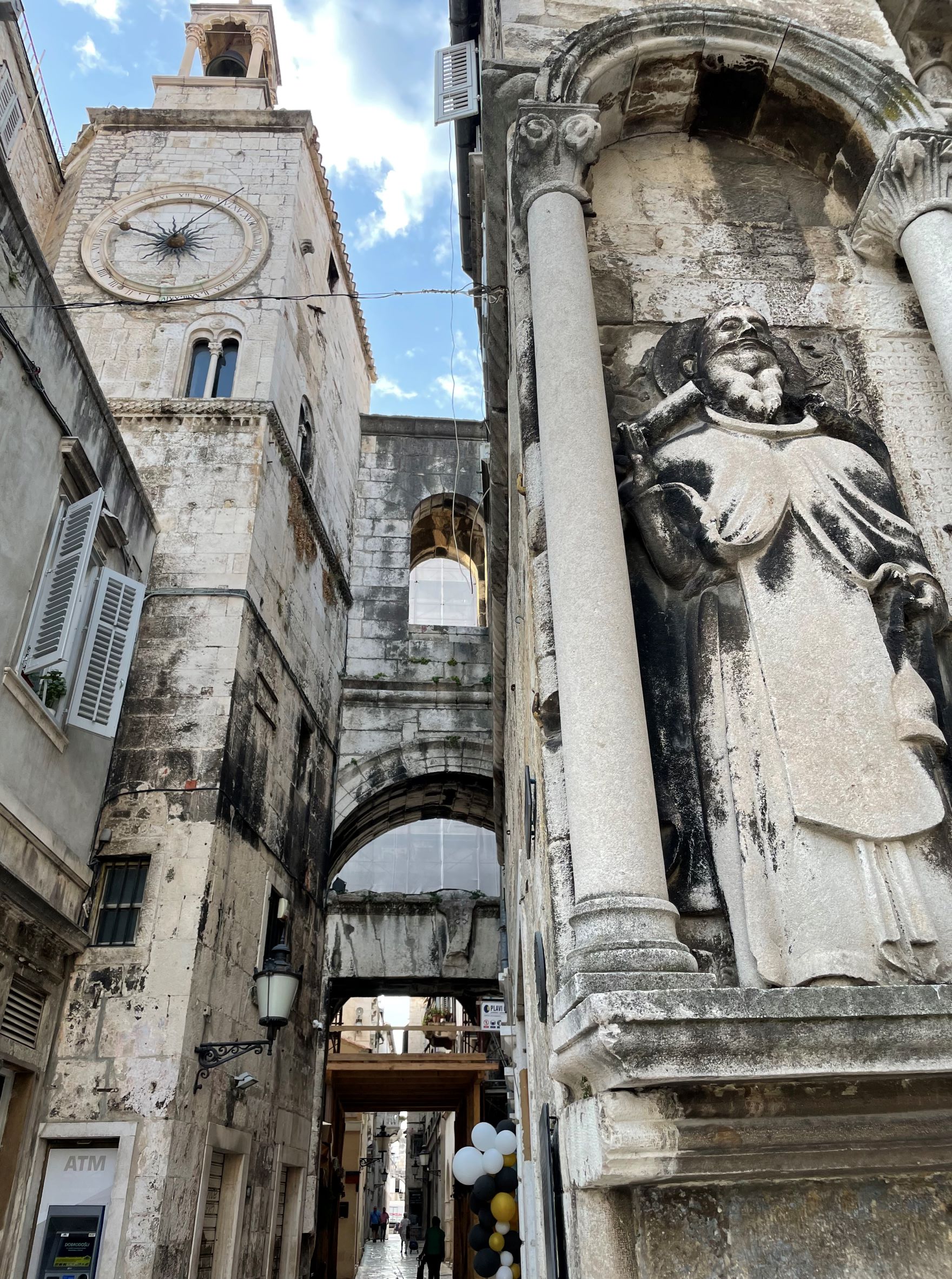
From Zadar I took a bus into a 16-hour whirlwind tour of Split, a mid-sized city halfway between Zadar and Dubrovnik in both distance and local flavor. The canyonlike alleys were taller and narrower than those I’d wandered in Zadar, many of them capped with a mind-bending array of stone arches whose function escaped me. Old town’s waterfront was occupied by colorful fishing boats and palm trees rather than beaches, so I skipped from one shaded coffeehouse to the next and plonked myself directly in front of every misting fan I could find. I happily devoured an entire sea bream fish for dinner after the waiter assured me that it had been plucked from the sea less than an hour beforehand, and as I picked clean its delicious bones I almost converted to obligate pescetarianism right then and there. I fell in with two hostel dormmates for a night on the old town, with a Studenac grocery store pit-stop to stock up on cheap drinks before joining the ubiquitous revelry that pervades the streets of party towns. The 2000-year-old streets shuddered with Deep House beats – probably small-potatoes vibrations compared to the millennia of warfare and general upheaval the city has already endured.



Dubrovnik
The seasonal Jadrolinija ferry from Split to Dubrovnik has indoor cabins that are salt-free, air-conditioned, and filled with comfy seats, so of course I spent the entire four-hour trip standing on the top outer deck being blasted by the 100-degree wind and salt spray kicked up by the engines. By that point in the trip I was so deep into my acceptance of the salt I’d come to love how it clung to my skin and tousled my hair into surfer-girl curls. Our route wove through an endless string of islands and vineyards and tiny fishing towns wedged into turquoise bays. How could I bear to sit inside, where a pane of glass would separate me from all THIS?
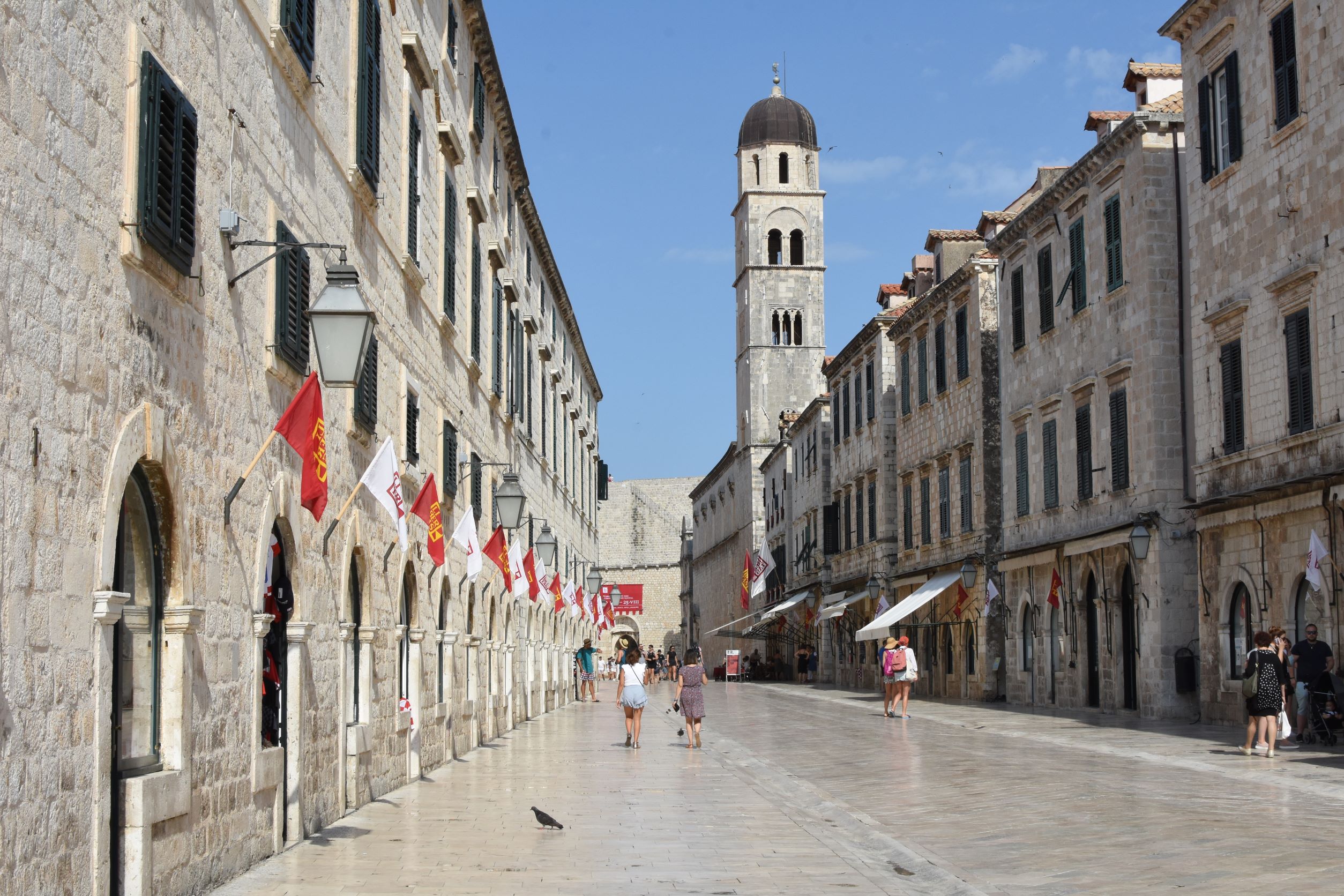
I began measuring time by when I had last set foot in the sea. Mind you, I did take some lengthy sojourns on land, because I adore Dubrovnik. I made my pilgrimage walk along the wall, hiked up Srd hill to check out the sunset and the foxholes from the Balkans war, wandered the buttery marble streets and petted every stray cat I could get my hands on. But I rarely reached the four-hour mark without itching for the sea. Even when I took a kayaking tour around the walls to snorkel in a nearby sea cave, I kept my feet outside the boat, like how I stick one foot out from underneath the sheet on a hot summer’s night. Mostly, though, I just lived at the beach.



The three city beaches of Dubrovnik are rock-and-concrete affairs that stick to the city wall like limpets. Each is accessed by a complex and unlabeled maze of alleys and tunnels and jetties that makes them feel like closely-guarded local secrets. Every morning I would arrive with a can of cold brew in hand and claim one of the natural rock caves for myself or, more likely, share one with a napping cat taking shelter from the punishing sun. The cat would watch with one half-open eye as I shed my clothes like a snake and leapt from the rocky precipice.
A hazy two-meter-thick cline of solar-heated water floated at the surface, and it was only when I dove beneath this amorphous layer that I could see clearly. So I dove over and over again, each time sinking deeper than the last and feeling pressure build in my ears and fire fill my lungs, but I stayed down for just a few more moments, hugging my knees as I stared at the shining tornadoes of fish going nowhere and everywhere all at once. Finally I’d kick for the surface, my friend the salt helping me skyward, up through turquoise and teal and robin’s egg and actual seafoam and then, finally, I’d break the surface and inhale. Half the sky belongs to Dubrovnik’s ancient wall, which was built to keep literal pirates out of the city that was once so rich as to be the rival of Venice. (What was their most valuable commodity? Salt! Worth its weight in gold for preserving yesteryear’s food.)



Pictures from my favorite of the city beaches including the best sea cave, the unmarked hole in the wall leading to the beach, and the bar that’s out there too.
One day, to give my lungs a break from diving, I started swimming. I mean I really and truly swam, using long freestyle strokes that I had hardly used in 16 years after a four-year teenage obsession with competitive swimming had led to injury and burnout. My body slipped back into a remembered rhythm and I loosened and lengthened my reach the further I went. My shoulders began to ache, as I knew they would, but with a bittersweet pain of remembered youth. A surprised laugh burst out of me and the bubbles tickled my cheeks.
I lapped back and forth along the beach, memorizing the constellations of boulders that comprised the walls’ hidden feet. A thin white line of buoy ropes demarcate a safe boat-free swimming area around each beach, but these were all summarily ignored by the old-timers whose sun-seasoned skin and sincerity of their belonging clearly marked them as locals. I paused and watched as a steady stream of them appeared from behind one corner of the wall and disappeared around the next, like they were migrating along the coast. Some even pulled dry-bags behind them and I wondered if they were fitting to leave this shore entirely and strike out for Italy.
For two days I stayed within the “safe” white confines of the buoys, getting to know the local fish pods and rock crannies filled with anemones. And every day the migrating old-timers passed me by with their lackadaisical strokes. Finally one morning, after seeing the same septuagenarian swimming eastward 30 minutes after I saw her swim westward, I lost all patience with “safe.” I swam to the white edge of my known sea. I stared down the line of buoys, those horrific things I’m already irrationally afraid of, which were now drawing a second parallel line of fear between “known” and “not known.” Safe and not. But it’s all the same wall, all the same sea! The water and the fish don’t give a single shit about this arbitrary boundary, so why did I? Telling myself this didn’t make it any easier for me to hyperventilate a lungful of air and panic-dive under the rope. I waited to feel the slimy rope grab my foot on the way by.
And then I popped up, free.
With one threshold behind me, other boundaries started to melt away too. The Adriatic was so near my own blood’s temperature and composition that it was hard to tell where I ended and it began. Osmosis pulled all the fear out of my bloodstream to be discarded into the blue. Only the solid presence of the wall kept me tethered in space, though its agelessness and my unfettered state of mind had released me from time. The waves rolled me back and forth as I struck out east towards the next beach, playing with me in a way the freshwater pools never had. I breathed left towards the medieval wall, rotated down to peer into a kaleidoscope of boulders and fish, breathed right towards a blinding yellow eye glinting off the Adriatic. How many arbitrary thresholds have I allowed to hold me back in life? How many times have I told myself I couldn’t do something: couldn’t move beyond fear, couldn’t swim into the unknown, couldn’t swim at all, for that matter? With racing heart I swam from one beach to the next, passing boundaries and octogenarians alike. I guess I’m something of a migrator myself.


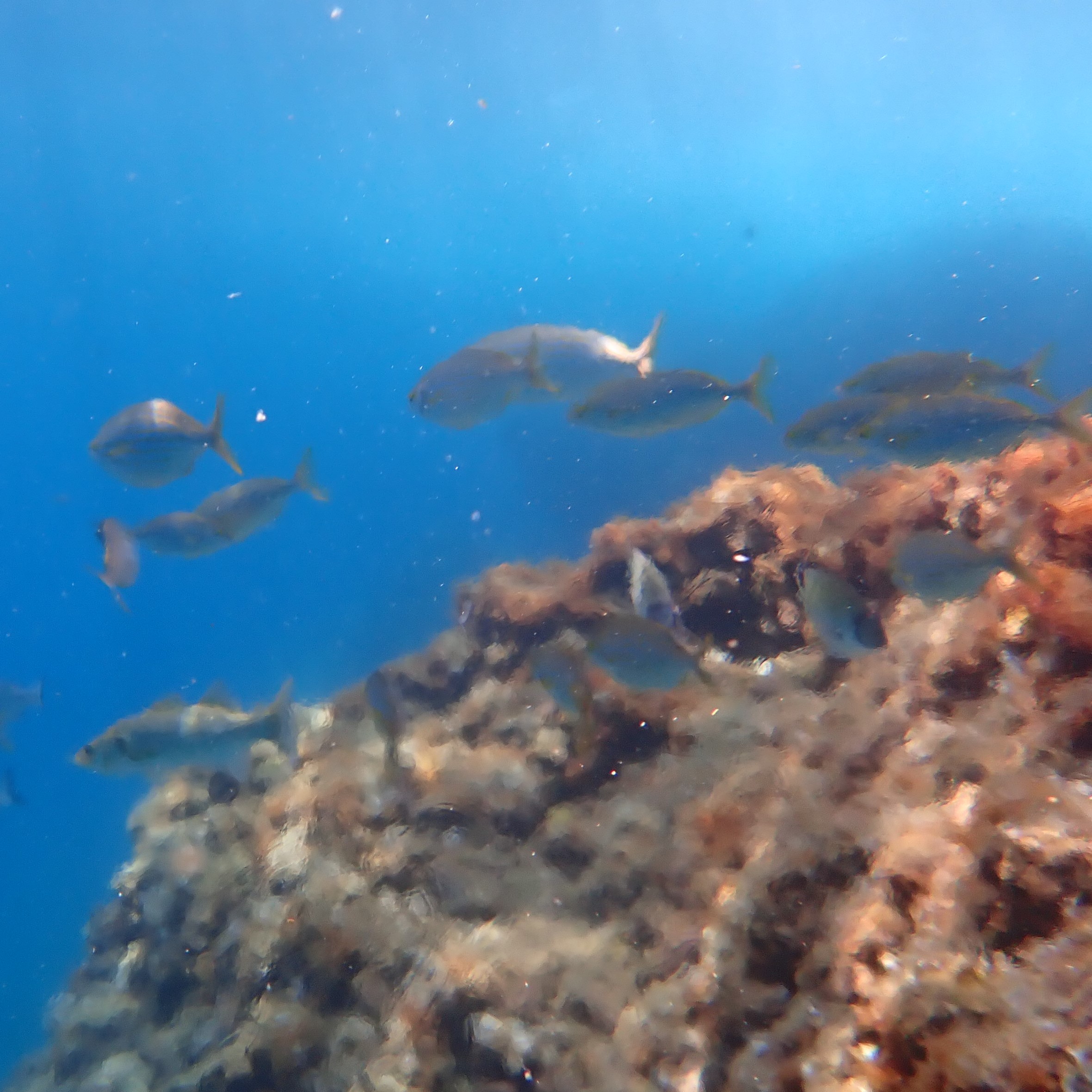
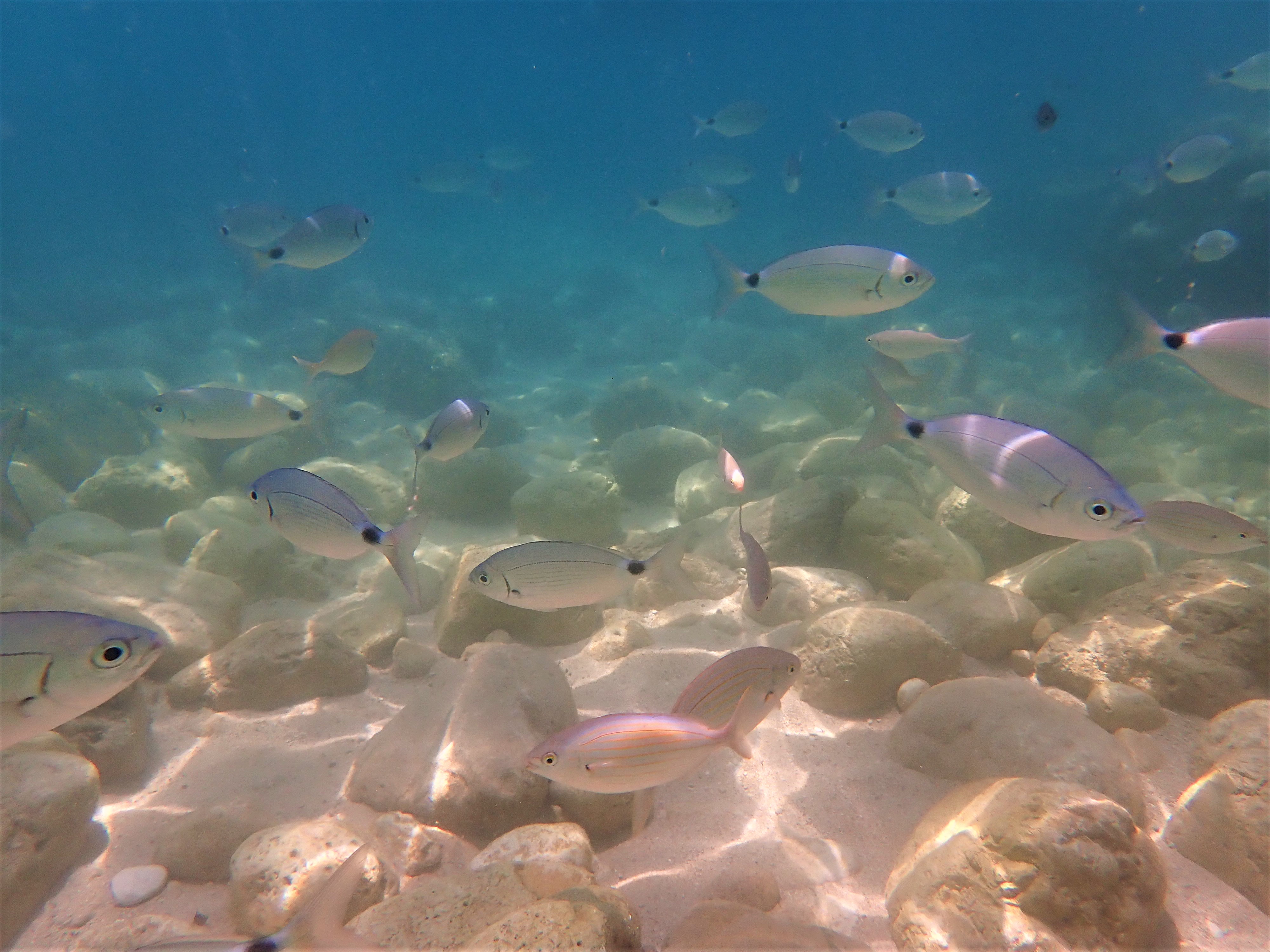
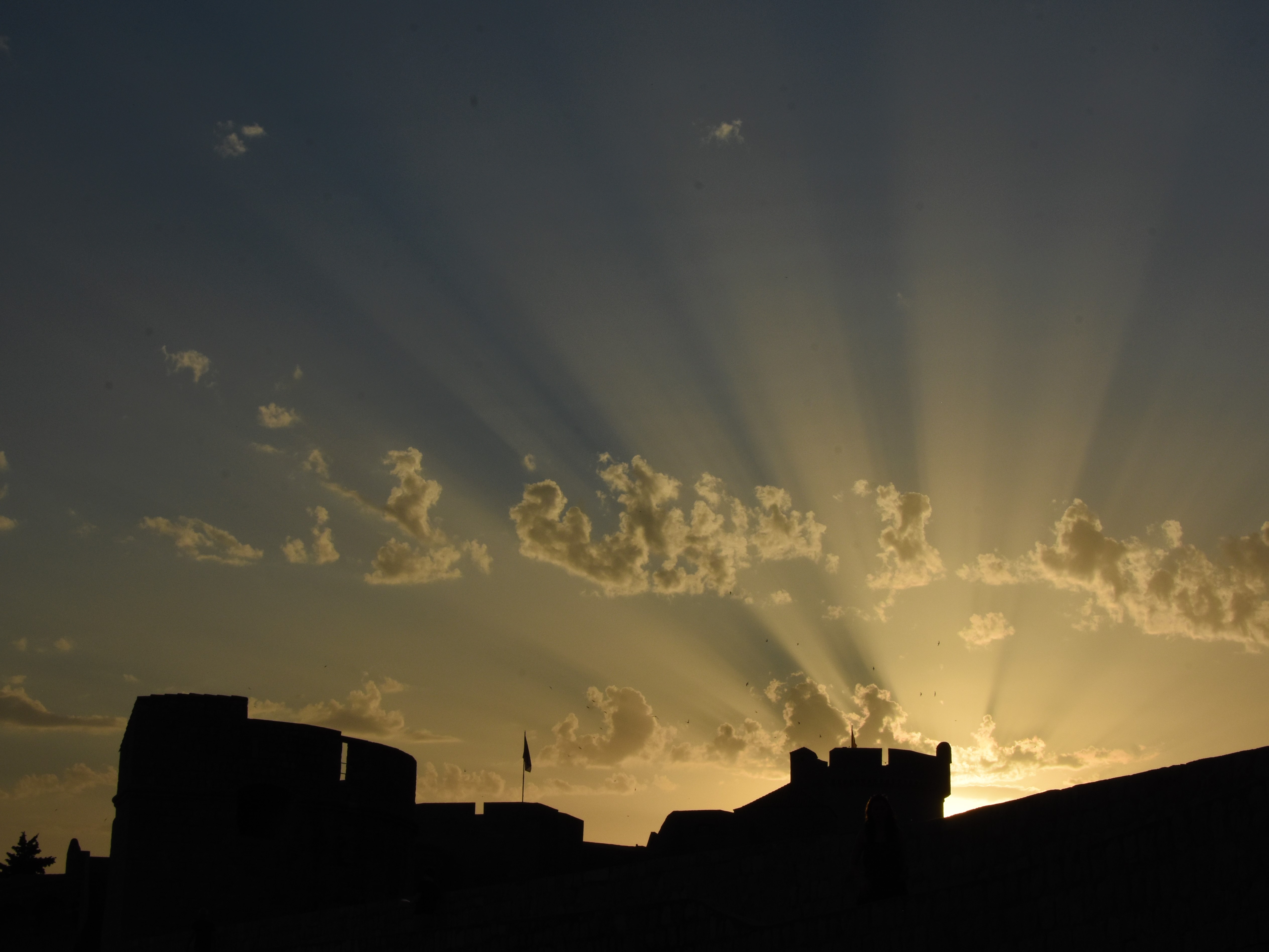
Where the walls meet the sky meets the sea. See also: the white buoy lines. Bottom left is an in-focus photograph that shows the heat layer!
Eventually I had to migrate back north, ferrying to Split and bussing to Zadar before an evening flight back to Germany. I took a last long walk through Zadar’s old town, past the leather-brown local hawking dried starfish and religious idols off his boat, surfing through waves of tourists, gingerly walking around the Roman flagstones to help preserve them just a little bit longer. In just a week my skin had shifted from winter white to summer gold with just a hint of red across my nose and shoulders, places already intensely freckled from 30-odd years of similar sunscreen sins. My hair had taken on a permanent wave. My mind was still a bit strange and untethered, but lacking the unfocused desperation that I’d landed with.
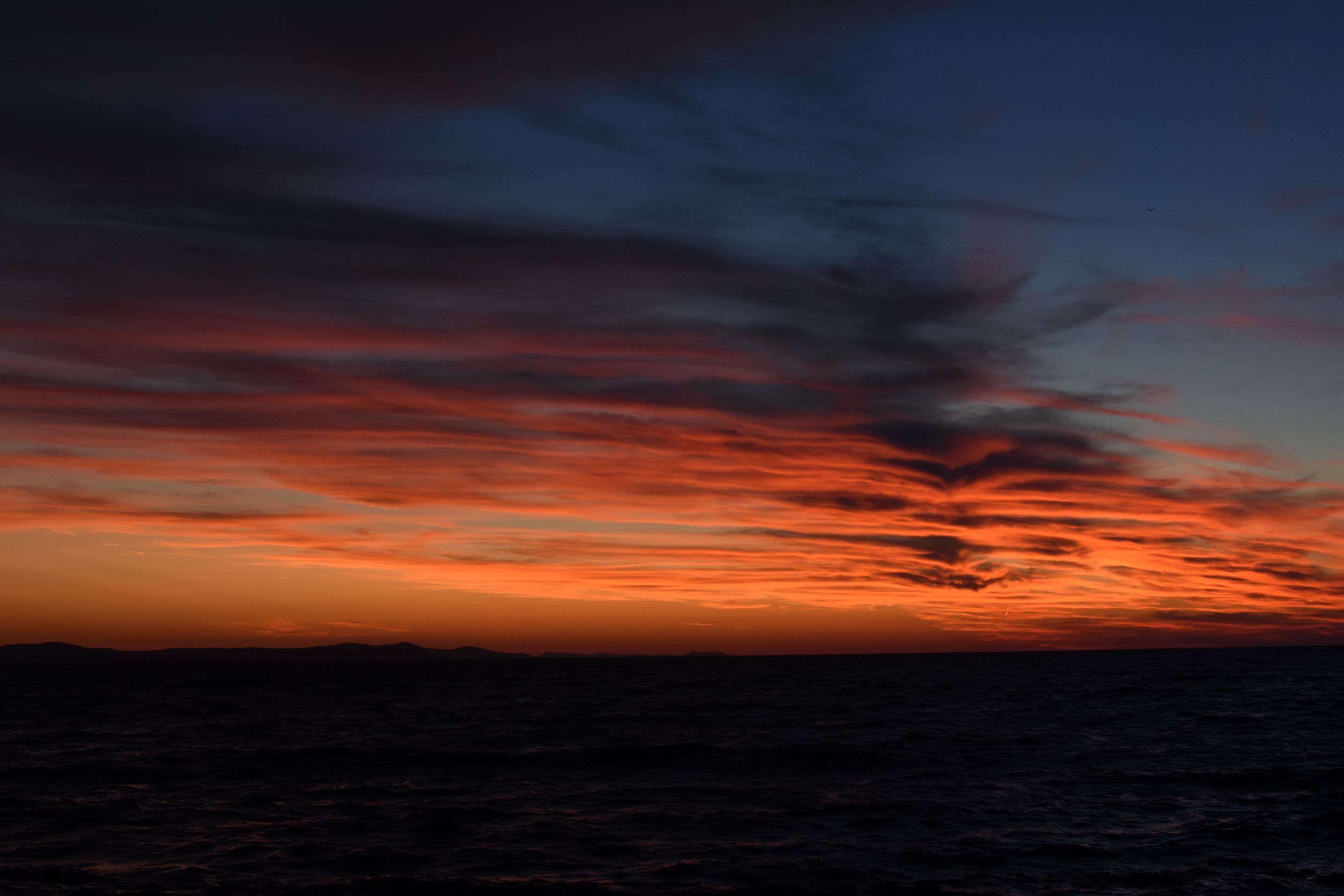
Whether I’d intended it or not, I’d taken the healing of the sea. I had submerged into the silent blue and let it obliterate my pandemic-shrunk comfort boundaries. I could hear the Adriatic singing to me through the throat of the far-off sea organ, bidding me farewell for now. By the time I departed I was still a bit wary of conversations with strangers, but at least I was no longer such a stranger to myself.
*German for “morning-hater”
**The Balkans were occupied by Austria in the not-so-distant past. The relationship is civil now, but Austrians did tear down half of Zadar’s ancient sea wall to aid modern commerce… how rude.
 Window Seat Odyssey
Leave a comment