Nahuel Huapi lake is the same as it’s always been. The blazing sun still hangs in the periwinkle sky, the dull roar of the far-off road still blends in a familiar way with the gentle lapping of waves on the rocky shore. But there’s also something sinister here, darkening the edges of this bluebird day. The steady wind that blows in as usual from the Andes has a chilly undercurrent, enough to raise goosebumps even though it’s still summer. The cars – is it me, or are there fewer of them? Those last full planes still flying north overhead – when will they ever migrate south again, when will they come back for me?
If there were a soundtrack score overlaying this day, this is the part where a sudden burst of suspicious violins would swell. It’s the part of the movie where you know something is coming, but it’s something you can’t yet see. Run, you want to yell at the dumb brunette on the screen, why aren’t you running?
It all just looks so normal, but it feels so wrong. If it weren’t for the barrage of news from friends and the Internet, I would have no idea that I had been stranded on a foreign continent, with a potentially deadly virus coming at me like a tidal wave.
There’s no immediate danger in staying, but the fear of entrapment is something else entirely. I am calmer now that the flights have stopped and the roads have closed, knowing there’s nothing I can do, but the sensation of helplessness constantly tugs at my subconscious.
In my mind a lockdown was the only logical choice for Argentina to make, with its dearth of hospital beds and advance warning from Italy about what was coming. But it doesn’t make it suck any less for us stranded, suspended somewhere between a rock and a hard place. It’s hard even to know which is the rock and which is the hard place right now. Argentina, with its low case count but dismal medical capacities, versus the hotspot that is Germany, where I already pay for a health care system that might help me survive any potential diabetic complications. And what does that make the US, my motherland, who told us all to come home but then went radio silent on the subject of repatriation?
There are many who believe we all had sufficient warning to make it out before the borders slammed shut around us, but I have whiplash from how fast things went from normal to lockdown. On Friday the 13th – yeah, I know – almost everything was normal. Toilet paper and pasta were fully stocked, corona was nothing but a dinnertime conversation subject, and we were extracting DNA at work like it was any other day. But within one week, the entire nation was on house arrest, facing literal arrest if we left our homes for any reason other than to buy food or medicine, and certainly unable to leave the country unless we were already in Buenos Aires (a two-hour flight, or 18-hour bus ride away from Bariloche; and most domestic long-distance options are canceled). There aren’t any official numbers, but there must be thousands of foreigners stranded in Argentina alone. To try to pile all of us onto the few regularly scheduled flights still operating – let alone to try to get all of us in contact with airline agents who could help us, amid their own upheaval – was never going to happen.
That said, never before have I experienced so many “hindsight is 20/20” moments back-to-back in my life. How ironic that it happens in 2020. Excellent dad-joke, universe, but the horse has been dead for a while.
Here’s the one-week timeline of our zero-to-lockdown journey. See how many “hindsight is 20/20” ideas you can come up with:
Friday the 13th of March, 2020. The first stirrings of trouble: flights from the EU to Argentina are banned. We’re not overly concerned, even though my German supervisor had a flight home planned for Tuesday. Few nations had introduced flight bans by this point, and they were all logically to and from the first Asian hotspot areas. Surely it would be weeks or months before that happened to us, especially since there were only a handful of cases across the entire continent of Latin America. My supervisor, colleague, and I drive north out of town for a weekend road trip.
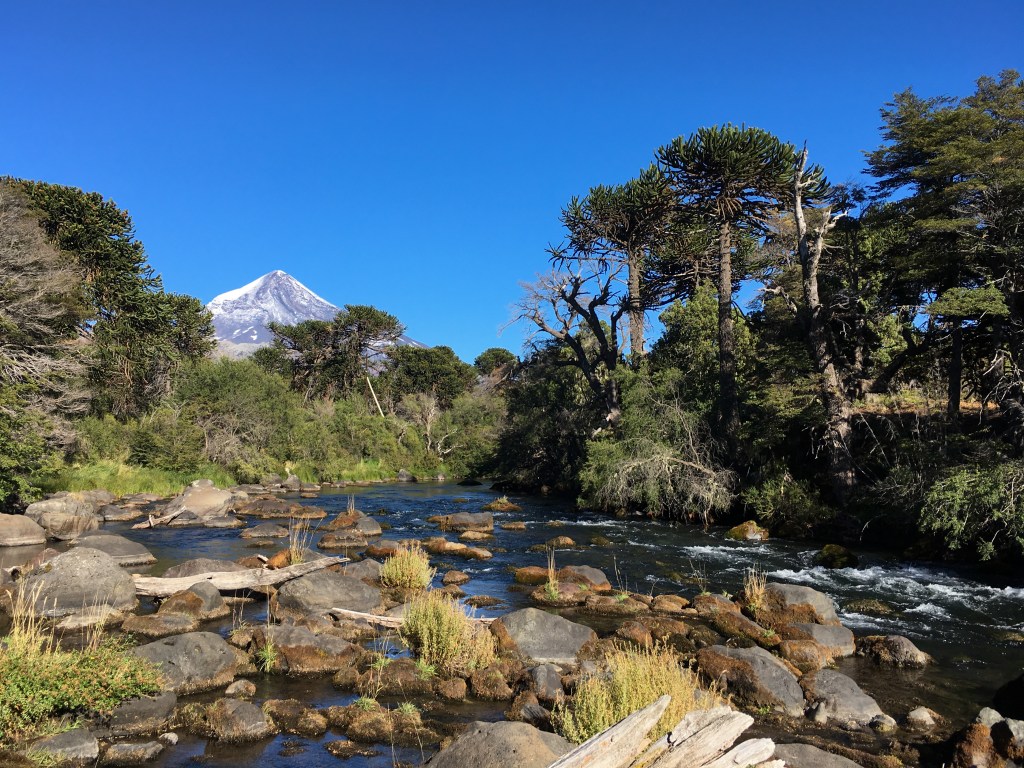
Saturday the 14th. After a long and pleasant day of hiking in the wilderness, we return to the mobile data zone to learn that all flights to the EU and the US will be cancelled after Monday. We find ourselves making a madcap dash south, shaving 45 minutes off a normally 3-hour drive though the steppe, and careen into the parking lot of the Bariloche airport an hour before it closes so my supervisor can attempt an emergency exit to Buenos Aires and get back to her family (miraculously she made it, on one of the last normally scheduled flights to Germany). Neither my roommate/colleague nor I are particularly concerned for ourselves; surely there will still be a barebones flight schedule operating to take us “tourists” home.
Sunday the 15th. One supervisor down, we shrug and decide to make use of the rental car and take off north again for a leisurely day trip on the seven lakes tour. We stop at a grocery store to pick up some picnic supplies, and there are only a handful of people wandering around the fully stocked store. The bubble of calm that inexplicably surrounded Bariloche would pop within a day.

Wednesday the 18th. All domestic flights and buses are abruptly canceled “for the next five days,” to stop people from traveling during the long holiday weekend. I walk to INTA, my workplace, in the morning to perform the daily DNA extraction, where I learn that the lab will be closed indefinitely starting today. Starting to feel a sense of impending doom, I try to buy a last-minute flight to Buenos Aires, but all 15 of Thursday’s daily flights are sold out. It feels like a noose has slipped stealthily around my neck, so instead I buy a plane ticket to Buenos Aires for the 26th, one day after the current travel ban is supposed to expire.
Thursday the 19th: The president decrees a full-country mandatory lockdown, to begin Friday at midnight and last until March 31st. All businesses close, all transportation methods are halted including personal cars, and the entire country is now on house arrest. I cannot leave my house, not even to walk to the lakefront that is less than one minute away, for any reason other than to buy essential food or medicine. Less than a day after I bought it, my plane ticket for the 26th is canceled.
So now, consider my options. German rescue flights are theoretically in the works, but first I much reach Buenos Aires. KLM, LATAM, and Aerolineas Argentinas are all unreachable, despite their splashy website messages and new help pages. Their rebooking lines are so backed up that they will not respond to you unless your plane was meant to depart within the next 3 days – this is not especially helpful since I’m trying to move my departure date up by a month. And anyways, with most of their routes canceled or reduced, there’s no guarantee that any new flights I reserve will actually fly. I can do as my own government recommends – “prepare to shelter in place for an indefinite amount of time” – but what then when the virus hits, for surely it will eventually, and then other countries begin to block incoming flights FROM Argentina?
So now: stuck. I’m in the bottom floor of a private house near the lake, with one increasingly annoying roommate and one friendly landlady in the floor above who doesn’t speak a word of English. The Wi-Fi has been on the fritz for the past month so Netflix is out of the question, and the TV has only one English and one German channel. It’s incredible how fast the mundane can become exceptional, after you are deprived of it. To leave your fenced-in yard and climb into a car, and drive two miles to go grocery shopping. The freedom! The privilege! The novelty of seeing something besides your own walls! To receive a handful of pirated movies IN ENGLISH from your colleague who broke quarantine to cure your boredom – the highlight of your day! There is a suspension of judgement, of questioning sanity, too. You see people doing abnormal things – kicking soccer balls to themselves, sitting on their roofs – and think to yourself good for you, man, do whatever it takes to stay sane. One day I literally pace back and forth in my apartment, despite only having the space to make ten steps.


Unfortunately, xenophobia also begins to grip the country. In the second week of lockdown we stand in the growing line at the grocery store, these social Latin Americans doing their damnedest to stand two meters away from each other and looking suitably unhappy about it. We reach the front of the queue and the security detail hears us speaking English, comes out to ask us for our passports to prove we’ve been here more than two weeks and are not breaking quarantine. I’ve never been one to carry my passport around a city where I live, so I am forced to give my supervisor a shopping list then sit down and wait on the sidewalk like a leper. But as soon as my companions are through the door, the security woman vanishes. They are checking none of their own; they assume with some bizarre nationalistic logic that only foreigners can be carriers, only foreigners present a risk. Not the locals, certainly, although feasibly they could have been breaking quarantine after returning from Spain or Italy…
I know I should try harder to leave, but my suburban nest in Bariloche feels about as safe as I could ask for right now. Unable to reach the airlines, I just keep throwing money at tickets, hoping one will finally stick. My third attempt to reach Buenos Aires – on April 1st – is canceled when Argentina completely slams shut its borders, allowing neither foreigners to leave nor citizens to return home.
Shit.
 Window Seat Odyssey
Leave a comment