I stick a hand in my pocket and find a medium-sized coin, and I can tell which nation it’s from without even looking at it. The metal of it feels wrong somehow; the face that kisses the pad of my thumb is a little denser and softer than what I’m used to now. American…not Canadian. I sigh and keep digging through the other fifty pockets I have among all my winter layers, trying to find the toonie* I know I brought so I could fill up on Tim Horton’s during the frigid walk to class.
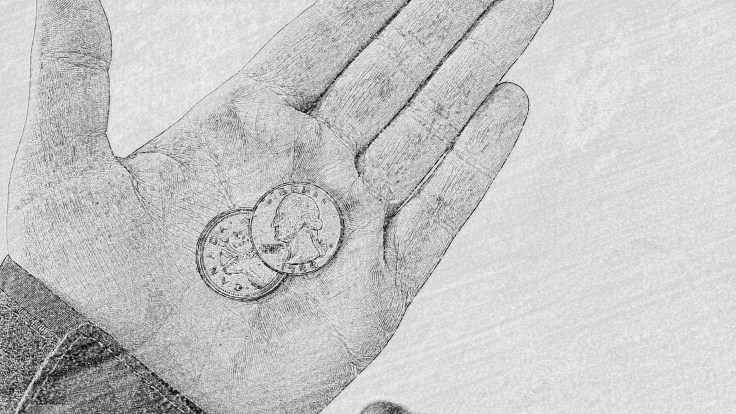
It’s become my habit now when traveling in the US to pay with cash, then forsake any and all non-paper change. On the rare occasion when there’s not a mostly-empty tip or donation jar waiting on the counter, I’ll plop the stray coinage into the hand of a companion (the running joke is that I’m tipping my friends for putting up with me). It’s only when I’m traveling alone that the odd American quarter ends up in my pocket, where it will stay for a few months until I inevitably lose it on the streets of some foreign city or another.
When briefly traveling among a string of countries that all have their own unique currencies, it makes sense to ditch the coins at the end of the trip because they can’t be exchanged and will probably just end up gathering dust in a closet for the next fifty-odd years. But at what point did I adopt this viewpoint for my own homeland? When did I actually become an expatriate?
In the literal sense, of course, expatriation happens the day you pack up all your belongings and ship out. But there’s a deeper layer, a sort of emotional expatriation, which happens for some of us when we no longer really feel at home in our own motherlands. I can’t exactly pinpoint the moment this happened to me, but I’ve now been away for 18 months, and when I return to America it feels more like my estranged sister than loving mother. She is family to me, which is a bond that’s nearly impossible to break, but it increasingly feels like her ideals and future plans have strayed down a path that I have trouble following. It’s also possible that our paths actually diverged long ago and I didn’t notice until I took the great step back to my ancestral home continent. The question is, did she change or did I?
America, much like my own human parents, shaped who I am, and this is a debt that can never be forgotten or repaid. They both taught me the value of strength and of using my loud voice to express my opinion; they told me to dream big because I could do anything as long as I put my mind to it. I am extremely fortunate to have grown up in a country with such personal freedoms and great expectations, and also to have been supported by a stable and loving middle class family. But just as we all must eventually grow up and leave the safe havens of our childhood homes, I took it a step further and left the familiar shores of my home country to see what else was out there.
I have this one clear memory from grade school, of walking down the hallway and thinking about how I couldn’t even fathom being born in another country because the US was hands-down The Best Country on Earth. I held onto this belief for many years, not realizing in my innocence how absurd it was to make such a decision when I had never even set foot in another country.
During my expatriation years I’ve come to see that The Best Country on Earth is more like a personal judgment than a collective human award gifted to a single country. Can you even imagine trying to get the whole of humanity to agree upon one single Best Country? Barring the fact that it would be a logistical nightmare to have a discussion with 7 billion people in over 5,000 languages, the criteria to win such an award are based solely on each person’s ideals and perceptions and lives. One woman’s favorite country may be another’s idea of hell (for example, I was not a huge fan of Italy. Sue me.**). When I finally followed my dreams to Germany, a country I suspected might be a good fit for me, I found itchy-footed Germans who were preparing to chase their own dreams to North America or Asia. It turns out there is no one right place for everyone, and also that your birthplace may not necessarily be the place you will feel most at home. An individual’s ideal place can even shift over time, as you change, or the world changes, or even if you find yourself vacationing in a new foreign country and its reality fills an empty niche in your soul that you hadn’t known was there until you feel sudden warmth nestling into your heart. And who knows, if I had never begun traveling, or even if I’d grown up in the small Michigan town I was born in, I may have been perfectly happy with my only-America life. “Grow where you’re planted,” as my mom likes to say, which is an idea I can get behind. But I was born human, not a tree, so growth and movement don’t have to be mutually exclusive.
Expatriation, by the way, is such a harsh-sounding English word. The “Ex-” makes it sound like America and I had a long relationship that turned rocky, and then there was a screaming match and we threw things at each other and decided never to speak again unless there was a lawyer present. But I am not forsaking my homeland; I’m not setting fire to my passport or refusing to set foot there ever again just because we both changed. After all, so many of the people and places I love most still reside there, and despite my extensive stateside travels I’m sure there are still thousands of worthy places I have yet to explore. (As an aside, after spending a collective two years on other continents, I can confidently say that North America has some truly unique and unparalleled destinations that should not be taken for granted.)
So my plan for now is to continue my expatriate life but return to visit the US now and then, although there is a slight chance I’ll get into some uncomfortable ideological fights with America over the proverbial Thanksgiving turkey. Someday I’ll probably end up living there again, buying a tiny house in the wilderness somewhere and filling it with travel photographs and stray coins from distant lands, because I’ve come to learn that obtaining residency in other countries is difficult at best and I can’t seem to find any eligible European bachelors willing to give me a “green card” wedding.
But for now?
For now, America, you can keep the change.
I have the world to explore.
*$2 Canadian coin. The $1 has a loon (bird) on it, so it’s a loonie, and the two-dollar became toonie.
**I hate that I love this Americanism. “You’re offended by my opinion? Great, let’s fight about it in court.”
 Window Seat Odyssey
Leave a comment